
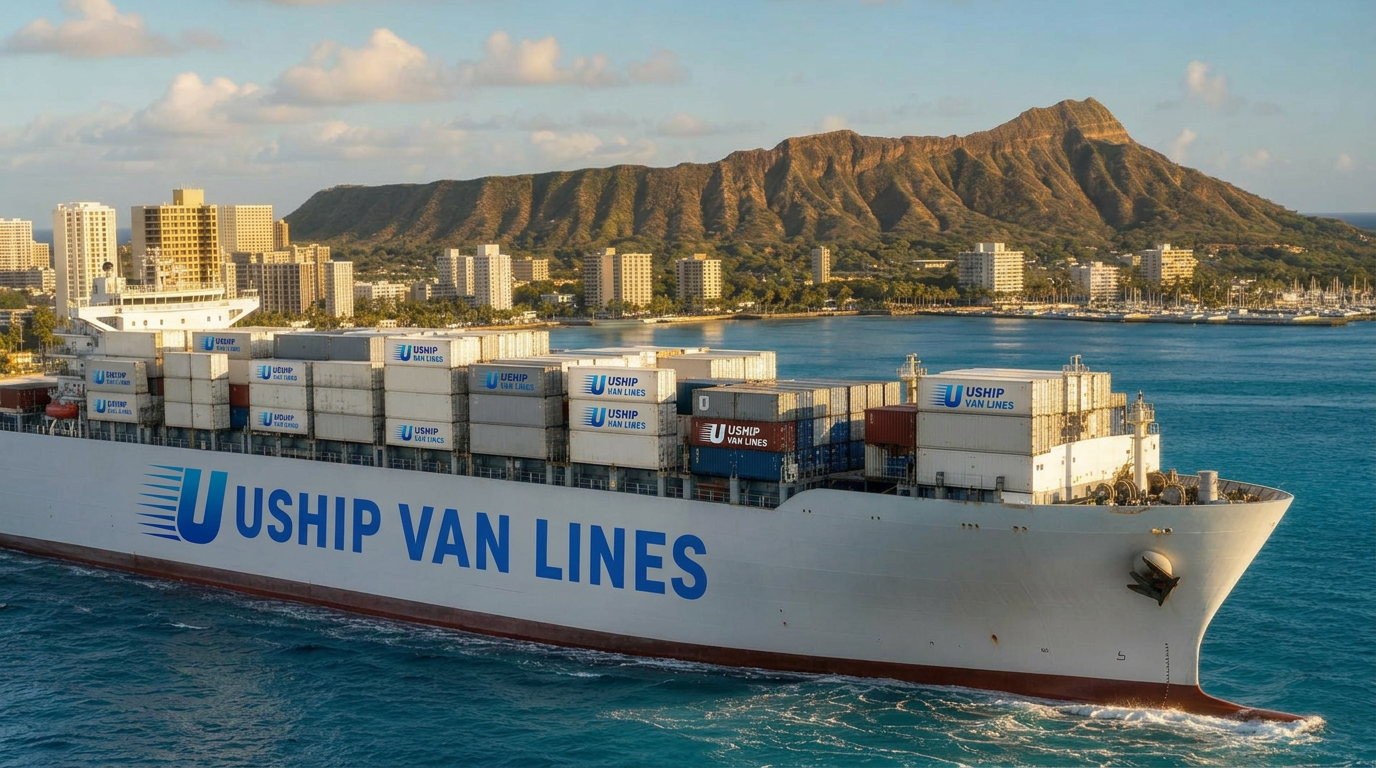
Moving from Hawaii to Cape Coral, FL
Moving from Hawaii to Cape Coral, FL means trading Pacific island life for Southwest Florida's Gulf Coast canals and relaxed waterfront communities. This 4,800+ mile relocation requires careful coordination of ocean freight from Hawaiian ports, mainland receiving, and cross-country ground transportation to your new Cape Coral home.
Best Alaska & Hawaii Movers, powered by UShip Van Lines, specializes in these complex island-to-mainland moves. We handle every step—from packing your belongings in Honolulu, Maui, Kauai, or the Big Island through ocean container shipment and final delivery to your Cape Coral address. Request a free quote today to start planning your seamless transition to Florida's sunny Gulf Coast.
Route overview
Hawaii to Cape Coral: A Two-Ocean Journey
Your household goods travel from Hawaiian islands to Cape Coral through a coordinated multi-modal process. Items are containerized at your Hawaii residence, shipped via ocean carrier (typically Matson or Pasha) to West Coast ports in Long Beach or Oakland, then transferred to over-the-road trucks for the 2,800-mile cross-country journey to Southwest Florida.
Cape Coral sits on the Caloosahatchee River in Lee County, offering 400+ miles of navigable canals, warm winters, and a growing community of transplants. The move requires understanding Hawaii's unique shipping requirements—including agricultural inspections and restricted items—plus mainland logistics through Southern California, across the Southwest, and into Florida's Gulf region.
Timing matters significantly for this route. Ocean transit alone takes 7–14 days, with additional time for port handling, cross-country trucking through Texas and Louisiana, and final delivery to Cape Coral's residential neighborhoods near the river or inland canal systems.
How the moving process works
Your 7-Step Hawaii to Cape Coral Moving Process
1. In-Home Survey & Inventory – A moving consultant assesses your Hawaii home (virtual or in-person), documenting volume, special items like surfboards or outdoor furniture, and services needed. You'll receive a detailed estimate covering ocean freight, mainland transport, and delivery to Cape Coral.
2. Pre-Move Planning & Restrictions – We identify items restricted from Hawaii shipment (soil, certain plants, untreated wood) and help you declutter before packing. Vehicle shipping is quoted separately if you're transporting cars to Florida.
3. Professional Packing – Crews pack your belongings using ocean-rated materials designed for the humidity and handling of trans-Pacific shipping. Fragile items get extra protection; electronics and valuables receive specialized wrapping.
4. Containerization & Port Transport – Your goods are loaded into a 20-foot or 40-foot ocean container, sealed, and transported to Honolulu Harbor (or Kahului, Hilo, Nawiliwili depending on your island). The container boards a Matson or Pasha vessel bound for California.
5. West Coast Receiving & Customs – Container arrives at Long Beach or Oakland, clears customs and agricultural inspection, then is unloaded at our partner warehouse. Goods transfer to a climate-controlled moving van for the cross-country leg.
6. Mainland Transit – Your shipment travels I-10 through Arizona, New Mexico, Texas, Louisiana, and into Florida, typically taking 5–7 days from California to Cape Coral depending on scheduling and weather.
7. Cape Coral Delivery & Setup – Our crew delivers to your new address, unloads, places furniture in rooms, and removes packing materials. You inspect and sign off, completing your island-to-Gulf Coast journey.
Estimated moving costs
What Does a Hawaii to Cape Coral Move Cost?
For a typical 2–3 bedroom household (approximately 7,000–10,000 lbs), expect total costs between $8,500 and $16,500. Studio or 1-bedroom moves may run $5,500–$8,000, while larger 4-bedroom homes can exceed $18,000–$25,000.
Key cost drivers include:
- Volume and weight – Ocean freight is priced per cubic foot or container share; mainland transport by weight and distance
- Packing services – Full professional packing adds $1,200–$2,800; partial packing or DIY reduces costs
- Container type – Shared container (consolidation) is more economical; exclusive 20-ft or 40-ft containers offer faster transit
- Origin island – Neighbor island moves (Maui, Kauai, Big Island) require inter-island barge to Oahu, adding $800–$1,500
- Seasonality – Summer peak season (June–August) commands 15–25% premiums over winter shoulder months
- Delivery access – Cape Coral's canal-front properties or gated communities may require shuttle trucks if full-size semis can't access
- Storage – If your Cape Coral home isn't ready, mainland storage runs $150–$300/month
Vehicle shipping from Hawaii to Florida adds $1,200–$1,800 per car via roll-on/roll-off ocean service plus mainland auto transport. We provide separate quotes for vehicles to ensure accurate budgeting.
Prices are estimates only and vary by exact inventory, services, and market conditions. Request a personalized quote for your specific move.
Estimated transit times
How Long Does Hawaii to Cape Coral Take?
Door-to-door transit typically ranges 18–35 days, broken down by leg:
Ocean freight (Hawaii to California): 7–14 days. Matson offers weekly sailings with 7–9 day transit; Pasha schedules are slightly less frequent. Add 2–4 days for port handling and customs clearance at Long Beach or Oakland.
Mainland transfer: 1–3 days to unload the container, inspect contents, and reload onto over-the-road trucks at the West Coast warehouse.
Cross-country trucking (California to Cape Coral): 5–8 days covering approximately 2,800 miles via I-10 through the Southwest and Deep South into Florida. Direct service is faster; consolidated loads with multiple pickups/deliveries add time.
Delivery window: You'll receive a 2–3 day delivery window once your shipment departs California. Final scheduling depends on Lee County traffic, weather, and delivery appointments in Cape Coral's residential zones.
Total timeline also includes 3–7 days before pickup for packing and containerization in Hawaii. Book 4–8 weeks ahead during peak summer season; 3–5 weeks may suffice in fall or winter. Hurricane season disruptions (June–November in both Hawaii and Florida) can add 3–10 days to ocean or mainland schedules.
Regional logistics
Hawaii-to-Florida Logistics You Need to Know
Hawaii Departure Ports
Oahu shipments depart Honolulu Harbor (Sand Island). Neighbor island residents ship via Kahului (Maui), Hilo or Kawaihae (Big Island), or Nawiliwili (Kauai), with goods first traveling by Young Brothers barge to Oahu before ocean vessel loading—adding 3–7 days and $800–$1,500.
Restricted & Prohibited Items
Hawaii and USDA regulations prohibit shipping soil, many live plants, fresh produce, certain woods, and untreated bamboo to the mainland. Firearms require special declaration. Hazardous materials (propane, paint, chemicals) cannot ship in ocean containers. Your moving coordinator provides a full restricted-items list.
Agricultural Inspection
All shipments from Hawaii undergo USDA agricultural inspection at California ports to prevent pest introduction. This is standard and built into the timeline, but improperly declared items can cause delays or confiscation.
Vehicle Shipping
Cars ship separately via Matson or Pasha auto service to California (7–14 days), then overland to Florida (5–8 days). Total vehicle transit: 12–22 days. Vehicles must be clean (no soil/debris), have less than ¼ tank fuel, and contain no personal items. Expect $1,200–$1,800 per vehicle.
Storage Options
If your Cape Coral home isn't ready, we offer short-term storage at our California warehouse ($150–$250/month) or Florida facilities near Fort Myers ($175–$300/month). Climate-controlled units protect belongings from Florida's humidity.
Cape Coral Delivery Considerations
Many Cape Coral neighborhoods feature narrow streets, canal-front properties, and gated communities. Large moving trucks may require smaller shuttle vehicles for final delivery, particularly in older sections near the Caloosahatchee or deep within canal residential zones. Confirm access details with your move coordinator to avoid surprise shuttle fees ($350–$650).
Insurance & Valuation
Ocean moves carry higher risk than domestic ground transport. We recommend full-value protection (typically $10–$15 per $1,000 of declared value) rather than basic released-value coverage (60¢/lb). Homeowners or renters insurance often doesn't cover belongings in transit—verify your policy.
Seasonal considerations
Best Times to Move from Hawaii to Cape Coral
Winter (December–February): Ideal moving window. Hawaii weather is mild; Florida's dry season means comfortable Cape Coral conditions. Lower demand yields better rates (10–20% below peak). Book holiday weeks early as carrier availability tightens late December.
Spring (March–May): Excellent for moves. Hurricane season hasn't begun; Florida weather is warm but not scorching. Rates rise slightly in April–May as snowbirds depart and summer demand builds. Ocean schedules are reliable with minimal weather delays.
Summer (June–August): Peak moving season with highest costs. Hawaii hurricane season begins (though direct hits are rare); Atlantic hurricane season affects Florida Gulf Coast. Port congestion increases at Long Beach/Oakland. Book 8+ weeks ahead. Expect 20–30% premium pricing and potential weather delays.
Fall (September–November): Hurricane risk peaks September–October in both regions. November is excellent once storm season wanes—Florida's coolest months begin, and moving costs drop 15–25%. Thanksgiving week has limited availability. Earlier fall moves (September) risk tropical weather disruptions but offer better rates than summer.
Pro tip: For maximum savings and reliability, target January–March or November. Avoid August–October if you're risk-averse about hurricane delays, though carriers have contingency plans and insurance coverage.
Why choose Best Alaska & Hawaii Movers
Why Best Alaska & Hawaii Movers for Your Cape Coral Relocation
-
Island moving specialists – We focus exclusively on Alaska and Hawaii routes, understanding the unique logistics, paperwork, and carrier relationships that mainland-only movers lack.
-
Transparent pricing – Detailed estimates break down ocean freight, mainland transport, packing, and accessorial charges so you know exactly what you're paying for—no hidden fees at delivery.
-
End-to-end coordination – One point of contact manages your entire move from Hawaii packing through Cape Coral delivery, eliminating the confusion of dealing with separate ocean and ground carriers.
-
Flexible scheduling – We accommodate your timeline, whether you need expedited service for a job start date or slower, economical transit with storage while your Florida home closes escrow.
-
Powered by UShip Van Lines – Our parent company's nationwide network and vetted carrier partnerships ensure reliable mainland transport and professional service at every stage of your cross-country journey.