
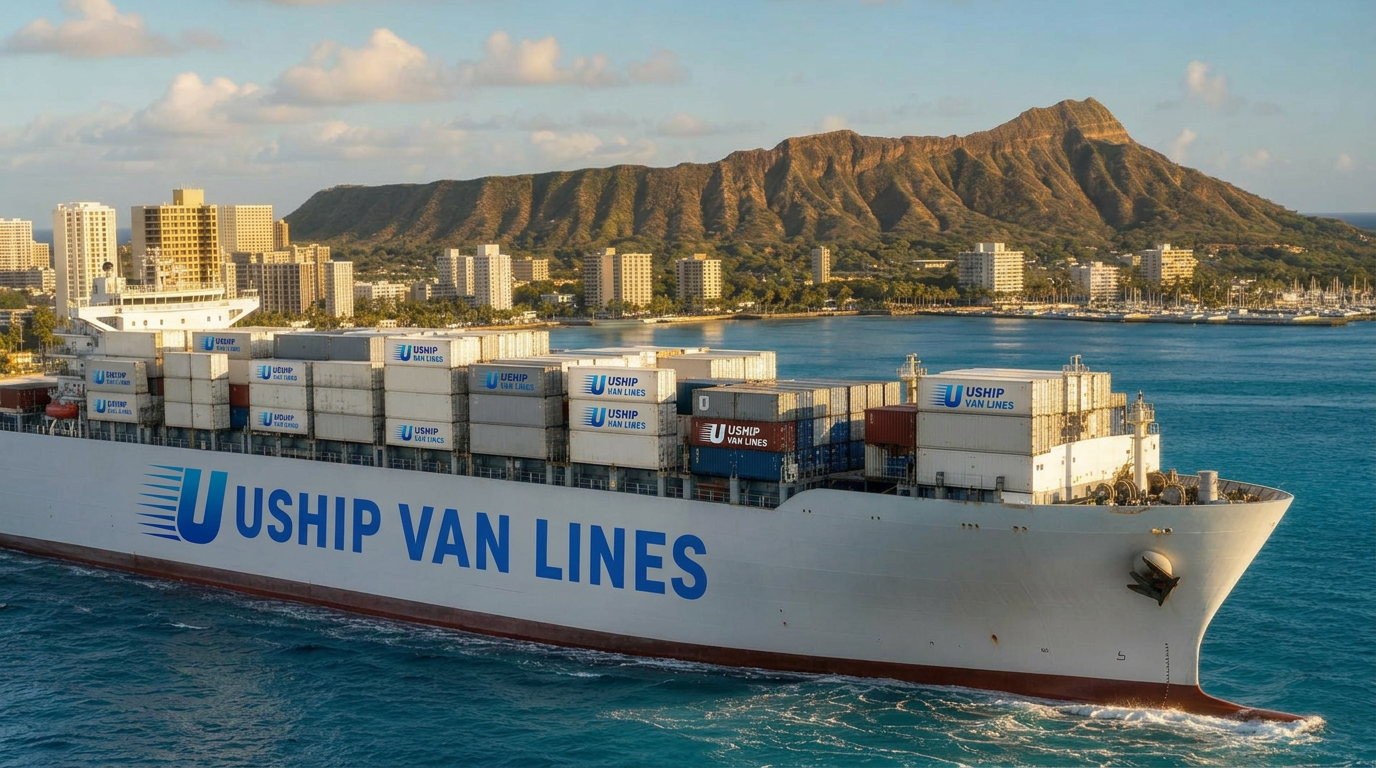
Moving from Hawaii to Melbourne, FL
Relocating from the Hawaiian Islands to Melbourne on Florida's Space Coast means navigating one of the most complex moving routes in the country—a multi-leg journey combining ocean container shipping, mainland trucking, and careful coordination across time zones and climate extremes. Whether you're leaving Oahu, Maui, Kauai, or the Big Island for Melbourne's growing tech sector, beachside living, or proximity to the Kennedy Space Center, every successful move depends on understanding container schedules, port logistics, and real-world transit realities.
Best Alaska & Hawaii Movers, powered by UShip Van Lines, specializes in Hawaii-to-mainland relocations with transparent pricing, dedicated move coordination, and decades of combined experience handling the unique challenges of island departures. Request your free, customized quote today to get accurate cost estimates and a timeline built around your specific needs.
Route overview
Hawaii to Melbourne, FL: A Cross-Pacific and Cross-Continental Journey
Moving from Hawaii to Melbourne, Florida covers approximately 4,900 miles and requires three distinct transportation legs: local pickup and delivery to your Hawaii departure port (Honolulu for most shipments, Kahului for Maui, Nawiliwili for Kauai, or Hilo/Kona for Big Island), ocean container transport via Matson or Pasha to the U.S. West Coast (typically Long Beach or Oakland), then cross-country trucking through the Southern corridor or I-10 route to Florida's east coast.
Melbourne sits in Brevard County between Orlando and the Atlantic, an area experiencing steady population growth thanks to aerospace industry expansion, warm winters, and beach proximity. Unlike crowded South Florida metro areas, Melbourne offers relatively straightforward final-mile delivery with good highway access via I-95, though scheduling around Port Canaveral cruise traffic and Space Coast launch events occasionally requires flexibility.
The entire door-to-door process involves customs clearance (minimal for domestic household goods but still documented), container devanning at the mainland port, consolidated loading onto long-haul trucks, and final delivery to your Melbourne residence. Each handoff creates potential delay points, which is why experienced Hawaii movers build buffer time into every estimate and maintain constant communication throughout your shipment's journey.
How the moving process works
How Your Hawaii to Melbourne Move Works: Step-by-Step
-
Initial survey and quote — Your move coordinator conducts a virtual or in-person inventory of your household goods, discusses prohibited items (plants, certain foods, ammunition), vehicle shipping if needed, and provides a detailed cost estimate with container size recommendation (20-foot for studio/1BR, 40-foot for 3BR+ homes).
-
Port delivery and container loading — Professional packers arrive at your Hawaii residence, wrap and protect your belongings, then transport everything to your departure port where items are loaded into your dedicated or shared ocean container; you receive a bill of lading and container number for tracking.
-
Ocean transit to West Coast — Your container boards a Matson or Pasha vessel for the 5–7 day voyage to Long Beach or Oakland; during this leg, your shipment is subject to maritime conditions, so proper packing and moisture barriers are critical for electronics and wood furniture.
-
Port arrival and customs processing — Upon West Coast arrival, your container clears customs documentation (typically 1–2 business days for standard household goods), is devanned at the port facility, and your items are consolidated onto a long-haul truck for the cross-country leg.
-
Cross-country transport — Your household goods travel approximately 2,700 miles via I-10 through Arizona, New Mexico, Texas, Louisiana, and into Florida, or via southern routes depending on season and carrier schedules; this leg typically takes 5–8 days with required driver rest stops.
-
Florida delivery and final mile — The truck arrives at our Florida distribution point, your delivery is scheduled within your agreed window, and a local crew brings everything to your Melbourne home; for houses with long driveways or gated communities, confirm vehicle access in advance.
-
Unpacking and settlement — Full-service packages include unpacking, furniture placement, and debris removal; you inspect all items, note any damage on the delivery receipt, and your move coordinator follows up to ensure satisfaction and process any insurance claims if needed.
Estimated moving costs
What You'll Actually Pay: Hawaii to Melbourne Moving Costs
A typical 2–3 bedroom household move from Hawaii to Melbourne, Florida runs $6,800–$12,500 depending on container size, service level, and seasonal demand. Studio or 1-bedroom moves using shared container space (consolidation) start around $4,200–$5,800, while large 4+ bedroom homes requiring exclusive 40-foot containers can reach $14,000–$18,000.
Your total cost reflects several key factors: container type and space (exclusive 20-foot vs. shared vs. 40-foot exclusive), packing services (self-pack saves $800–$1,500 but increases damage risk and voids some coverage), distance from port (Big Island or Kauai pickups add $400–$900 versus Oahu), vehicle shipping (cars shipped separately via RORO add $1,400–$1,900 per vehicle), insurance level (basic carrier liability at $0.60/lb vs. full replacement value coverage), and timing (summer peak season June–August carries 15–25% premiums over fall/winter).
Additional costs to budget: temporary housing if your delivery window spans multiple days, storage fees if you need warehousing on either end ($150–$350/month), elevator or long-carry fees for condos ($125–$300), specialty items like pianos or artwork requiring custom crating ($200–$600 per piece), and end-of-journey supplies (cleaning your old place, first-month essentials in Melbourne). Always request itemized quotes and confirm what's included—reputable movers never hide fees or provide vague "estimates subject to change."
Estimated transit times
Realistic Timeline: How Long Your Move Actually Takes
Door-to-door moves from Hawaii to Melbourne, Florida typically require 18–35 days depending on container schedules, port efficiency, and mainland routing. Here's the realistic breakdown:
Hawaii pickup to port delivery: 1–3 days (same-day for Honolulu-area homes, 2–3 days for neighbor islands requiring inter-island barge or separate arrangements). Port dwell time before vessel departure: 2–7 days (containers are staged and consolidated; you don't control sailing schedules). Ocean voyage to Long Beach/Oakland: 5–7 days (Matson and Pasha run regular weekly services, but weather and port congestion affect exact times). West Coast port processing: 2–4 days (customs clearance, devanning, truck loading). Cross-country trucking: 6–9 days (approximately 2,700 miles with mandatory driver rest periods and potential weather delays through desert or Gulf states). Final delivery window: 1–3 days (you'll receive a narrow window; flexibility helps, especially if delivery requires appointment with condo management).
Expedited service shaves 4–7 days by prioritizing your container load and using dedicated trucks instead of consolidated routes, but adds 30–40% to total cost. Peak summer months (June–August) often see longer port dwell times due to volume, while winter moves (November–February) typically proceed faster but face occasional weather delays in southern states experiencing rare ice events. Always plan for the upper end of the range when coordinating lease end dates, job start dates, or school enrollment deadlines.
Regional logistics
Hawaii-Specific Moving Logistics You Must Understand
Port and carrier realities: Most Hawaii household goods ship through Honolulu (Oahu), with Matson and Pasha dominating the market. Neighbor island residents often need inter-island transport to Honolulu's container terminal, though Kahului (Maui), Nawiliwili (Kauai), and Hilo (Big Island) handle some direct shipments at higher cost. Your mover coordinates terminal delivery, but you should understand that port schedules—not your preferred timeline—drive departure dates.
Prohibited and restricted items: Hawaii's agricultural inspection is rigorous for inbound shipments, but outbound moves to the mainland face fewer restrictions. However, you still cannot ship plants, soil, fresh foods, hazardous materials (paint, propane, aerosols), or ammunition. Certain tropical plants and seeds are federally prohibited. If you're shipping a vehicle separately, it must be cleaned and have less than 1/4 tank of fuel.
Vehicle shipping considerations: Cars, trucks, and motorcycles ship separately via Roll-On/Roll-Off (RORO) vessels, typically taking 7–12 days Hawaii to West Coast, then overland transport to Melbourne adds another 7–10 days. Total vehicle shipping runs $1,400–$1,900 per standard sedan; oversized vehicles or enclosed transport costs more. Alternatively, some families sell Hawaii vehicles and purchase in Florida to avoid shipping costs and mileage concerns.
Moisture and climate protection: Ocean containers experience temperature and humidity swings during the Pacific crossing. Professional movers use moisture barriers, silica packs, and climate-appropriate packing materials for electronics, leather furniture, and wood items. Insist on proper prep—mold and corrosion claims from inadequate packing are common and often disputed.
Documentation and insurance: You'll receive a bill of lading (your contract and receipt), container number for tracking, and inventory list. Review insurance options carefully: basic carrier liability ($0.60/lb) means a 50-lb TV is covered for $30, while full replacement value coverage costs 1–2% of declared value but actually replaces damaged items. Given the journey's complexity, full coverage is worth the investment.
Melbourne delivery access: Confirm your new home's delivery access—gated communities may require 48-hour advance notice, condos may restrict elevator use to specific hours or require certificates of insurance, and narrow streets in historic downtown Melbourne may necessitate shuttle trucks. Communicate these details early to avoid last-minute fees or delays.
Seasonal considerations
Best Times to Move from Hawaii to Melbourne, FL
Spring (March–May): Ideal weather on both ends, moderate container availability, and pricing 10–15% below summer peaks. Hawaii's dry season means easier packing and loading, while Melbourne enjoys pleasant temperatures before summer heat and humidity arrive. Book 6–8 weeks ahead for best rates.
Summer (June–August): Peak moving season with highest demand and prices; families relocating before school years drive container competition. Hawaii hurricane season officially begins June 1 (though serious storms are rare), and Melbourne faces afternoon thunderstorms and early hurricane season risk. Port congestion on the West Coast worsens in July–August. If moving summer, book 10–12 weeks out and accept premium pricing.
Fall (September–November): Excellent value window with 15–20% discounts versus summer, but September is peak Atlantic hurricane season affecting Florida's east coast. Monitor tropical forecasts closely if moving September–October; carriers may delay deliveries if storms threaten Melbourne area. Hawaii weather remains stable. Container availability improves dramatically after Labor Day.
Winter (December–February): Lowest prices and fastest container availability, but holiday weeks (mid-December through early January) see skeleton port crews and potential delays. Hawaii's wet season (November–March) means more rain during pack days—discuss weather contingencies with your crew. Melbourne winters are mild (60s–70s°F), making delivery pleasant, and you'll avoid summer's oppressive humidity during unpacking.
Why choose Best Alaska & Hawaii Movers
Why Best Alaska & Hawaii Movers for Your Melbourne Relocation
-
Hawaii specialists, not generalists — We focus exclusively on Alaska and Hawaii routes, understanding container logistics, port relationships, and island-specific challenges that general movers simply don't encounter regularly.
-
Transparent, itemized pricing — Every quote breaks down container costs, packing services, insurance options, and potential fees; we never surprise you with "revised estimates" after pickup.
-
Dedicated move coordination — You receive a single point of contact who manages your shipment from Honolulu (or neighbor island) pickup through Melbourne delivery, proactively communicating delays and providing real tracking updates.
-
Powered by UShip Van Lines infrastructure — Our mainland network ensures your household goods transfer seamlessly from West Coast port to Florida delivery without languishing in third-party warehouses or being re-brokered to unknown carriers.
-
Comprehensive insurance options — We offer both basic carrier liability and full replacement value coverage with straightforward claims processes, plus guidance on what protection level makes sense for your specific inventory.
-
Flexible service levels — Choose full-service packing and unpacking, container loading only (you pack), or hybrid approaches; we tailor solutions to your budget and DIY comfort level without pushing unnecessary add-ons.