
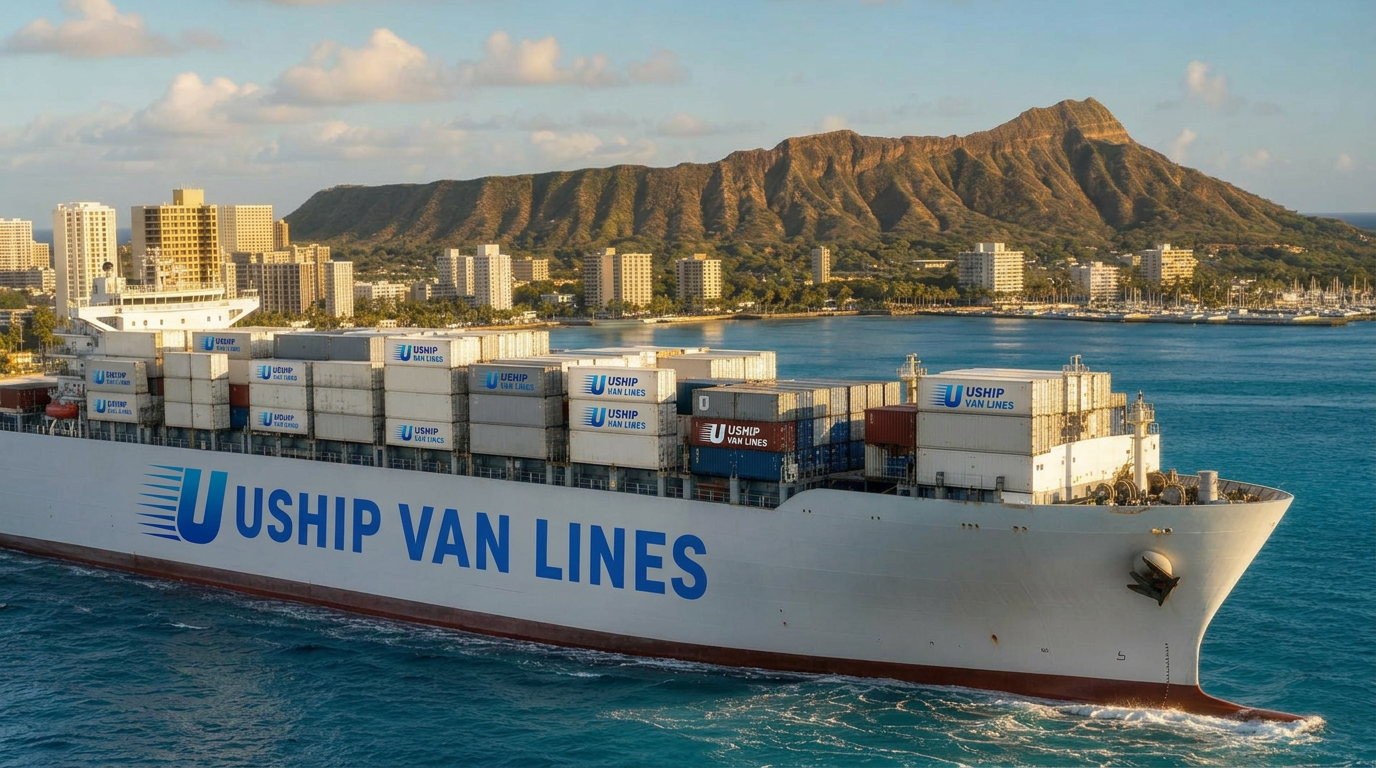
Moving from El Paso, TX to Hawaii
Relocating from the sun-baked deserts of El Paso to the tropical islands of Hawaii represents one of the most dramatic geographic and logistical moves you can make. Your belongings will travel over 3,700 miles—first overland to California, then across the Pacific Ocean in a container aboard Matson or Pasha vessels, and finally delivered to your new island home.
Best Alaska & Hawaii Movers, powered by UShip Van Lines, specializes in this complex journey. We coordinate every step: pickup in El Paso, secure containerization, ocean freight, Hawaiian port clearance, and final delivery to Oahu, Maui, the Big Island, or Kauai. Ready to start your island move? Request your free, no-obligation quote today.
Route overview
The El Paso to Hawaii Moving Route
Moving from El Paso to Hawaii requires a multi-modal approach that combines ground transportation with ocean freight. Your household goods are picked up in El Paso, transported approximately 800 miles west to either the Port of Long Beach or Port of Oakland in California, then loaded into a 20-foot or 40-foot ocean container for the 2,400-nautical-mile voyage to Honolulu. From there, items destined for neighbor islands travel via inter-island barge to Maui, Kauai, or Hilo/Kona on the Big Island.
This route presents unique challenges compared to mainland moves. El Paso's desert climate and elevation differ dramatically from Hawaii's humid, sea-level environment, requiring careful consideration of items sensitive to moisture. Texas residents often own vehicles, outdoor equipment, and household goods that require special handling or may be restricted by Hawaii's agricultural inspection laws. Understanding these differences before you pack saves time, money, and headaches.
The containerization process itself offers both security and efficiency. Your belongings share space only with your items (full container) or are carefully separated from other shipments (shared container). This consolidation point typically occurs in California, where experienced crews prepare containers to withstand ocean transit, securing items against the roll and pitch of multi-day voyages across the Pacific.
How the moving process works
How Your El Paso to Hawaii Move Works: Step-by-Step
1. Request a quote and schedule your move. Contact Best Alaska & Hawaii Movers at least 6–8 weeks before your desired move date. We'll assess your inventory, discuss prohibited items (certain plants, soil, used outdoor equipment), and provide a detailed cost estimate based on volume and services.
2. Pre-move inspection and Hawaii compliance review. Our team reviews Hawaii's strict agricultural and quarantine regulations with you. Items like potted plants, wooden furniture with bark, used gardening tools, and certain foods cannot enter Hawaii. We help you identify what stays, what ships, and what requires special treatment.
3. Professional packing and El Paso pickup. On moving day, our crew arrives at your El Paso residence, carefully packs your belongings using ocean-rated materials (reinforced boxes, moisture barriers, extra padding), and loads everything onto our truck. We complete a detailed inventory for customs and insurance purposes.
4. Ground transport to California consolidation point. Your shipment travels 800+ miles west to Long Beach or Oakland, where it's transferred to our containerization facility. Items are strategically loaded into your ocean container, with weight distributed for stability and heavy items secured to prevent shifting during the 5–7 day ocean voyage.
5. Ocean freight to Honolulu. Your container is loaded aboard a Matson or Pasha containership departing weekly from California. These purpose-built vessels maintain regular schedules year-round, though severe weather or port congestion can occasionally cause delays. Your container remains sealed throughout the journey.
6. Hawaiian port clearance and agricultural inspection. Upon arrival in Honolulu, U.S. Customs and Hawaii Department of Agriculture inspect your container. This typically takes 1–3 business days. Items flagged during inspection may require fumigation, treatment, or—in rare cases—disposal at your expense.
7. Final delivery to your island home. For Oahu destinations, delivery occurs 1–2 days after clearance. For neighbor islands, your container transfers to an inter-island barge (adding 3–5 days), then our local crew delivers to your new address. We unload, place items in rooms as directed, and remove packing materials.
Estimated moving costs
What Does an El Paso to Hawaii Move Cost?
A typical 2–3 bedroom household move from El Paso to Hawaii ranges from $6,800 to $14,500, depending on volume, services, destination island, and season. A studio or 1-bedroom move may cost $4,200–$6,500, while larger 4-bedroom homes can exceed $18,000.
Key cost drivers include:
- Shipment volume: Charged per cubic foot or by container size (20-foot containers hold roughly 1,000 cubic feet; 40-foot containers hold 2,000+ cubic feet). Full containers cost more upfront but offer better per-cubic-foot rates for larger moves.
- Destination island: Oahu delivery is least expensive. Maui, Kauai, and Big Island moves add $800–$2,200 for inter-island barge and additional handling.
- Packing services: Professional packing adds $800–$2,500 but ensures ocean-worthy protection and often qualifies for better insurance coverage.
- Vehicle shipping: Cars, trucks, and motorcycles ship separately via roll-on/roll-off (RoRo) service, adding $1,200–$1,800 per vehicle from California ports.
- Storage: If your Hawaii residence isn't ready, Honolulu-area storage costs $150–$400 per month for container storage.
- Insurance: Basic carrier liability covers $0.60/lb; full-value replacement insurance costs 1–3% of declared value and is strongly recommended for ocean moves.
- Season: Summer (June–August) and holiday periods see 10–15% higher rates due to increased demand from military and families moving during school breaks.
These are estimates based on industry averages for this route. Your actual cost depends on your specific inventory, services, and timing. Best Alaska & Hawaii Movers provides transparent, itemized quotes with no hidden fees—request yours today to get an accurate picture of your move cost.
Estimated transit times
How Long Does El Paso to Hawaii Shipping Take?
Door-to-door transit from El Paso to Oahu typically takes 18–28 days; neighbor island deliveries require 24–35 days. This timeline breaks down as follows:
- El Paso pickup to California port: 2–5 days (ground transport and containerization)
- Port staging and vessel loading: 2–7 days (waiting for next scheduled sailing)
- Ocean transit to Honolulu: 5–7 days (consistent for Matson/Pasha weekly service)
- Customs and agricultural inspection: 1–3 business days
- Oahu final delivery: 1–2 days after clearance
- Inter-island barge (if needed): Add 3–5 days for Maui/Kauai/Big Island
- Neighbor island delivery: 1–2 days after barge arrival
Factors that extend timelines:
- Holiday weeks: Thanksgiving, Christmas, and New Year periods add 3–7 days due to reduced port operations.
- Hurricane season delays: June through November can bring temporary port closures or vessel rerouting (rare but possible).
- Agricultural holds: Items requiring fumigation or additional inspection add 2–5 days.
- Neighbor island barge schedules: Smaller ports like Hilo or Kauai receive less frequent barge service than Kahului (Maui).
We recommend building flexibility into your move plan. Avoid scheduling your El Paso lease end and Hawaii lease start on back-to-back dates. A 5–7 day buffer prevents the stress and expense of temporary housing if inspection or weather delays occur.
Regional logistics
Hawaii Moving Logistics: What El Paso Residents Need to Know
Port operations and container handling: Your shipment enters Hawaii through Honolulu's Sand Island Terminal (Matson) or Pier 51A (Pasha). These facilities handle thousands of containers weekly but operate on strict schedules. Containers are unloaded, staged for inspection, cleared by agriculture officials, then released to local delivery partners. You cannot personally pick up items—licensed carriers must handle final delivery.
Hawaii agricultural restrictions: The Hawaii Department of Agriculture prohibits or restricts many common household items. Completely banned: soil, plants in soil, fresh fruits/vegetables, live animals (except with advance permits), used beekeeping equipment, certain seeds. Restricted (require inspection/treatment): wooden furniture with bark, wicker items, potted plants (must be bare-root shipped), outdoor equipment with soil residue, bicycles with dirt. Clean all outdoor gear thoroughly before packing or risk disposal at port.
Vehicle shipping considerations: Cars and trucks ship separately from household goods. Vehicles must be driven onto the vessel (RoRo method), so they need to be operational with less than 1/4 tank of fuel. Personal items are not allowed inside vehicles during ocean transport. Vehicles undergo their own agricultural inspection—clean interiors, floor mats, and wheel wells completely. Shipping a vehicle from California to Hawaii costs $1,200–$1,800 and takes 7–14 days port-to-port.
Documentation requirements: You'll need a government-issued ID, detailed inventory list (we provide), and customs declaration form (form 6059-B for personal effects). Hawaii does not charge state sales tax on personal-use household goods shipped from the mainland, but you must declare items honestly. Commercial goods, items for resale, or extremely high-value shipments may require additional customs paperwork.
Last-mile delivery challenges: Hawaii's residential areas range from Honolulu high-rises with loading dock restrictions to rural Big Island properties accessed by narrow, unpaved roads. Inform us about access limitations: steep driveways, low-clearance gates, HOA move-in restrictions (many Honolulu condos allow moves only on weekdays 8 AM–4 PM), or remote locations requiring smaller delivery trucks. We'll plan accordingly to avoid day-of-delivery surprises.
Storage options: If your Hawaii home isn't ready, we offer container storage in Honolulu ($150–$250/month) or can arrange warehouse storage on neighbor islands ($200–$400/month). Container storage is more economical for short-term needs (under 60 days); warehouse storage provides climate control for longer periods and easier access if you need to retrieve items before final delivery.
Seasonal considerations
Best Times to Move from El Paso to Hawaii
Winter (December–February): Lowest demand period means better rates and more flexible scheduling. California ports operate normally, and Hawaiian weather is pleasant (70s–80s, occasional rain). Holiday weeks (Christmas/New Year) are exceptions—book early or avoid these dates. Excellent time for budget-conscious movers.
Spring (March–May): Ideal moving window. Moderate demand, stable pricing, minimal weather disruptions. May sees increased military moves (PCS season begins), so book 8+ weeks ahead. Ocean conditions are generally calm, reducing the small risk of voyage delays.
Summer (June–August): Peak season. Families move during school breaks, military PCS season is in full swing, and prices rise 10–15%. Hurricane season officially begins June 1, though direct Hawaii impacts are rare. Book 10–12 weeks in advance. Expect potential delays due to volume and occasional tropical storms affecting Pacific shipping lanes.
Fall (September–November): Hurricane season peaks August–October, with Pacific tropical storms occasionally causing 1–3 day vessel delays or port preclosure shutdowns. Demand drops after Labor Day, bringing better rates than summer. November is excellent for moves—post-hurricane season, pre-holiday rush, and comfortable Hawaii arrival weather. Thanksgiving week itself slows port operations.
El Paso-specific considerations: Summer temperatures in El Paso exceed 100°F, making unloading physically demanding. Schedule early-morning pickups. If you're moving household electronics, climate-controlled storage between pickup and containerization (included in most professional services) prevents heat damage during the ground-transport leg.
Why choose Best Alaska & Hawaii Movers
Why Choose Best Alaska & Hawaii Movers for Your El Paso to Hawaii Move
-
Specialized Hawaii expertise: We focus exclusively on Alaska and Hawaii moves, giving us deep knowledge of USDA regulations, port procedures, island logistics, and inter-island shipping that general moving companies lack. We've navigated thousands of agricultural inspections and know how to prepare shipments for smooth clearance.
-
Transparent pricing with no hidden fees: You'll receive an itemized quote detailing every cost—ground transport, ocean freight, packing, insurance, destination charges, and any optional services. No surprise fees at delivery. We explain what's included and what's not, so you can budget confidently.
-
End-to-end coordination powered by UShip Van Lines: From your El Paso doorstep to your Hawaii living room, one team manages your entire move. We coordinate ground carriers, ocean freight partners (Matson/Pasha), customs brokers, agricultural inspectors, and island delivery crews—you have a single point of contact throughout.
-
Flexible scheduling and storage solutions: We understand Hawaii moves require timing flexibility. Whether you need temporary storage in California, Honolulu container storage while you house-hunt, or split deliveries to accommodate phased arrivals, we customize logistics to match your situation.
-
Comprehensive insurance options: Ocean moves carry unique risks. We offer full-value replacement coverage underwritten by reputable insurers, protecting your belongings against damage during ground transport, containerization, ocean voyage, and final delivery. Our team helps you choose appropriate coverage levels based on your inventory value.