
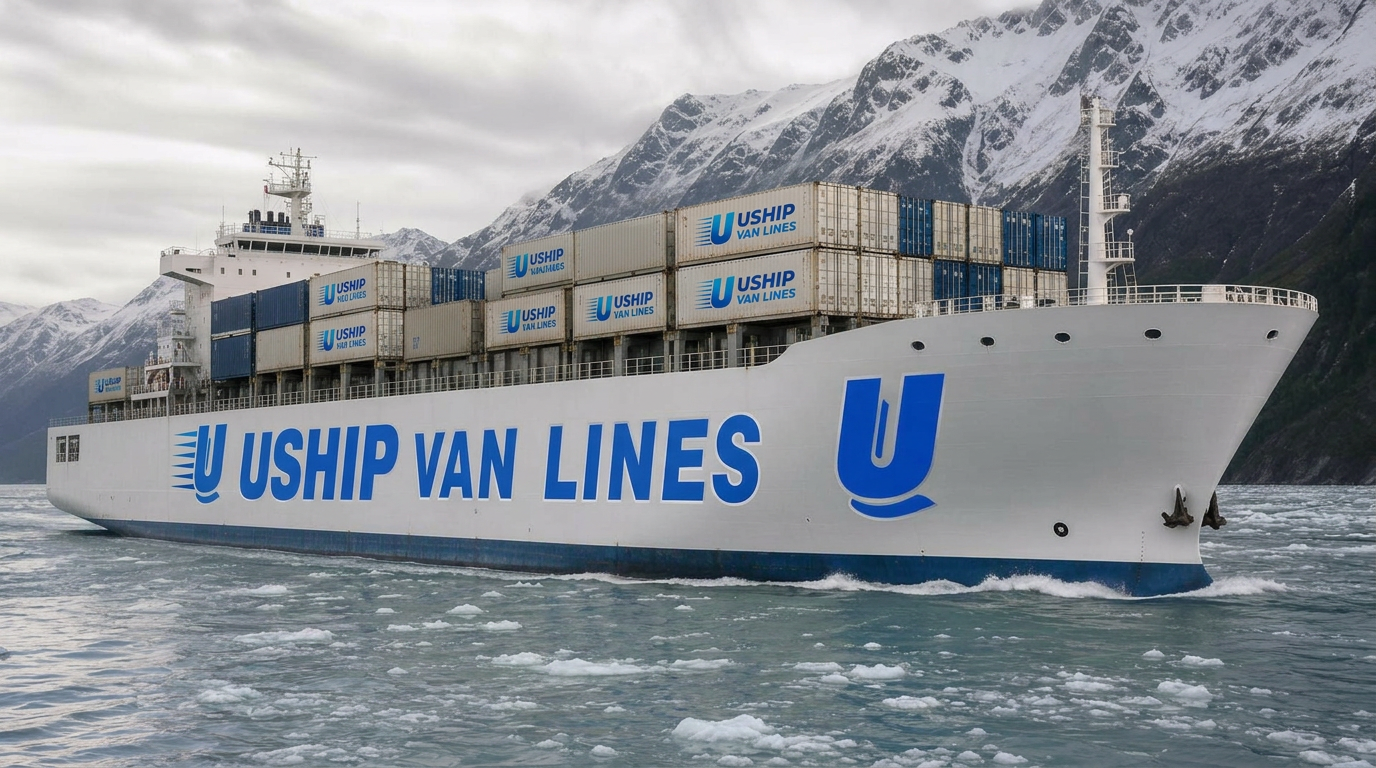
Moving from East Orange, NJ to Alaska
Moving from East Orange, New Jersey to Alaska represents one of the most logistically complex residential relocations in North America. Your household goods will travel over 3,500 miles, transitioning from the densely populated New York metro area through transcontinental trucking, Seattle-area barge consolidation, and finally navigating Alaska's unique last-mile delivery challenges to communities ranging from Anchorage to remote bush locations.
Best Alaska & Hawaii Movers, powered by UShip Van Lines, specializes in this exact route. We coordinate every step—from your East Orange pickup through West Coast barge loading and final delivery to your Alaska destination. Ready to start planning your northern adventure? Request a free quote today to receive a detailed cost breakdown and timeline tailored to your specific move.
Route overview
How Your East Orange to Alaska Move Works
The East Orange, NJ to Alaska corridor requires seamless coordination across three distinct transportation modes. Your belongings begin with pickup from your East Orange residence, then travel via long-haul trucking approximately 2,900 miles across the continental U.S. to the Port of Tacoma, Washington. This cross-country segment typically takes 5–7 days, depending on routing and consolidation schedules.
At Tacoma, your household goods are containerized and loaded aboard commercial barges operated by carriers like TOTE Maritime Alaska or Alaska Marine Lines. The barge journey from Tacoma to the Port of Anchorage covers roughly 1,400 nautical miles and runs on weekly schedules year-round, with sailing times of approximately 60–72 hours. Upon arrival in Anchorage, your shipment clears the port and transfers to Alaska-based carriers for final delivery.
Last-mile delivery varies dramatically based on your destination. Anchorage, Wasilla, and Eagle River deliveries may occur within 1–3 days of port arrival. Fairbanks requires additional trucking up the Parks Highway (8–10 hours). Kenai Peninsula, Southeast Alaska communities, or bush locations accessible only by ferry or air cargo introduce additional complexity, transit time, and cost. Understanding your specific destination's accessibility is critical to accurate planning and budgeting.
How the moving process works
Step-by-Step: Your East Orange, NJ to Alaska Move
1. Initial Consultation & Inventory Assessment We conduct a detailed inventory of your household goods, either virtually or in-person at your East Orange home. This assessment determines container requirements, identifies items requiring special handling (firearms, alcohol, hazardous materials are restricted on Alaska barges), and establishes your delivery destination's accessibility. We'll discuss vehicle shipping options separately, as cars typically ship on the same TOTE Maritime vessels.
2. Pre-Move Preparation & Packing Professional packing is strongly recommended for Alaska moves due to the extended transit time and multiple handling points. We can provide full-service packing 1–2 days before your scheduled pickup, using marine-grade materials suitable for barge transport. You'll need to separate items that cannot ship (propane, ammunition, perishables) and prepare essential-bag items for air travel, as your household goods will be in transit 2–4 weeks.
3. East Orange Pickup & Cross-Country Transport Our crew loads your belongings in East Orange, typically placing them in a shared container or dedicated truck space. The transcontinental journey follows I-80 or I-90 west through Pennsylvania, Ohio, Indiana, Illinois, Iowa, Nebraska, Wyoming, and into Washington State. Your shipment may consolidate with other Alaska-bound loads at our Seattle-area warehouse.
4. Tacoma Port Processing & Barge Loading At the Port of Tacoma, your goods are transferred into 20-foot or 40-foot marine containers and loaded onto the next available Alaska-bound barge. TOTE Maritime operates regular sailings (typically 2–3 per week), while Alaska Marine Lines serves the same route. Weather and port operations occasionally cause 1–2 day delays during winter months.
5. Ocean Transit to Anchorage The barge sails north through the Inside Passage and Gulf of Alaska, arriving at the Port of Anchorage 60–72 hours after departure. Your shipment remains containerized throughout, protecting it from saltwater exposure. Severe weather in the Gulf (particularly October–March) can extend sailing times by 6–12 hours.
6. Alaska Port Clearance & Last-Mile Delivery After clearing Anchorage port operations, your container is stripped and goods are loaded onto Alaska-registered delivery trucks. Road-accessible locations (Anchorage, Mat-Su Valley, Kenai, Fairbanks) receive direct delivery. Remote communities may require barge transfer to smaller Alaska Marine Highway vessels, bush plane cargo flights, or seasonal ice-road access.
7. Final Delivery & Unpacking Our Alaska partners deliver to your new residence, unload all items, and perform a condition inspection with you. We offer unpacking services and debris removal for an additional fee. Any damage claims should be noted immediately on the delivery inventory sheet, as Alaska's remote location makes later verification difficult.
Estimated moving costs
What to Expect: Cost Breakdown
A typical 2–3 bedroom household move from East Orange, NJ to Alaska generally ranges from $8,500 to $16,000, depending on volume, destination accessibility, and service level. This estimate assumes approximately 8,000–12,000 pounds (the contents of a 1,400–2,000 square foot home) and delivery to road-accessible Alaska locations like Anchorage, Wasilla, or Fairbanks.
Primary cost drivers include:
- Volume and weight: Charges are typically calculated per cubic foot or per pound. Alaska moves average $1.10–$1.85 per pound for full-service door-to-door transport.
- Destination accessibility: Anchorage and Mat-Su Valley represent the baseline. Fairbanks adds $800–$1,500. Kenai Peninsula coastal communities add $600–$1,200. Southeast Alaska (Juneau, Ketchikan, Sitka) requires additional barge transfers, adding $2,000–$4,000. True bush communities accessible only by air can double total costs.
- Barge schedules and timing: Peak summer months (May–August) see higher demand and slightly elevated rates. Winter moves (November–March) may qualify for 5–10% discounts but face weather-related delay risks.
- Packing services: Full professional packing adds $1,200–$2,500 for a 3-bedroom home. Partial packing (fragiles, artwork, electronics) runs $400–$800.
- Vehicle shipping: Cars typically ship on the same TOTE Maritime barges. Tacoma to Anchorage vehicle transport costs $1,800–$2,600 per standard sedan, with delivery to your Alaska residence adding another $200–$600.
- Storage: If your Alaska residence isn't ready, Anchorage-area storage costs $150–$300 per month for a typical household.
- Insurance coverage: Basic carrier liability covers $0.60 per pound. Full replacement value insurance adds 1–2% of declared value (recommended for Alaska's longer transit times).
These figures represent industry averages for this route. Your actual quote will reflect your specific inventory, destination, and selected services. We never guarantee prices without a detailed assessment—request your free quote for accurate pricing based on your unique move parameters.
Estimated transit times
Door-to-Door Timeline: East Orange to Alaska
Total transit time from your East Orange pickup to final Alaska delivery typically ranges from 18 to 35 days, with significant variation based on your specific destination and seasonal factors.
Segment-by-segment breakdown:
- East Orange to Tacoma (overland): 5–7 days for direct truck transport, or 7–10 days if your shipment consolidates with other Alaska-bound loads at our Seattle-area warehouse.
- Tacoma port processing: 1–4 days between truck arrival and barge departure, depending on sailing schedules and how closely we time your delivery to the port.
- Ocean transit (Tacoma to Anchorage): 3–4 days of sailing time under normal conditions. Gulf of Alaska weather (especially autumn and winter storms) can add 6–18 hours.
- Anchorage port clearance: 1–2 days for container offloading, customs processing (if applicable), and transfer to local delivery carriers.
- Last-mile Alaska delivery: Same-day to 3 days for Anchorage metro area. 3–5 days for Mat-Su Valley or Kenai Peninsula. 5–7 days for Fairbanks. Southeast Alaska communities add 7–14 days for secondary barge connections. Bush locations vary widely (1–6 weeks) based on seasonal access.
Planning your timeline: Book your move 6–8 weeks in advance for summer relocations (peak season) or 4–6 weeks for winter moves. Build buffer time into your Alaska arrival plans—never schedule your household goods delivery to coincide exactly with your personal arrival date. Most East Orange to Alaska customers fly to their destination and stay in temporary housing or hotels for 3–7 days while awaiting delivery. The Port of Anchorage operates year-round, but winter weather introduces greater unpredictability.
Regional logistics
Alaska-Specific Moving Logistics
Port and Barge Operations Your shipment will transit through the Port of Tacoma (specifically the Husky Terminal or Alaska Terminal) and arrive at the Port of Anchorage on Knik Arm. These facilities handle container cargo year-round, though winter ice occasionally requires icebreaker assistance in Anchorage (adding 0–2 days). TOTE Maritime Alaska operates the largest Alaska freight vessels (M/V Midnight Sun and M/V North Star), while Alaska Marine Lines serves the same route with smaller but more frequent sailings. We coordinate timing to match your schedule with the most efficient sailing.
Vehicle Shipping Coordination Most customers ship 1–2 vehicles alongside household goods. Cars are driven into the same barge's vehicle deck and delivered to Anchorage separately from household goods (vehicles typically clear the port 1–2 days before container freight). You'll need to prepare your vehicle: no more than 1/4 tank of gas, no personal items inside, clean exterior for customs inspection. Alaska requires vehicle registration within 90 days of establishing residency, and you'll need to complete this at an Alaska DMV office with your shipping documents.
Restricted and Prohibited Items Alaska barges prohibit or restrict numerous items due to maritime safety regulations: propane tanks (even if "empty"), ammunition, firearms without proper documentation, hazardous materials, plants (Alaska's strict agricultural inspection), and perishable food. Alcohol is limited to personal-use quantities and may require additional paperwork. We provide a complete restricted-items checklist during your consultation. Violating these restrictions can result in your entire shipment being held at port pending inspection.
Last-Mile Delivery Challenges Alaska's road system is limited—only 30% of communities connect to the contiguous road network. If you're moving to a location off the road system, your shipment will require secondary transport:
- Alaska Marine Highway: State ferry system serving Southeast and coastal communities (add 7–14 days and $1,500–$3,500)
- Bush air cargo: Small aircraft to villages (very expensive, typically $2–$5 per pound beyond base costs)
- Seasonal access: Some communities receive freight only during specific seasons (winter ice roads, summer barges)
Anchorage, Eagle River, Wasilla, Palmer, Fairbanks, Kenai, Soldotna, Homer, and Seward all have year-round road access and represent the most cost-effective destinations.
Documentation and Customs While Alaska is a U.S. state, the Jones Act governs maritime shipping, and some carriers require detailed inventory documentation similar to international moves. Active-duty military members have specific entitlements and paperwork requirements. If you're importing goods purchased outside the U.S. in the past year, or if you're a new Alaska resident with international purchases, mention this during consultation—additional customs declarations may be necessary.
Seasonal considerations
When to Move: Alaska Seasonal Factors
Summer (May–September): Peak Season Summer represents the busiest moving period for Alaska relocations, driven by favorable weather, school schedules, and the State of Alaska's traditional PCS (permanent change of station) season for military and government workers. Barge schedules run most frequently, and road conditions throughout Alaska are optimal. However, expect 15–20% higher rates due to demand, and book 8–10 weeks ahead to secure preferred dates. Last-mile delivery to remote areas is easiest during these months, as most seasonal roads, ferries, and air services operate at full capacity.
Fall (October–November): Shoulder Season Autumn offers moderate pricing (5–10% below summer peaks) and still-reliable barge schedules, though Gulf of Alaska weather becomes increasingly unpredictable. Early snow can affect Parks Highway travel to Fairbanks and close some remote access roads by mid-November. This is an excellent window for Anchorage, Mat-Su, and Kenai Peninsula moves if you're flexible on exact delivery dates and prepared for weather delays of 2–5 days. Southeast Alaska sees increased rainfall but remains accessible.
Winter (December–March): Off-Season Rates Winter moves to Alaska offer the lowest rates—often 10–15% below summer pricing—but introduce the highest weather risk. Gulf of Alaska storms can delay barge departures by 1–3 days, and the Parks Highway to Fairbanks occasionally closes for 6–24 hours during severe weather. Anchorage and Mat-Su deliveries remain reliable, as these areas maintain road infrastructure year-round. Bush Alaska and some remote Southeast communities become difficult or impossible to reach, with some locations accepting freight only by ski-plane or waiting until spring ice breakup. If you're moving to Anchorage and can tolerate potential 3–7 day weather delays, winter moves offer excellent value.
Spring (April–May): Breakup & Transition Late April and May mark Alaska's "breakup" season—when winter ice melts but summer operations haven't fully resumed. River ice on the Yukon and Kuskokwim can temporarily block barge access to western Alaska communities. Many unpaved Alaska roads become impassable mud for 2–4 weeks. However, Anchorage-area moves face minimal issues, and this period offers moderate pricing as companies prepare for summer peak season. Barge schedules begin increasing frequency in late April.
Why choose Best Alaska & Hawaii Movers
Why Choose Best Alaska & Hawaii Movers for Your East Orange to Alaska Move
-
Alaska Specialists: We focus exclusively on Alaska and Hawaii relocations, giving us deep expertise in barge logistics, port operations, and Alaska's unique last-mile delivery challenges that general moving companies can't match. Our team understands the specific requirements of the East Orange to Anchorage corridor.
-
Single-Point Coordination: You work with one dedicated move coordinator from your initial East Orange quote through final Alaska delivery. We manage the handoffs between long-haul trucking, port operations, barge carriers, and Alaska delivery partners—you never navigate multiple vendors independently.
-
Transparent Pricing: We provide detailed, itemized quotes breaking down every cost component—overland transport, barge fees, last-mile delivery, insurance options, and any destination-specific surcharges. No hidden fees, no surprise charges upon delivery.
-
UShip Van Lines Partnership: Powered by UShip Van Lines' nationwide carrier network, we combine boutique Alaska expertise with enterprise-level resources, technology, and buying power. This partnership delivers better pricing and more flexible scheduling than small independent operators.
-
Flexible Service Levels: Choose full-service packing and white-glove delivery, or save costs with self-pack options and basic delivery. We tailor service levels to your budget and needs rather than forcing one-size-fits-all packages.
-
Real-Time Tracking: Monitor your shipment's progress from East Orange pickup through barge transit to Alaska delivery via our online portal. You'll receive proactive updates at each milestone, with immediate notification of any weather delays or schedule changes.