
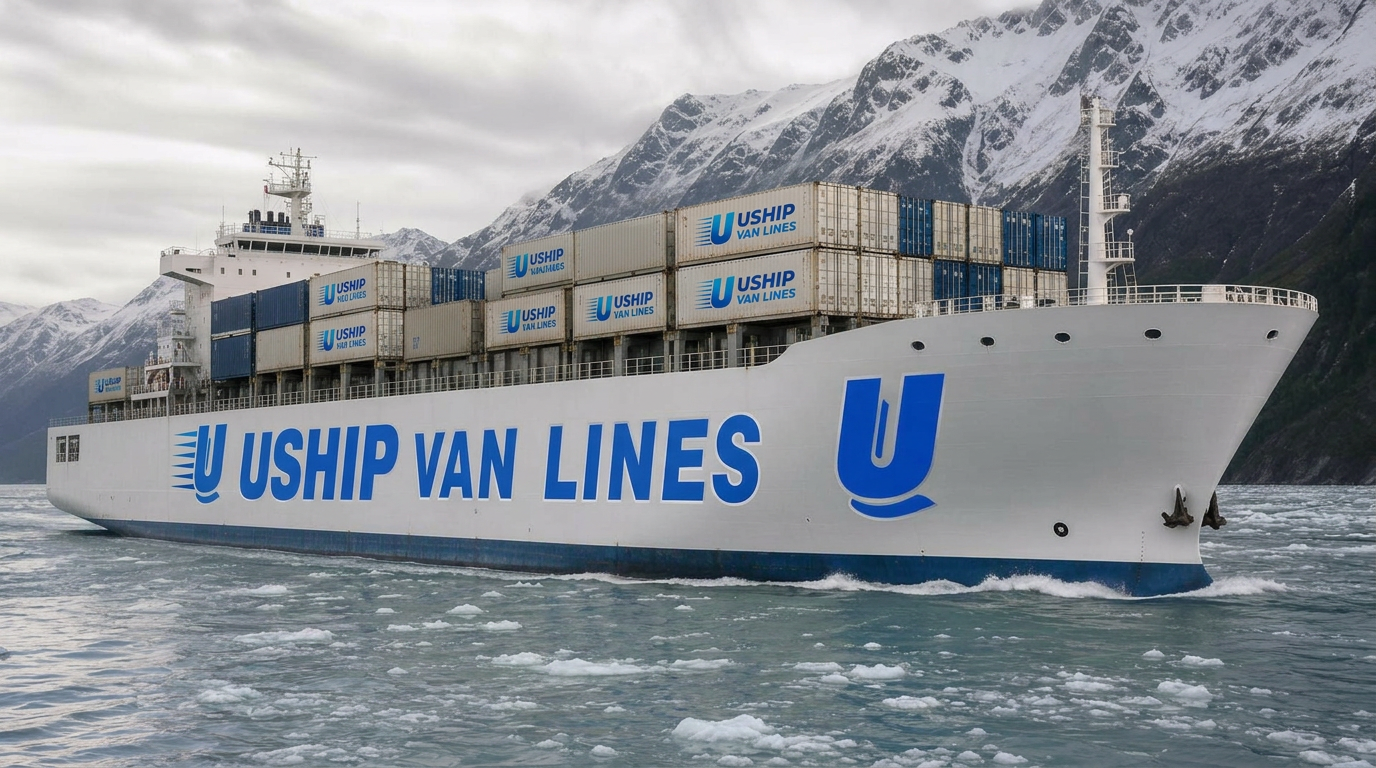
Moving from Dallas, TX to Alaska
Moving from Dallas, TX to Alaska means trading sprawling highways and Texas heat for glacier views, endless summer daylight, and a rugged frontier lifestyle. Whether you're relocating to Anchorage for work, retiring to the Mat-Su Valley, or chasing adventure in Fairbanks, this cross-country journey requires careful planning—especially when your belongings must travel thousands of miles overland and then cross the Pacific by barge.
Best Alaska & Hawaii Movers, powered by UShip Van Lines, specializes in these complex long-haul moves. We coordinate ground transport from Dallas to Pacific Northwest ports, barge shipping to Alaska, and last-mile delivery to your doorstep—even in remote areas. Ready to start planning? Request your free, no-obligation quote today.
Route overview
Dallas to Alaska: The Journey North
Your household goods will begin their journey in Dallas, traveling northwest through Oklahoma, Kansas, and Colorado before crossing the Rockies into the Pacific Northwest. Most shipments route through Tacoma or Seattle, where containers are loaded onto specialized Alaska Marine Highway System (AMHS) barges or commercial shipping lines bound for the Port of Anchorage or other coastal hubs.
From the port, your belongings are off-loaded and transferred to Alaska-based carriers for final delivery. If you're moving to Anchorage, Wasilla, or Eagle River, this last leg is relatively straightforward. Moves to Fairbanks add 350+ miles of interior highway travel. Remote communities in the Kenai Peninsula, Southeast Alaska, or the bush may require additional barge legs, air freight, or specialized winter-road transport.
End-to-end distance from Dallas to Anchorage is roughly 3,400 miles, making this one of the longest domestic moving routes in the United States.
How the moving process works
How Your Dallas-to-Alaska Move Works
-
Free In-Home or Virtual Survey: We assess your inventory, note any oversized items (kayaks, ATVs, hunting gear), and provide a detailed quote covering all legs of the journey.
-
Packing and Loading in Dallas: Professional movers pack fragile items, disassemble furniture, and load your belongings into a climate-controlled container or dedicated truck compartment. Texas heat means careful handling of electronics and temperature-sensitive goods.
-
Ground Transport to Pacific Northwest Port: Your shipment travels 2,100+ miles to Tacoma or Seattle over 4–7 days. The container is staged at a bonded warehouse pending barge schedules.
-
Barge Shipping to Alaska: Containers are loaded onto oceangoing barges. Anchorage sailings run year-round but are less frequent November–March. Transit time is 5–10 days depending on weather and routing.
-
Port Clearance and Transfer: Upon arrival in Anchorage (or Whittier/Seward for some shipments), containers clear customs-style inspections and are transferred to Alaska trucking partners.
-
Last-Mile Delivery: Your goods are delivered to your new home. Interior moves (Fairbanks, Delta Junction) or rural addresses may require additional transit days and specialized equipment.
-
Unpacking and Setup: Full-service options include unpacking, furniture reassembly, and debris removal—especially valuable after a multi-week journey.
Estimated moving costs
What Does a Dallas-to-Alaska Move Cost?
For a typical 2–3 bedroom household (7,000–10,000 lbs), expect total costs between $8,500 and $16,000. Studio or 1-bedroom moves may start around $5,000; large 4+ bedroom homes can exceed $20,000.
Key cost drivers include:
- Distance and fuel surcharges: 3,400+ miles of ground transport plus ocean freight.
- Barge rates: Seasonal pricing fluctuates. Summer (May–September) is peak season with higher demand and rates.
- Container type: Full-container loads (20' or 40') offer better per-pound pricing than shared/consolidated shipments.
- Packing services: DIY packing saves money but increases risk. Professional packing for fragile items, Alaska-bound winter gear, and electronics is often worth the investment.
- Last-mile complexity: Delivery to Anchorage is straightforward. Fairbanks, remote Mat-Su communities, or off-road-system towns add significant expense.
- Vehicle shipping: Driving the Alaska Highway from Dallas is a serious undertaking. Shipping a car or truck via the same barge adds $1,500–$3,500.
- Storage: Barge schedules may require short-term warehousing in Tacoma or Anchorage (typically $100–$300/week).
We provide transparent, itemized quotes with no hidden fees. Final cost depends on your exact inventory and destination, so request a personalized estimate to plan your budget accurately.
Estimated transit times
How Long Does It Take?
Door-to-door transit from Dallas to Alaska typically takes 3–5 weeks, broken down as follows:
- Packing and loading in Dallas: 1–2 days
- Ground transport to Tacoma/Seattle: 5–7 days
- Port staging and barge wait: 3–10 days (longer in winter or if you miss a sailing)
- Barge crossing to Anchorage: 5–10 days (weather-dependent)
- Port clearance and transfer: 1–3 days
- Final delivery to your Alaska address: 1–2 days for Anchorage-area; 3–5 days for Fairbanks or remote zones
Expedited options may shave 5–7 days off the timeline by prioritizing ground transport and guaranteed barge slots, but expect premium pricing. Off-season moves (October–April) sometimes face delays due to reduced barge frequency and winter road conditions on the Alaska Highway.
Booking 6–8 weeks in advance ensures you secure optimal barge schedules and avoid rush fees.
Regional logistics
Alaska-Specific Logistics You Need to Know
Ports and Routing: Most Dallas shipments route through the Port of Tacoma, with containers loaded onto Totem Ocean Trailer Express (TOTE) or Alaska Marine Highway System barges. Some shipments use Seattle or even Prince Rupert, BC, depending on final destination.
Customs and Inspections: Although Alaska is a U.S. state, Canadian routing (if used) requires temporary customs paperwork. Agricultural inspections at Alaska ports are strict—no untreated wood pallets, no soil on outdoor gear, and plant/seed restrictions apply.
Vehicle Shipping: Many families ship one vehicle and drive another up the Alaska Highway. Barge auto transport from Tacoma to Anchorage takes the same 5–10 days as household goods. Vehicles must be clean (no dirt/mud), under 1/4 tank of fuel, and free of personal items.
Furniture and Oversized Items: Alaska homes often feature large freezers, gun safes, snowmobiles, and hunting equipment. Ensure your mover inventories these accurately. Some rural deliveries require items to be transferred to smaller trucks or even bush planes.
Last-Mile to Remote Areas: Kodiak, Sitka, Juneau, Ketchikan, and bush communities are not on the road system. Shipments require additional barge legs or air freight. Costs and timelines increase significantly—sometimes doubling. Always specify your exact zip code when requesting quotes.
Storage Options: Warehousing is available in Tacoma (pre-barge) and Anchorage (post-arrival). This is useful if your housing isn't ready or if you're staging a multi-phase move (e.g., summer goods now, winter/spring goods later).
Seasonal considerations
Best Times to Move from Dallas to Alaska
Spring (April–May): Ice breakup in coastal Alaska can delay barge arrivals. Ground transport through the Rockies may encounter late-season snowstorms. Lower demand means competitive pricing.
Summer (June–August): Peak moving season. Barge sailings are frequent, weather is stable, and last-mile delivery is easiest. Prices are at their highest. Book early—slots fill fast as students, military families, and professionals relocate.
Fall (September–October): Shoulder season offers moderate pricing and still-reliable barge schedules. September is ideal: calm seas, autumn colors on the Alaska Highway (if you're driving separately), and fewer crowds. By late October, barge frequency drops.
Winter (November–March): Lowest rates and minimal competition for slots. However, barge sailings to Anchorage run every 2–3 weeks instead of weekly. Severe weather can delay departures or extend crossing times. Interior Alaska deliveries may face icy roads, sub-zero temperatures, and limited daylight. Not recommended for time-sensitive moves, but budget-conscious clients can save 15–25%.
Pro tip: If you have flexibility, target late May or early September for the best balance of weather, cost, and schedule reliability.
Why choose Best Alaska & Hawaii Movers
Why Best Alaska & Hawaii Movers?
- Alaska Specialists: We focus exclusively on non-contiguous moves. Our team understands barge schedules, port logistics, and Alaska's unique delivery challenges—experience you won't find with generic long-distance movers.
- Transparent Pricing: Itemized quotes covering every leg (ground, barge, last-mile). No surprise fees, no hidden fuel surcharges added later.
- Comprehensive Coordination: One point of contact manages your Dallas pickup, Tacoma port transfer, barge booking, and Alaska delivery. You're not juggling multiple vendors.
- Full-Service or Flexible Options: Choose white-glove packing and unpacking, or save money by packing yourself and hiring us for transport only. We accommodate partial loads, vehicle shipping, and storage as needed.
- Powered by UShip Van Lines: Backed by a trusted logistics network with decades of experience in complex, multi-modal moves. Our vetted carriers meet rigorous safety and service standards.
Moving from Dallas, TX to Alaska: A Complete 2026 Guide
Households leaving Dallas, TX for Alaska are part of a measurable migration trend, and the moving market on this corridor has adjusted pricing, capacity, and delivery windows accordingly.
This corridor combines a roughly 1,678-mile linehaul with an ocean leg, which means you're hiring a carrier who can manage both the cross-country trucking and the barge or container handoff without dropping the ball at either end.
Below you'll find the data you actually need — pricing by shipment size, delivery timing, regional W cost factors, route-specific challenges, and money-saving tactics that work on this exact corridor.
How Much Does Moving from Dallas, TX to Alaska Cost?
Quotes for this route are calculated from three inputs: the weight of your shipment, the linehaul mileage, and the calendar date you pick up. The route is roughly 1,678 miles of land travel plus the ocean leg, so quotes break into linehaul + ocean container + port handling rather than a single per-mile rate.
Studios and one-bedrooms typically run $4,200–$6,700, two-bedrooms land between $7,600–$12,200, three-bedrooms are usually $11,800–$19,000, and four-bedroom homes range $16,400–$26,300. Ocean freight, port handling, and final-mile delivery in Alaska or Hawaii add a structural premium of roughly 30–45% over a comparable lower-48 long-haul. Avoiding the May–August peak alone can knock 15–25% off your final invoice.
How Long Does the Dallas, TX to Alaska Move Take?
Plan on 12–21 business days between pickup and final delivery on the Dallas, TX-to-Alaska route.
On Alaska and Hawaii lanes, the timing is anchored by the weekly barge or steamship schedule. Miss the cutoff at the port of origin and your shipment waits a full week for the next sailing — which is why the carriers who run this corridor frequently are worth a small premium. Drivers cap legal hours at 11 per day, and the ocean carrier needs containers staged at the port 24–48 hours before sailing, so the published transit window already accounts for both legs plus port dwell. If you need a guaranteed delivery date, ask for "expedited" or "exclusive use" pricing — it's 30–60% more, but the truck goes straight to your destination.
Cost Factors Explained
Six variables drive 90% of the price difference between two quotes for the same Dallas, TX-to-Alaska move.
Shipment weight. Carriers charge by the pound on long hauls. A 4,000-lb load vs a 6,500-lb load is the single biggest swing factor in your final bill.
Distance and routing. Linehaul mileage is fixed, but routes that detour through hub cities for consolidation can add 100–200 miles of billable distance.
Packing services. Full-pack runs $600–$2,200 on top of the move; partial-pack (kitchen + breakables only) is usually $200–$700.
Season and date. Summer and end-of-month dates carry a 15–35% premium over off-peak windows.
Specialty items. Pianos, gun safes, pool tables, and large appliances typically add $200–$700 each.
Access. Long carries (>75 ft from truck), stairs without elevator, and shuttle requirements at either end add $150–$1,200 in real-world charges.
Tips Specific to the Dallas, TX to Alaska Route
After thousands of moves on this corridor, a few patterns repeat for the customers who pay the least and have the smoothest delivery.
Book 6–10 weeks ahead. Ocean carriers have fixed weekly sailings and consolidated container space fills up — last-minute bookings either pay an exclusive-use premium or wait a week. Mid-September through May offers the lowest pricing window for this corridor. Push for binding (not non-binding) estimates. Binding pricing locks the carrier in; non-binding lets them re-weigh on delivery day and bill more. Reduce shipment weight aggressively. Every 1,000 lbs you cut typically trims $400–$900 off this route's final cost. Sell, donate, or trash anything you don't truly want at the destination.
Why Mover Quotes Vary So Much on This Route
Two licensed carriers can quote the same Dallas, TX-to-Alaska move and differ by $2,000+. That gap is rarely random.
Carrier vs broker. Brokers post your move to a load board and the cheapest carrier accepts — you get whoever's available, not whoever's best. Asset-based carriers own their trucks and crews and price for direct accountability.
Trailer fill on this route. Carriers running regular freight on the Dallas, TX-to-Alaska corridor will quote lower because they're filling trailer space they're already paying to move.
Estimate type. Non-binding quotes are intentionally low to win the booking, then re-weighed and re-priced at pickup. Binding quotes are firm.
Insurance and valuation. Released-value coverage (60¢/lb) is included free; full-value protection adds 1–2% of declared value. Quotes that don't itemize valuation are hiding the upsell.
When comparing quotes, ask each company how often they actually run trucks on this route. The answer separates carriers who price it as a normal lane from those who price it as a one-off.
How to Compare Movers for the Dallas, TX to Alaska Route
Comparing movers properly is less about price and more about making the quotes apples-to-apples.
1. Send the same inventory. Use a single inventory list (room-by-room) and send it to every carrier you contact.
2. Demand a binding estimate. Ask explicitly: "Is this binding or non-binding?" Anything non-binding can be revised on pickup day after the truck weighs your shipment.
3. Verify FMCSA registration. Look up the USDOT and MC numbers on the FMCSA SAFER database. You're checking for active operating authority and a complaint history.
4. Compare line items. Linehaul, packing, valuation, fuel, and accessorials should each appear as a separate line. A flat lump-sum quote hides where the markup is.
5. Read deposit terms. A reputable carrier asks for 0–25% down and never demands cash. Anyone asking for 50%+ upfront or wire transfer only is a red flag.