
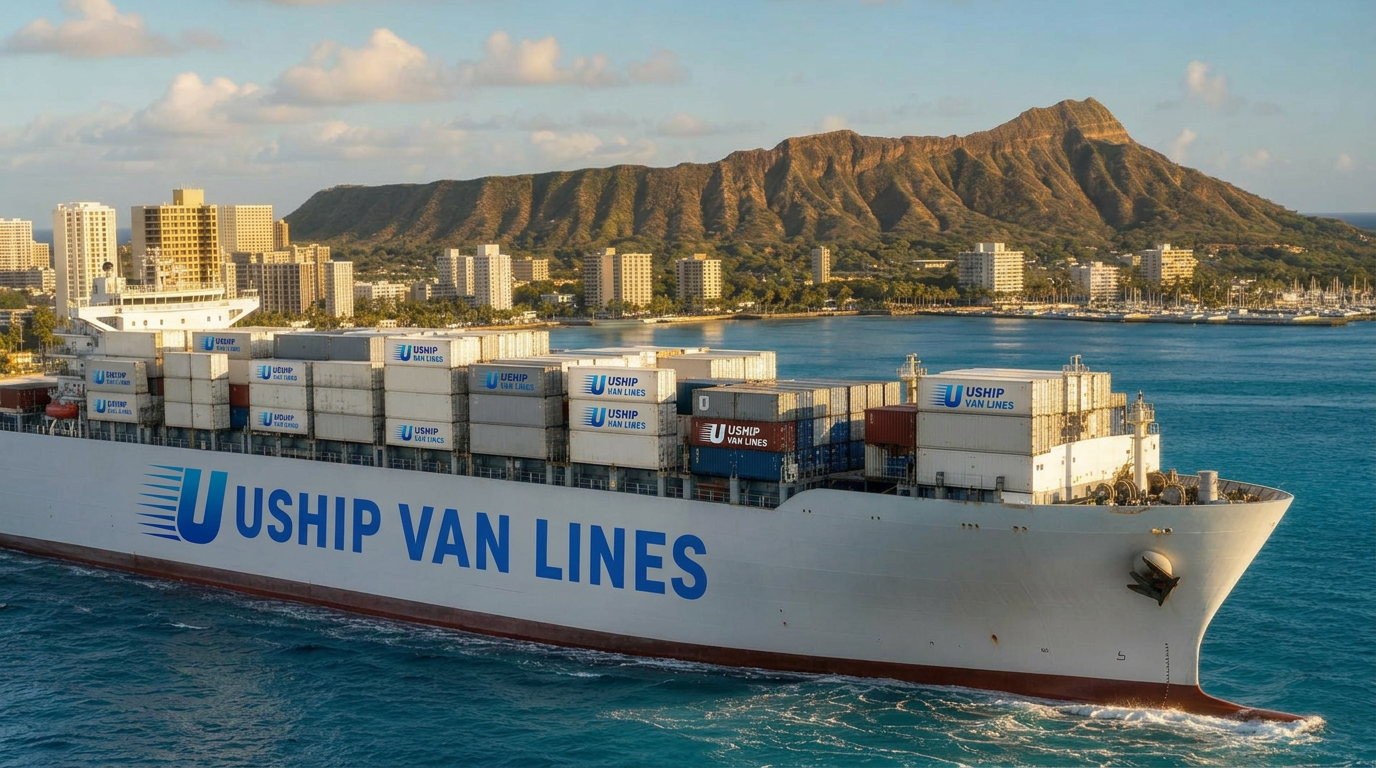
Moving from Cambridge, MA to Hawaii
Moving from Cambridge, Massachusetts to Hawaii represents one of the most dramatic relocations in the United States—trading historic New England streets for Pacific island living. This transcontinental and transoceanic move requires careful coordination of ground transportation across the mainland, ocean container shipping from West Coast ports, and final delivery to your Hawaiian island destination.
Best Alaska & Hawaii Movers, powered by UShip Van Lines, specializes in these complex multi-leg relocations. We coordinate the entire journey from your Cambridge doorstep to your new island home, managing ground transport to West Coast ports, ocean container logistics via Matson or Pasha Lines, and inter-island connections if you're moving beyond Oahu. Ready to start planning your island move? Request a detailed quote today.
Route overview
Understanding the Cambridge to Hawaii Moving Route
Your belongings will travel approximately 5,100 miles from Cambridge to Honolulu, combining cross-country ground transportation with ocean freight. The journey begins with loading your household goods in Cambridge, followed by a 3,000-mile truck journey to West Coast departure ports—typically Long Beach or Oakland, California. From there, your items are loaded into ocean containers for the 2,400-mile Pacific crossing to Honolulu, with potential inter-island shipping if your final destination is Maui, Kauai, or the Big Island.
This route requires navigating both mainland and island logistics. Massachusetts has no direct ocean container service to Hawaii, so West Coast consolidation is essential. Most movers coordinate container loading at Long Beach or Oakland terminals, where cargo is transferred to Matson Navigation or Pasha Hawaii vessels operating weekly service to the islands. Understanding this multi-stage process helps you plan realistic timelines and prepare for the unique requirements of island shipping, from agricultural inspections to weight-based pricing.
How the moving process works
Step-by-Step: How Your Cambridge to Hawaii Move Works
-
Initial survey and inventory – Your moving team conducts a virtual or in-home assessment of your Cambridge residence, creating a detailed inventory. This is critical for ocean moves, as pricing is typically based on cubic footage or container share, and prohibited items (plants, certain foods, soil) must be identified early.
-
Packing and preparation – Professional packing is strongly recommended for ocean moves. Items are secured for both road vibration and potential ocean swells. All wooden furniture and materials must meet USDA requirements—either fumigated or made of manufactured wood—to prevent invasive species introduction to Hawaii.
-
Ground transportation to West Coast port – Your household goods are loaded onto a truck in Cambridge and transported cross-country to Long Beach or Oakland. This leg typically takes 5–7 days, with your items stored briefly at a port-area warehouse while awaiting container loading.
-
Container consolidation and loading – Your belongings are loaded into a shared ocean container (most residential moves) or exclusive-use container (larger moves). Consolidated shipments are cost-effective but require precise coordination to match container sailing schedules.
-
Ocean transit to Honolulu – Containers are loaded onto Matson or Pasha vessels for the 5–7 day Pacific crossing. Ships depart weekly, but your specific sailing depends on container consolidation timing. Items clear USDA agricultural inspection and customs upon arrival.
-
Inter-island shipping (if needed) – If your destination is Maui, Kauai, the Big Island, or Molokai, containers are transferred to inter-island barges operated by Young Brothers or similar carriers. This adds 2–5 days depending on island and barge schedules.
-
Final delivery and unloading – Once cleared through Honolulu (or neighbor island port), your items are loaded onto a local delivery truck and transported to your new Hawaiian residence. Your team unpacks and places items according to your instructions, completing the 5,000+ mile journey.
Estimated moving costs
What Does a Cambridge to Hawaii Move Cost?
Budget $8,500–$16,000 for a typical 2–3 bedroom household moving from Cambridge to Hawaii. A smaller 1-bedroom apartment with minimal furniture might cost $5,500–$8,000, while a large 4-bedroom home with extensive belongings can exceed $20,000. These figures include ground transportation to the West Coast, ocean container shipping, and delivery to your Hawaiian residence.
Key cost drivers include cubic footage (Hawaii moves are priced by space, not weight), container type (shared vs. exclusive-use), destination island (Honolulu is least expensive; neighbor islands add $800–$2,000 for inter-island barge fees), and packing services (professional packing adds $1,200–$3,000 but is critical for ocean moves). Additional costs include vehicle shipping ($1,400–$1,900 per car via Roll-on/Roll-off service), storage if timing between departure and arrival doesn't align ($150–$400/month), and specialty items like pianos or artwork requiring custom crating.
Seasonal pricing fluctuates significantly. Summer months (June–August) see 15–25% higher rates due to peak moving demand and military relocation season. Booking in fall or winter often yields better pricing and more flexible scheduling. We never guarantee prices without a detailed inventory review—every move's cost depends on your specific volume, service level, and timing.
Estimated transit times
How Long Does Cambridge to Hawaii Shipping Take?
Plan for 21–35 days door-to-door from your Cambridge pickup to delivery in Hawaii. This timeline breaks down into distinct legs: 5–7 days for ground transportation from Cambridge to Long Beach or Oakland, 3–10 days for container consolidation and port processing (highly variable based on sailing schedules and container fill rates), 5–7 days for ocean transit to Honolulu, and 2–5 days for customs clearance, agricultural inspection, and final delivery.
If you're moving to a neighbor island, add 2–5 additional days for inter-island barge service and ground delivery. Maui and Kauai typically see faster inter-island connections than the Big Island's Hilo port. Molokai has the most limited barge service and can add up to 7 days.
Timeline factors include container consolidation speed (shared containers wait for sufficient cargo to fill economically), seasonal port congestion (summer and pre-holiday periods create delays), sailing frequency (weekly departures mean missing one sailing adds 7 days), and agricultural inspection volume (mainland shipments face thorough USDA review for pest/disease risks). Rush service is rarely available for ocean moves—the physics of weekly ship departures and port operations create hard time floors. Plan your Cambridge departure and Hawaii arrival dates with buffer time for unexpected delays.
Regional logistics
Hawaii-Specific Moving Logistics You Must Know
Port operations and container routing: Your Cambridge belongings will transit through either Long Beach (Pier T, Matson terminal) or Oakland (Outer Harbor, Pasha or Matson facilities) before ocean shipping. These ports handle weekly Hawaii departures. Container consolidation occurs in port-adjacent warehouses—your goods are transferred from the cross-country truck into shared 20-foot or 40-foot ocean containers. Exclusive-use containers are available for larger moves but cost 40–60% more than consolidated service.
USDA agricultural restrictions: Hawaii has the strictest agricultural inspection protocols in the nation. All wooden furniture, crates, and pallets must be pest-free—either constructed from manufactured wood products (plywood, particleboard) or fumigated solid wood with proper certification. Plants are prohibited from entry without costly permits and quarantine. Soil, certain seeds, and fresh/frozen foods face restrictions. Inspectors in Honolulu examine mainland shipments thoroughly; non-compliant items are destroyed at your expense. Your mover should provide detailed prohibited item lists during the survey phase.
Vehicle shipping: Cars are shipped separately via Roll-on/Roll-off (RoRo) service from Richmond, CA, or other West Coast ports. Cost runs $1,400–$1,900 per vehicle to Honolulu, with inter-island transport adding $300–$600. Vehicles must be clean (exterior and interior), contain no personal items (shipping companies prohibit loaded vehicles), and carry less than a quarter-tank of fuel. Allow 2–3 weeks for vehicle transit.
Inter-island logistics: If your final destination is beyond Oahu, your container transfers to Young Brothers or Aloha Marine Lines inter-island barges at Honolulu's Sand Island terminal. Neighbor island ports include Kahului (Maui), Nawiliwili (Kauai), Hilo and Kawaihae (Big Island). Barge frequency varies—Maui and Kauai see multiple weekly departures; Big Island service is less frequent. This leg adds $800–$2,000 to total costs.
Last-mile delivery challenges: Hawaii's unique geography creates delivery considerations. Narrow roads, limited truck access, and residential parking restrictions (especially in Honolulu high-rises) may require shuttle trucks. Remote properties on the Big Island or Kauai's North Shore may incur long-carry fees. Coordinate building access, elevator reservations, and parking permits at least two weeks before your delivery date.
Seasonal considerations
Best Times to Move from Cambridge to Hawaii
Spring (March–May) offers moderate pricing and reliable weather on both ends. Cambridge is emerging from winter, making loading easier, while Hawaii's calm pre-summer seas ensure smooth ocean crossings. This is a sweet spot for avoiding both extreme cold in Massachusetts and peak pricing in Hawaii.
Summer (June–August) is peak moving season—expect the highest prices (15–25% above winter rates) and tightest capacity. Military permanent change of station (PCS) moves dominate West Coast ports during this window. Hurricane season officially begins June 1 in Hawaii, though major storms are rare. Book 8–12 weeks ahead if moving during summer.
Fall (September–November) brings more favorable pricing and lighter port congestion. However, this is peak hurricane season in the Central Pacific (August–October), when tropical systems occasionally threaten Hawaii. While modern vessels safely navigate most conditions, storms can delay port operations by 2–4 days. Fall also sees mainland weather changes—schedule your Cambridge pickup before November snowfall complicates loading.
Winter (December–February) offers the lowest pricing but weather challenges. Cambridge winters mean potential for snow/ice delays during pickup and initial ground transport. Hawaii's winter brings larger surf and occasional "Kona storms" (rain systems from the south), but these rarely disrupt shipping schedules. Holiday periods (mid-December through early January) see reduced sailing frequency and port closures. Book early if you need delivery before or after Christmas.
Year-round consideration: container consolidation timing varies by season. Summer's high volume means containers fill faster, potentially shortening your wait. Off-season moves may wait longer for consolidation partners, though exclusive-use containers eliminate this variable.
Why choose Best Alaska & Hawaii Movers
Why Choose Best Alaska & Hawaii Movers for Your Cambridge to Hawaii Relocation
-
Specialized island expertise – We focus exclusively on Alaska and Hawaii moves, managing the complex logistics of ocean container shipping, port coordination, and inter-island transfers that general moving companies rarely handle well.
-
Transparent multi-leg coordination – Your move involves ground transport, port consolidation, ocean freight, and final delivery—potentially across four different service providers. We manage every handoff, keeping you informed at each stage rather than leaving you to track containers through generic portals.
-
Realistic timeline and cost guidance – We provide honest assessments of transit times (3–5 weeks, not the "10 days" some brokers promise) and comprehensive cost breakdowns including port fees, agricultural compliance, and inter-island charges often hidden in initial quotes.
-
USDA compliance expertise – Our teams understand Hawaii's agricultural restrictions, properly preparing and documenting wooden items, advising on prohibited goods, and ensuring your shipment passes inspection without costly delays or destroyed belongings.
-
Powered by UShip Van Lines' carrier network – We leverage UShip's extensive network of licensed, insured carriers while providing the specialized service knowledge that non-specialist brokers lack for these unique routes.