
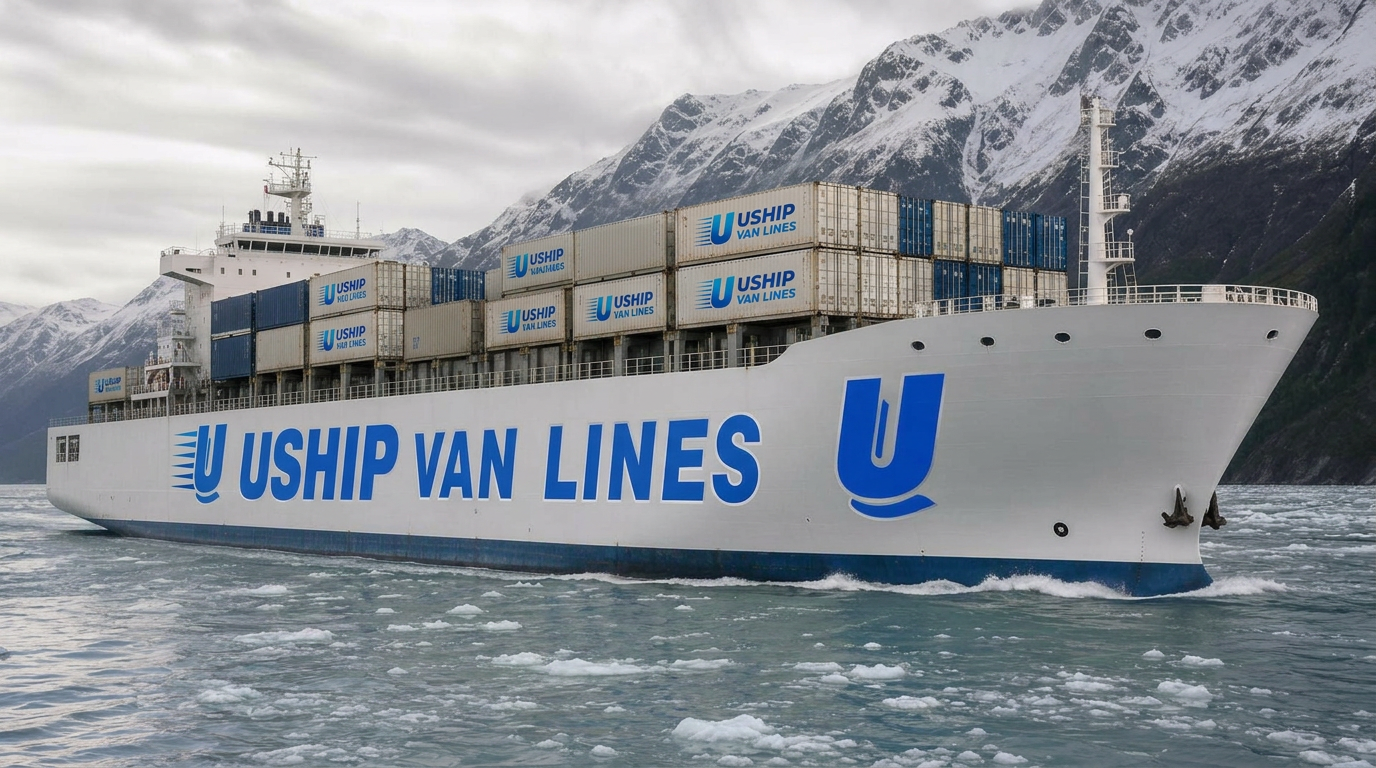
Moving from Austin, TX to Alaska
Moving from Austin, Texas to Alaska is one of the most dramatic relocations you can make — swapping live music and barbecue for mountains, wildlife, and the midnight sun. This isn't a standard interstate move; your household goods will travel thousands of miles by truck and barge, crossing the continental U.S. and navigating Pacific waters to reach Anchorage, Fairbanks, or remote Alaska destinations.
Best Alaska & Hawaii Movers, powered by UShip Van Lines, specializes in this exact route. We coordinate the entire chain: pickup in Austin, overland transport to the Port of Tacoma, barge scheduling to Anchorage, and final delivery across Alaska. Request your free quote today to start planning your move north.
Route overview
The Austin to Alaska Moving Route
Your belongings begin with a truck pickup anywhere in the Austin metro — from downtown high-rises to suburbs in Round Rock, Cedar Park, or Pflugerville. The shipment travels approximately 2,200 miles northwest to Tacoma, Washington, where it's loaded onto a commercial barge bound for the Port of Anchorage. This marine leg covers roughly 1,450 nautical miles and typically sails weekly during peak season (May–September), less frequently in winter.
Once the barge docks in Anchorage, your shipment clears customs (if applicable) and transfers to a local truck for final delivery. If you're moving to Fairbanks, Mat-Su Valley (Wasilla, Palmer), the Kenai Peninsula, or Southeast Alaska communities, expect an additional overland or marine segment. Bush destinations (accessible only by air or seasonal barge) require specialized logistics and advance coordination.
Total door-to-door transit averages 14–28 days, with longer timelines in winter when barge sailings are infrequent and weather delays are common. This route demands experienced coordination — Best Alaska & Hawaii Movers manages every handoff so you don't have to track multiple carriers.
How the moving process works
How Your Austin to Alaska Move Works
-
Free Quote & Planning Consultation
Contact us with your Austin address, Alaska destination, approximate inventory size, and preferred moving dates. We'll provide a detailed estimate and discuss barge schedules, vehicle shipping, and any special items (firearms, artwork, motorcycles). -
Pickup in Austin
On your scheduled date, professional movers arrive at your Austin home, load your belongings into a dedicated truck or shared container, and inventory everything. Full-service packing is available; many customers pack personal items themselves to save costs. -
Overland Transport to Tacoma
Your shipment travels via Interstate 35 and I-90 to the Port of Tacoma, usually arriving within 3–5 days. It's staged at a secure warehouse awaiting the next available barge sailing. -
Barge Sailing to Anchorage
Goods are loaded into marine containers or trailers aboard Alaska Marine Lines, Totem Ocean Trailer Express (TOTE), or similar carriers. The voyage takes 5–7 days in good weather; expect delays during winter storms. -
Customs Clearance & Port Handling
Although Alaska is a U.S. state, shipments may undergo agricultural inspections. We handle all port documentation and coordinate with Anchorage receiving agents. -
Last-Mile Delivery
A local Alaska driver completes the final leg to your street address in Anchorage, Fairbanks, Kenai, or beyond. For remote areas, delivery may involve smaller trucks, gravel roads, or even float-plane cargo transfers. -
Unload & Inventory Check
Upon arrival, inspect your items against the original inventory, report any damage immediately, and settle final payments. We provide post-move support to resolve any claims.
Estimated moving costs
What Does It Cost to Move from Austin to Alaska?
A typical 2–3 bedroom household (8,000–12,000 lbs) moving from Austin to Anchorage generally costs $6,500–$11,500, depending on volume, services, and season. Smaller studio/1-bedroom moves may run $3,800–$5,500; larger 4+ bedroom homes can exceed $14,000.
Key cost drivers:
- Distance & weight: Alaska moves are priced by cubic feet or weight, plus fuel surcharges for the 3,600+ mile total journey.
- Barge fees: Marine transport adds $1,500–$3,000 per shipment, varying by container size and carrier.
- Seasonality: Summer peak season (May–August) commands premium rates; winter moves can save 15–25% but face longer transit and weather risk.
- Packing services: Full professional packing adds $800–$2,000; fragile-only or partial packing is a middle-ground option.
- Vehicle shipping: Cars/trucks shipped separately via RORO (roll-on/roll-off) barge cost $1,200–$2,200 Austin to Anchorage.
- Remote destinations: Delivery beyond Anchorage (Fairbanks, Kenai, Homer) incurs additional mileage; bush locations require air freight at significantly higher rates.
- Storage: If barge schedules don't align with your timeline, short-term warehousing in Tacoma or Anchorage costs $150–$400/month.
We never guarantee prices without a detailed inventory. Request a personalized quote to see exact figures for your move.
Estimated transit times
How Long Does Austin to Alaska Moving Take?
Door-to-door transit typically ranges 14–28 days, broken down as follows:
- Austin to Tacoma (truck): 3–5 days
- Port staging & barge wait: 2–7 days (depends on sailing schedule)
- Tacoma to Anchorage (barge): 5–7 days at sea
- Port clearance & Anchorage processing: 1–3 days
- Final delivery in Alaska: 1–5 days (longer for Fairbanks, Kenai, or remote areas)
Summer moves (May–September) benefit from frequent weekly barge sailings and faster port turnaround, often completing in 14–18 days. Winter moves (October–April) face bi-weekly or monthly barge schedules, weather delays, and ice conditions, stretching timelines to 21–35 days or more.
If you're moving to Southeast Alaska (Juneau, Ketchikan, Sitka) or the Aleutians, marine routes differ entirely and may add 7–14 days. Always build buffer time into your Alaska arrival plans — housing leases, job start dates, and school enrollment should account for possible delays.
Regional logistics
Alaska-Specific Logistics You Need to Know
Barge Ports & Routing: All Austin shipments funnel through the Port of Tacoma (Seattle-Tacoma area), the primary gateway for Alaska freight. Barges dock at the Port of Anchorage; from there, goods distribute statewide. Southeast Alaska (Juneau, Ketchikan) uses different marine routes; confirm destination details during booking.
Vehicle Shipping: Most customers drive the Alaska-Canada Highway (ALCAN) themselves, a 3,500-mile adventure from Austin. If you prefer to ship your car, RORO barge service from Tacoma to Anchorage takes 5–7 days and costs $1,200–$2,200. Vehicles must be clean (no soil, plant material) and under 1/4 tank of fuel. Enclosed auto transport is rarely available for Alaska routes.
Paperwork & Inspections: While Alaska is part of the U.S., agricultural inspections protect against invasive species. No fruits, vegetables, soil, or live plants are allowed. Firearms are legal but must be declared and packed according to federal regulations. We guide you through all required documentation.
Last-Mile Challenges: Anchorage and major highway towns (Wasilla, Fairbanks, Kenai) have paved road access year-round. Remote areas (Homer, Valdez, Delta Junction) may require smaller trucks or winter road conditions. Bush Alaska (Bethel, Kotzebue, Nome) is accessible only by air or seasonal barge; expect freight charges of $1.50–$3.00 per pound.
Storage Options: If your Alaska housing isn't ready or you're awaiting military orders, we offer short-term storage in Tacoma or Anchorage. Climate-controlled units protect belongings from humidity and temperature swings.
Restricted Items: Hazardous materials (propane, paint, aerosols), perishables, and pets/plants travel under separate regulations. Texas barbecue sauce is fine; live jalapeño plants are not.
Seasonal considerations
Best Time to Move from Austin to Alaska
Summer (May–August): Peak moving season. Barge capacity is highest, sailings are weekly, and Alaska weather is cooperative. Expect premium pricing (10–20% higher) and book 6–8 weeks ahead. Ideal if you need predictable timelines or are relocating school-age children before the fall semester.
Fall (September–October): Shoulder season with moderate rates and decent barge frequency. Weather becomes unpredictable — early snow in Alaska, storm systems in the Gulf of Alaska. Good value if you have flexible delivery dates.
Winter (November–March): Off-peak savings of 15–25%, but barge sailings drop to bi-weekly or monthly. Expect delays from ice, storms, and reduced port operations. Moving during this window works well for retirees, remote workers, or anyone with storage flexibility. Austin's mild winter makes packing/loading easier than northern states.
Spring (April–early May): Transition period as barge schedules ramp up. Rates begin climbing toward summer peaks, but availability improves. Alaska's spring thaw can complicate last-mile delivery on unpaved roads.
Weather tip: Austin summers are scorching; schedule your Austin pickup early morning to protect heat-sensitive items (candles, electronics, vinyl records). Alaska winters are dark and cold — ensure your household goods include cold-weather essentials in your "first box" for immediate access upon arrival.
Why choose Best Alaska & Hawaii Movers
Why Choose Best Alaska & Hawaii Movers (Powered by UShip Van Lines)
- Alaska Specialists: We operate this exact Austin–Tacoma–Anchorage route weekly, with deep relationships among barge carriers, Alaska delivery agents, and customs brokers. You're not a one-off experiment; you're our core business.
- End-to-End Coordination: One point of contact manages your entire move — from Austin pickup through barge booking, port logistics, and final Alaska delivery. No finger-pointing between trucking companies and marine carriers.
- Transparent Pricing: Detailed quotes break down truck, barge, fuel, and accessorial fees. No hidden charges for "Alaska remote area" or surprise port handling fees.
- Flexible Scheduling: We work around your timeline, offer storage solutions if your barge date doesn't match your lease, and provide real-time tracking updates via our customer portal.
- Vetted Partner Network: UShip Van Lines coordinates with licensed, insured carriers at every leg. We prioritize safety, reliability, and damage-free delivery — your Texas treasures deserve careful handling across 4,000 miles.