
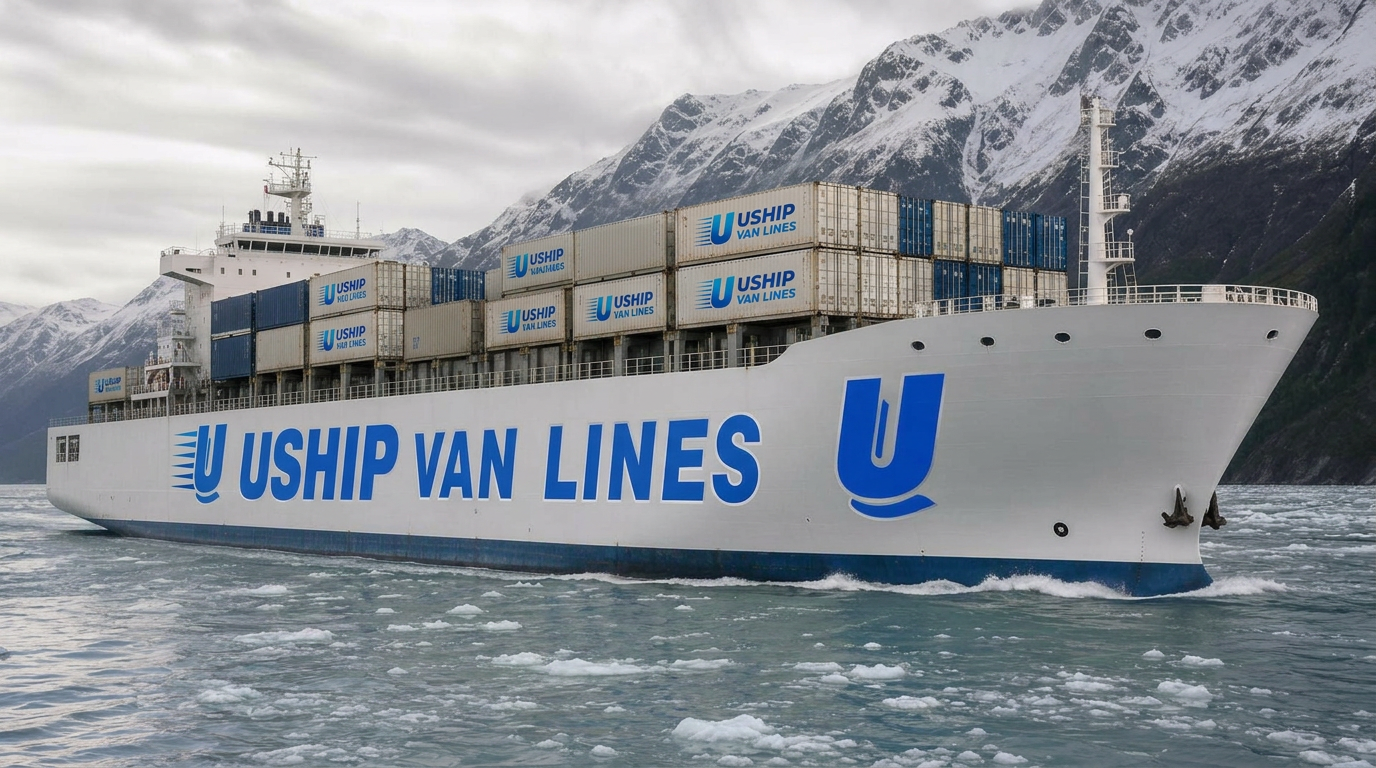
Moving from Alaska to New Rochelle, NY
Relocating from Alaska to New Rochelle, NY requires specialized logistics that few moving companies can manage. This cross-country move combines maritime barge shipping, long-haul overland transport, and careful coordination across multiple transportation modes—all to deliver your household goods safely to Westchester County.
Best Alaska & Hawaii Movers, powered by UShip Van Lines, handles every detail of your Alaska-to-New York relocation. Whether you're leaving Anchorage, Fairbanks, the Mat-Su Valley, or Kenai Peninsula, we coordinate barge schedules, manage port logistics, and ensure reliable delivery to your new New Rochelle home. Request your personalized moving quote today to see how we simplify this complex journey.
Route overview
Alaska to New Rochelle Route Overview
Moving from Alaska to New Rochelle spans approximately 3,700–4,200 road miles depending on your origin city, but the journey is far from a simple drive. Your household goods travel by barge from Alaska ports to Tacoma, Washington, then transfer to long-haul trucking for the cross-country journey through the northern United States to New York's Westchester County. New Rochelle sits just north of the Bronx along Long Island Sound, offering urban convenience with suburban charm—a stark contrast to Alaska's frontier lifestyle.
This route requires expertise in Alaska maritime shipping regulations, coordination with Port of Tacoma operations, and knowledge of New York metropolitan area delivery logistics. Timing depends heavily on weekly barge schedules from Alaska, weather conditions affecting Gulf of Alaska crossings, and continental route planning that accounts for seasonal road conditions. Most relocations from Alaska's population centers—Anchorage, Fairbanks, Wasilla, or Kenai—follow similar maritime-to-overland patterns, though bush community moves add additional complexity and cost.
New Rochelle's mix of historic neighborhoods, modern high-rises, and proximity to New York City makes it a popular destination for Alaskans seeking career opportunities, family connections, or simply more temperate weather. The logistics of this move demand a carrier familiar with both Alaska's unique shipping environment and the delivery challenges of Westchester County's dense residential areas.
How the moving process works
Your Step-by-Step Moving Process
1. Initial Survey and Quote We conduct a detailed inventory assessment—virtual or in-home—to determine your shipment volume and identify items requiring special handling. Alaska moves require precise weight estimates since barge pricing is volume- and weight-sensitive. We provide a comprehensive quote covering all transportation legs, with transparent breakdowns of barge fees, overland transport, and any last-mile services needed at your Alaska origin or New Rochelle destination.
2. Pre-Move Planning and Documentation We coordinate your shipment timing based on available barge sailings from Alaska (typically weekly from Anchorage). You'll receive a detailed timeline, required documentation for maritime shipping, and guidance on items restricted from barge transport (certain chemicals, propane tanks, perishables). If you're moving from outside Anchorage—Fairbanks, Mat-Su, or Kenai—we arrange local pickup and transport to the port.
3. Professional Packing and Loading Our Alaska team packs and loads your belongings using materials rated for maritime transport. Items are secured in the truck or container to withstand both barge movement and subsequent overland transit. We take special care with electronics, artwork, and furniture that will experience multiple handling points during the journey.
4. Barge Transport to Tacoma Your shipment travels via commercial barge service from the Port of Anchorage to Tacoma, Washington—a 1,800-nautical-mile journey taking 5–7 days in good conditions. We track your cargo throughout the maritime leg and coordinate Tacoma port unloading and customs clearance (standard for Alaska-origin shipments).
5. Cross-Country Overland Transport After Tacoma port processing, your goods transfer to a long-haul truck for the 2,900-mile journey to New York. The route typically follows I-90 through Montana, South Dakota, and into the Midwest before connecting to eastern interstates toward New York. This leg takes 7–10 days depending on weather and routing.
6. Final Delivery to New Rochelle We schedule your New Rochelle delivery window in advance, accounting for any building-specific requirements (elevator reservations, loading dock access, parking permits). Our delivery team unloads, places items in designated rooms, and reassembles furniture disassembled for the move. We conduct a final walkthrough to ensure everything arrived as expected.
7. Post-Move Support After delivery, we remain available to address any concerns, file claims if needed, and provide documentation for tax or employer reimbursement purposes. Our team understands the unique challenges Alaska relocations present and offers continued support during your transition to New York.
Estimated moving costs
Alaska to New Rochelle Moving Costs
A full-service move from Alaska to New Rochelle typically ranges from $8,500 to $16,000 for a 2–3 bedroom household, with most families paying $11,000–$13,500 depending on specific circumstances. These costs reflect the complex, multi-modal transportation required for Alaska relocations.
Primary Cost Factors:
Shipment Volume and Weight: Barge pricing is calculated by linear feet and weight. A 2-bedroom apartment (900–1,200 cubic feet) costs significantly less than a 3-bedroom house with garage items (1,800+ cubic feet). Heavier items like shop tools, appliances, and dense furniture increase barge fees.
Origin Location Within Alaska: Moves from Anchorage—with direct port access—cost less than Fairbanks (350+ miles inland), Mat-Su Valley, or Kenai Peninsula locations requiring pre-barge ground transport. Bush community moves involving air cargo or seasonal barge access add $2,000–$5,000.
Packing Services: Professional packing typically adds $1,200–$2,800 depending on home size and fragile item quantity. Alaska moves benefit from professional packing due to the multiple handling points and maritime transport conditions.
Vehicle Shipping: Adding a vehicle to your barge shipment costs $1,800–$3,200 per vehicle for Alaska-to-Tacoma maritime transport, plus $1,000–$1,500 for Tacoma-to-New York overland auto transport.
Seasonal Timing: Summer moves (May–September) command premium pricing due to high demand when Alaska weather permits easier logistics. Off-season moves (October–April) may offer 10–20% savings but face weather-related scheduling uncertainties.
Insurance Coverage: Basic coverage is included, but full-value protection (recommended for Alaska's complex journey) adds 1.5–3% of declared shipment value.
These estimates cover door-to-door service including all barge fees, overland trucking, standard insurance, and delivery. We never guarantee fixed prices until completing a detailed inventory, as every Alaska move involves unique variables affecting final cost.
Estimated transit times
Transit Time Expectations
Door-to-door delivery from Alaska to New Rochelle typically takes 18–28 days, though this timeline varies based on several Alaska-specific factors that require flexible planning.
Transit Breakdown:
Local Pickup and Port Transport (1–3 days): If you're in Anchorage, pickup can occur the day before barge loading. Fairbanks, Mat-Su, and Kenai locations require 1–2 days ground transport to reach the Port of Anchorage. Your items are loaded into the truck or container that will ride the barge.
Barge Sailing to Tacoma (5–9 days): Commercial barges from Anchorage to Tacoma depart weekly, with the ocean crossing taking 5–7 days in favorable conditions. Rough Gulf of Alaska weather can extend this by 1–2 days. Winter sailings (November–March) face more frequent weather delays.
Port Processing in Tacoma (1–2 days): Unloading, customs clearance, and transfer from barge to overland truck typically requires 1–2 business days. Busy port periods or customs inspections occasionally add time.
Cross-Country Transport (7–10 days): The 2,900-mile journey from Tacoma to New Rochelle follows northern interstate routes, averaging 350–400 miles daily. Winter weather across Montana, the Dakotas, or the Midwest can add 1–3 days. Summer typically sees faster transit.
Delivery Coordination (1–2 days): Once your shipment reaches the New York metro area, we schedule delivery based on your availability and any building-specific requirements (elevator reservations, parking permits for moving trucks).
Planning Buffer: We recommend building 3–5 extra days into your personal relocation timeline to account for weather, port operations, or unexpected delays inherent to Alaska shipping. Most moves complete within the 18–25 day range during summer months, while winter relocations should expect the longer end of the timeline.
Regional logistics
Alaska-Specific Moving Logistics
Port Operations and Barge Scheduling Alaska moves depend on commercial barge services operating between the Port of Anchorage and Tacoma, Washington. These barges carry containerized cargo, with your household goods loaded into trucks or shipping containers that ride aboard. Sailings typically depart weekly during peak season (May–September) but less frequently in winter. We coordinate your shipment to match sailing schedules, which requires advance planning—you can't simply "leave tomorrow" as you might with a purely overland move. Missing a sailing can delay your entire relocation by a week or more.
Alaska Origin Logistics Most moves originate from Anchorage, Fairbanks, the Matanuska-Susitna Valley, or the Kenai Peninsula. Anchorage offers the most straightforward logistics with direct port access. Fairbanks moves require 6–8 hours of ground transport (350+ miles) to reach Anchorage's port, adding 1–2 days and $800–$1,500 to costs. Mat-Su (Wasilla, Palmer) and Kenai Peninsula locations similarly need pre-barge ground transport. Bush communities accessible only by air or seasonal barge may require separate air freight for household goods or consolidation through regional hubs—these moves can add $3,000–$6,000 and require specialized planning.
Vehicle Shipping from Alaska Many Alaska residents ship vehicles alongside household goods. Vehicles travel on the same barge to Tacoma, then transfer to auto carriers for overland transport to New York. This is typically more cost-effective than driving (which involves 2,000+ miles through Canada, significant fuel and lodging costs, and wear on the vehicle). Vehicles must be empty except for one spare tire and jack—no personal items allowed due to maritime regulations. You'll need to provide vehicle keys and registration documents.
Restricted and Prohibited Items Maritime shipping prohibits certain items: propane tanks (including those on BBQ grills—we can disconnect these), ammunition and firearms (ship these separately through licensed firearm carriers), hazardous chemicals, perishable food, and plants (agricultural restrictions apply to Hawaii and Alaska shipments). We provide a complete prohibited items list during planning.
New Rochelle Delivery Considerations New Rochelle's mix of single-family homes, apartment buildings, and co-ops requires delivery coordination. Many buildings require advance notice, elevator reservations, and certificates of insurance from the moving company. Street parking for large moving trucks may need permits from the city. We handle these arrangements but need building management contact information at least two weeks before delivery. Some historic buildings or narrow streets may require shuttle trucks for final delivery.
Insurance and Documentation All Alaska barge shipments undergo customs processing in Tacoma (standard for Alaska-origin cargo entering the contiguous U.S.). We manage this paperwork, but you'll need to provide a detailed inventory and identification documents. We recommend full-value protection insurance given the multiple handling points and transportation modes—basic released-value coverage (typically $0.60/pound) is insufficient for most households' actual replacement values.
Seasonal considerations
Seasonal Planning for Alaska Moves
Spring (March–May) Spring is transitional for Alaska relocations. Early spring (March–April) still faces winter weather affecting both Alaska roads and continental routes, but barge schedules begin normalizing after winter's reduced frequency. Late spring (May) marks the beginning of peak moving season—costs increase 15–20%, but weather becomes more predictable. Book 6–8 weeks ahead for May departures. Spring breakup in Alaska can make some rural roads temporarily impassable, affecting pickup timing in outlying areas.
Summer (June–August) Summer is premium moving season from Alaska. Barge schedules run at full frequency (weekly or more), weather delays are minimal, and overland routes across the northern U.S. are reliably clear. However, demand peaks, driving prices up 20–30% versus off-season. New Rochelle destinations are ideal in summer for settling in before the school year. Book 8–10 weeks in advance. If you have flexibility, late August offers slightly better pricing as peak season winds down.
Fall (September–November) Early fall (September–October) offers a sweet spot—weather remains generally favorable, demand drops, and pricing becomes more competitive (10–15% below summer rates). Late fall (November) introduces weather uncertainty as winter conditions begin affecting Gulf of Alaska crossings and northern continental routes. Barge schedules may reduce frequency. Fall moves allow settling into New Rochelle before the holiday season, but require earlier booking as available sailings decrease.
Winter (December–February) Winter Alaska moves face the most challenges but offer the lowest prices (potentially 20–30% below summer). Barge sailings may reduce to every 10–14 days, Gulf of Alaska weather causes more frequent delays, and overland routes through Montana and the Dakotas can face severe winter storms. Transit times extend toward the 25–28 day range or longer. However, if your timeline is flexible and you're cost-conscious, winter moves can deliver substantial savings. New Rochelle winters are mild compared to Alaska, making it a manageable destination season. Book 6–8 weeks ahead and maintain schedule flexibility.
Why choose Best Alaska & Hawaii Movers
Why Choose Best Alaska & Hawaii Movers
Alaska-Specific Expertise: We specialize exclusively in Alaska and Hawaii relocations, understanding the maritime logistics, barge scheduling, and port operations that general moving companies can't navigate. Our team knows the difference between moving from Anchorage versus Fairbanks versus Kenai, and we plan accordingly.
Transparent Multi-Modal Pricing: Alaska moves involve barge fees, port charges, overland transport, and various accessorial costs that can confuse customers. We provide itemized quotes breaking down every cost component, so you understand exactly what you're paying for across all transportation legs.
Comprehensive Service Coordination: You get a single point of contact managing your entire move—from Alaska pickup through barge scheduling, Tacoma port transfer, cross-country trucking, and final New Rochelle delivery. You're not juggling multiple companies or coordinating separate shipments yourself.
Powered by UShip Van Lines' Network: Our partnership with UShip Van Lines gives us access to nationwide carrier networks, competitive pricing through volume agreements, and reliable overland transportation once your goods reach the contiguous U.S. You get specialized Alaska expertise backed by continental logistics infrastructure.
Flexible Timing and Storage Options: We understand Alaska moves rarely follow simple timelines. We offer storage solutions in Tacoma or along the route if your New Rochelle residence isn't ready, and we work with your schedule to accommodate barge sailing availability and seasonal constraints unique to Alaska relocations.