
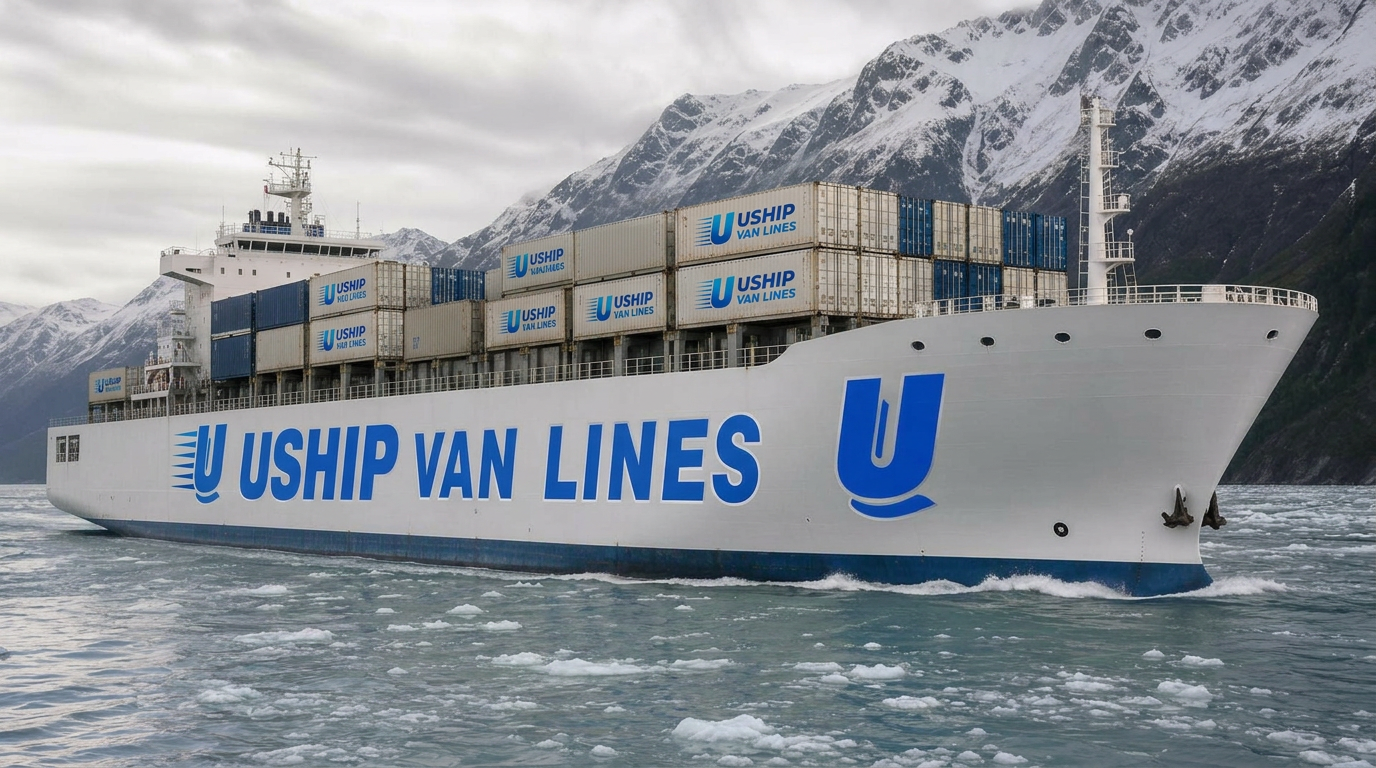
Moving from Alaska to New Jersey
Moving from Alaska to New Jersey means orchestrating a complex logistics chain: barge service from the Port of Anchorage to Tacoma, overland transit across the continent, and final delivery to the Garden State. Whether you're relocating from Anchorage, Fairbanks, the Mat-Su Valley, or a remote Alaskan community, this 4,000+ mile journey requires specialized carriers experienced in Alaska's unique shipping requirements and cross-country coordination.
Best Alaska & Hawaii Movers, powered by UShip Van Lines, handles every leg of your Alaska-to-New Jersey move—from pickup at your door through barge consolidation, cross-country transport, and white-glove delivery. Ready to start planning your move? Request a free quote today and speak with our Alaska routing specialists.
Route overview
Alaska to New Jersey: The Complete Moving Route
The Alaska-to-New Jersey corridor combines marine shipping with transcontinental ground transport. Your household goods travel by truck from anywhere in Alaska to the Port of Anchorage, then aboard a commercial barge to the Port of Tacoma (Washington). From Tacoma, a long-haul semi carries your shipment approximately 2,850 miles across I-90, I-80, and the eastern turnpike system to destinations throughout New Jersey—from the northern suburbs near New York City to the southern shore communities.
This route presents unique challenges: Alaska's seasonal barge schedules (weekly in summer, bi-weekly in winter), variable weather affecting both marine and mountain crossings, and coordination across multiple carriers. New Jersey's dense population and strict municipal regulations add delivery complexity, especially in urban areas like Newark, Jersey City, and Hoboken where truck access and parking permits require advance planning.
Successful Alaska-to-New Jersey moves depend on experienced logistics coordination, flexible scheduling around barge sailings, and carriers who understand both Alaska's last-mile challenges and New Jersey's urban delivery requirements.
How the moving process works
How Your Alaska to New Jersey Move Works
-
Initial Survey and Planning – Our team conducts a virtual or in-person assessment of your Alaskan home, inventories your belongings, discusses restricted items (ammunition, fuel, certain chemicals cannot travel via barge), and designs a timeline around available barge sailings and your New Jersey move-in date.
-
Alaska Pickup and Consolidation – Professional movers pack and load your household goods at your Alaska residence (whether in Anchorage, Fairbanks, Kenai, or remote communities requiring bush plane or seasonal road access), then transport everything to our Anchorage consolidation facility near the port.
-
Barge Transit to Tacoma – Your containerized or palletized shipment boards a commercial barge at the Port of Anchorage, sailing approximately 1,450 nautical miles to the Port of Tacoma over 3–5 days depending on weather and vessel schedule. We handle all marine documentation and port logistics.
-
Tacoma Transfer and Overland Dispatch – Upon arrival in Tacoma, your shipment clears customs paperwork (even for domestic moves, Alaska cargo often requires agricultural inspection), then transfers to a temperature-controlled long-haul semi-truck for the cross-country journey.
-
Cross-Country Transit – Your driver navigates I-90 through Washington, Idaho, and Montana; I-80 across Wyoming, Nebraska, Iowa, and into the eastern states; then connects to I-76 or I-78 into New Jersey. Real-time GPS tracking keeps you informed throughout the 2,850-mile journey.
-
New Jersey Delivery Coordination – As your shipment approaches, our team confirms delivery appointments, secures any required municipal parking permits (critical in dense urban areas), and coordinates building access for apartments or condos with freight elevator reservations.
-
Final Delivery and Setup – Our New Jersey delivery crew unloads, places furniture in designated rooms, reassembles items disassembled for the move, removes packing materials, and conducts a final walkthrough to ensure your satisfaction.
Estimated moving costs
What Does Moving from Alaska to New Jersey Cost?
Expect to budget $8,500–$16,000 for a typical 2–3 bedroom household move from Alaska to New Jersey. Studio or 1-bedroom moves may range $5,500–$9,000, while larger 4+ bedroom homes with full garages can reach $18,000–$26,000 or more.
Key cost drivers include:
- Volume and weight – Alaska moves price by cubic feet or weight; a standard 3-bedroom home averages 1,200–1,800 cubic feet
- Origin location – Anchorage pickups cost less than Fairbanks (requiring additional trucking to the port) or remote communities needing bush plane/seasonal ferry access
- Barge season – Winter sailings (November–March) may carry surcharges due to reduced frequency and weather risk
- Packing services – Full-service professional packing adds $1,200–$2,800 but ensures marine-worthy protection
- Vehicle shipping – Adding a car/truck to the barge runs $1,800–$3,200 Anchorage to Tacoma, plus $1,200–$1,600 Tacoma to New Jersey
- Storage needs – If your New Jersey home isn't ready, warehouse storage in Tacoma or New Jersey costs $150–$300/month
- Delivery location – Urban addresses with difficult truck access (narrow streets, no loading zones) may incur shuttle fees of $300–$800
- Insurance coverage – Full replacement value protection adds 1–2% of declared value; basic liability covers only $0.60/lb per article
Request a detailed quote with line-item pricing tailored to your exact inventory, locations, and timeline. We provide transparent estimates with no hidden fees.
Estimated transit times
How Long Does Alaska to New Jersey Moving Take?
Door-to-door transit typically requires 14–28 days, broken down by leg:
Alaska pickup to Port of Anchorage: 1–3 days for Anchorage-area origins; 3–5 days from Fairbanks or the Kenai Peninsula; 5–10 days from remote communities depending on seasonal road access or bush plane schedules.
Port consolidation and barge loading: 2–5 days as your shipment waits for the next scheduled sailing (weekly in summer, bi-weekly in winter).
Barge transit Anchorage to Tacoma: 3–5 days on the water, weather permitting. Winter storms can add 1–2 days; summer sailings run like clockwork.
Tacoma unloading and transfer: 1–2 days for port operations, agricultural inspection, and loading onto the overland truck.
Overland transit Tacoma to New Jersey: 5–7 days for the 2,850-mile journey. Direct runs complete in 5 days; consolidated shipments making other deliveries may take 6–7 days.
New Jersey delivery coordination: 1–2 days to schedule and execute final delivery based on your availability and building access.
Total timeline: Plan for 3–4 weeks from your Alaska pickup to New Jersey delivery. Booking 6–8 weeks in advance provides the most scheduling flexibility, especially during peak summer moving season (May–September) when barge space and truck capacity fill quickly. Off-season winter moves may compress timelines slightly but face higher weather risk.
Regional logistics
Alaska-Specific Moving Logistics
Port Operations: The Port of Anchorage handles the vast majority of Alaska household goods shipments. Cargo typically consolidates at nearby warehouses, then loads into 20' or 40' containers or as break-bulk palletized freight. All shipments require detailed inventory manifests and customs paperwork (agricultural inspection, even for domestic moves). Vehicle shipments load separately as roll-on/roll-off cargo.
Remote Origin Logistics: Moving from locations beyond the road system (Kodiak, Nome, Bethel, Southeast Alaska communities) requires additional legs—either bush plane to Anchorage (expensive, weight-limited) or seasonal ferry service. Winter ice road access to some communities opens alternate routes. Mat-Su Valley, Kenai Peninsula, and Fairbanks connect via paved highways, adding 1–3 days of trucking to Anchorage port access.
Vehicle Shipping: If you're driving your vehicle from Alaska, you'll face 3,500+ miles through Canada (requiring Canadian insurance and customs paperwork) or ship it via barge to Tacoma ($1,800–$3,200) then overland to New Jersey ($1,200–$1,600). Barge shipping is often more practical and cost-effective than the multi-week drive through Canadian winter conditions.
Restricted Items: Alaska's petroleum economy and hunting culture mean many households have items that cannot ship via commercial barge: ammunition, reloading powder, gasoline, propane tanks, hunting trophies (without proper documentation), and certain chemicals. Plan to sell, dispose of, or personally transport these items. Seafood can ship frozen in insulated containers with dry ice if properly packaged.
New Jersey Delivery Challenges: New Jersey's population density creates delivery complexity. Urban areas like Newark, Hoboken, Jersey City, and Trenton require advance parking permits and often need shuttle trucks for narrow streets. High-rise apartments need freight elevator reservations weeks in advance. Shore communities have seasonal restrictions during summer tourist months. Rural northwestern New Jersey (Sussex County) features winding mountain roads requiring careful truck routing.
Documentation: Even though this is a domestic move, expect more paperwork than a typical interstate relocation. Marine shipments require detailed packing lists, declared valuations, and sometimes agricultural inspection certificates. Keep copies of all documents, inventory lists, and photographs of high-value items.
Seasonal considerations
Best Time to Move from Alaska to New Jersey
Summer (May–September): Peak moving season offers weekly barge sailings, reliable weather, and maximum carrier availability. Roads throughout Alaska are fully accessible, including gravel highways to remote areas. Expect highest prices (15–25% above winter rates) and the need to book 8–10 weeks ahead. New Jersey summer heat requires climate-controlled trucks for electronics and furniture. Best for families moving between school years.
Fall (October–November): Shoulder season brings moderate pricing and good availability. Barge schedules reduce to bi-weekly as winter approaches. Early snow in Alaska mountain passes (Glenn Highway, Richardson Highway) can begin affecting trucking. New Jersey weather remains mild for delivery. October offers the sweet spot: fewer crowds, decent weather, 10–15% savings vs. summer peaks.
Winter (December–March): Off-season rates drop 20–30%, but weather adds complexity. Barge sailings run every 10–14 days, and Gulf of Alaska storms can delay departures. Alaska roads face ice, extreme cold (-20°F to -40°F in interior regions), and limited daylight for loading crews. Some remote communities become inaccessible until spring breakup. East Coast nor'easters can delay New Jersey delivery. Best for flexible schedules and budget-conscious movers who can tolerate uncertainty.
Spring (April–early May): Breakup season in Alaska brings muddy roads and unpredictable conditions as snow melts. Barge schedules ramp back to weekly service. Pricing begins climbing toward summer peaks. New Jersey spring weather is generally cooperative for delivery. The transition period can offer value, but Alaska road conditions require day-by-day assessment.
Why choose Best Alaska & Hawaii Movers
Why Choose Best Alaska & Hawaii Movers for Your Alaska to New Jersey Move
-
Alaska Expertise: We specialize exclusively in Alaska and Hawaii moving logistics—not a sideline, but our core focus. Our team understands barge schedules, port operations, Alaska seasonal road conditions, and the unique requirements of remote community pickups that general moving companies simply don't encounter.
-
Single-Source Coordination: One point of contact manages your entire move from Alaska door to New Jersey door. No handoffs between multiple subcontractors. We coordinate the barge line, overland carrier, and local delivery crews, providing you seamless communication and accountability throughout.
-
Transparent Pricing: Detailed quotes break down every cost component—Alaska pickup, port fees, barge charges, overland transit, and New Jersey delivery. No surprise fees. No hidden fuel surcharges. What we quote is what you pay, with clear explanations of optional services.
-
Real-Time Tracking: GPS monitoring on the overland leg, barge sailing updates, and proactive communication at every transition point. You'll know where your belongings are from Anchorage pickup through New Jersey delivery.
-
Powered by UShip Van Lines: Our partnership with UShip Van Lines provides access to vetted, licensed interstate carriers, comprehensive insurance options, and the backing of a nationwide logistics network—combined with our specialized Alaska/Hawaii knowledge.