
Moving from Alaska to Nashville, TN
Moving from Alaska to Nashville, TN means trading the Last Frontier for Music City—a relocation that combines logistical complexity with exciting opportunity. Whether you're leaving Anchorage, Fairbanks, or the Mat-Su Valley for Nashville's vibrant job market and cultural scene, you'll navigate a multi-modal move involving barge transport, cross-country trucking, and careful coordination across 3,400+ miles.
Best Alaska & Hawaii Movers, powered by UShip Van Lines, specializes in Alaska-to-Lower 48 relocations. We handle the barge booking through Tacoma, coordinate containerized shipping, and manage final delivery to your Nashville neighborhood—all while keeping you informed at every step. Ready to start planning? Request a free, no-obligation quote tailored to your specific moving needs.
Route overview
The Alaska to Nashville Moving Route
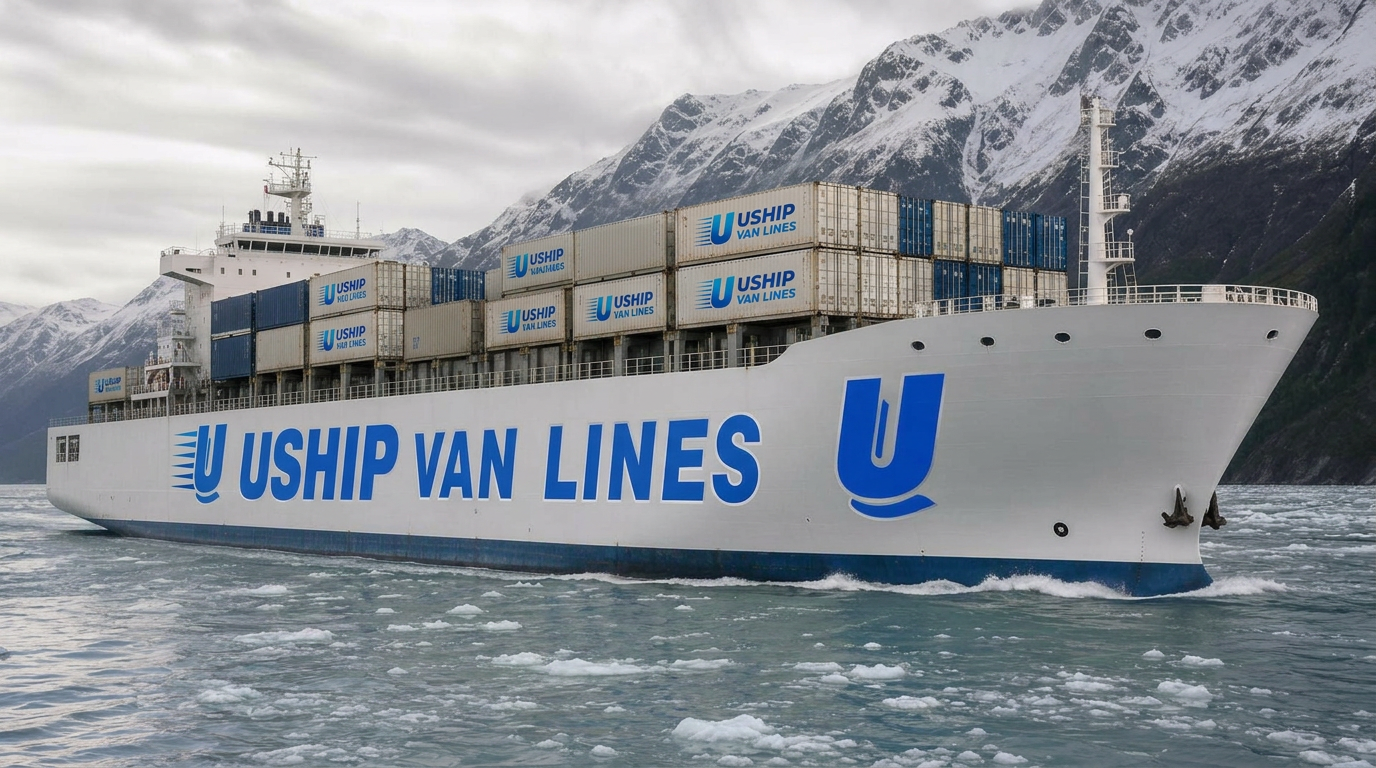
Your belongings travel approximately 3,450 miles from Alaska to Nashville through a carefully orchestrated multi-stage journey. The move begins with pickup at your Alaska residence (anywhere from Anchorage to Fairbanks to remote Mat-Su communities), consolidation into a shipping container, and barge transport from the Port of Anchorage to the Port of Tacoma, Washington. This maritime leg typically takes 6–9 days depending on sailing schedules and weather conditions.
Once your container arrives in Tacoma, it's transferred to a long-haul truck for the approximately 2,400-mile overland journey to Nashville. The route generally follows I-90 east through Montana, then I-94 and I-90 through the Dakotas and into Minnesota, before heading south through Iowa, Missouri, and into Tennessee via I-24. Nashville's central location in Middle Tennessee means relatively straightforward final delivery to neighborhoods like East Nashville, Germantown, 12 South, or outlying areas in Williamson and Sumner counties.
This Alaska-to-Tennessee corridor requires specialized expertise in both Alaska logistics and long-distance continental shipping. Temperature-sensitive items need protection during both the maritime leg and potential winter overland travel. Professional coordination ensures smooth handoffs between barge operators, port facilities, and ground transportation teams.
How the moving process works
How Your Alaska to Nashville Move Works: Step-by-Step
-
Initial Survey and Quote: We conduct a detailed inventory of your belongings via video survey or in-home assessment (in major Alaska markets). We evaluate special items like vehicles, ATVs, boats, or oversized furniture, and provide a comprehensive written estimate reflecting barge costs, overland transport, and Nashville delivery.
-
Barge Schedule Coordination: We book your container space on the next available Alaska Marine Lines or TOTE Maritime sailing from Anchorage to Tacoma. Barge schedules run weekly during summer, less frequently in winter. We coordinate timing to align with your move-out date and Nashville arrival needs.
-
Alaska Pickup and Container Loading: Professional movers arrive at your Alaska location, carefully pack and load your belongings into a 20-foot or 40-foot shipping container. Items are secured for ocean transit using specialized techniques—blocking, bracing, and moisture-barrier materials to protect against condensation during the maritime leg.
-
Maritime Transport to Tacoma: Your sealed container travels by barge from Anchorage to Tacoma (approximately 1,450 nautical miles). The journey takes 6–9 days depending on weather, stops, and specific sailing. Containers remain sealed and protected throughout the voyage.
-
Port Processing and Truck Loading: Upon Tacoma arrival, your container is offloaded, cleared through port operations, and transferred to a long-haul truck. This transfer typically takes 1–3 business days depending on port congestion and customs processing for any restricted items.
-
Cross-Country Trucking: Your container travels overland to Nashville via I-90 and I-24, covering approximately 2,400 miles in 4–7 days. Professional drivers navigate mountain passes, weather conditions, and scheduled rest stops while maintaining communication with our dispatch team.
-
Nashville Delivery and Unloading: Upon arrival in Nashville, our team coordinates delivery to your new residence. Movers unload your container, place items in designated rooms, and remove packing materials. We conduct a final inventory check and address any concerns before completing the move.
Estimated moving costs
Cost Expectations for Alaska to Nashville Moves
A typical 2–3 bedroom household move from Alaska to Nashville generally ranges from $6,800 to $13,500, with most families paying $8,500–$11,000 for full-service door-to-door relocation. Studio and 1-bedroom moves typically cost $4,200–$6,800, while larger 4+ bedroom homes can reach $14,000–$22,000 depending on volume and special items.
Key cost drivers include:
- Barge transport fees: Maritime shipping from Anchorage to Tacoma represents 40–50% of total cost, charged by container size (20-ft vs. 40-ft) and weight
- Distance from Anchorage: Pickups in Fairbanks, Mat-Su Valley, Kenai Peninsula, or remote locations add $400–$1,800 for additional trucking to port facilities
- Overland distance: The 2,400-mile Tacoma-to-Nashville leg is priced per mile and container weight, with fuel surcharges varying by season
- Packing services: Full professional packing adds $800–$2,200; partial packing (fragiles only) runs $300–$700
- Vehicle shipping: Adding a car to your barge container costs $1,200–$2,400; separate auto transport runs $1,800–$2,800
- Seasonality: Summer moves (May–September) cost 15–25% more due to peak Alaska moving season and limited barge capacity
- Storage: If timing doesn't align, short-term storage in Tacoma or Nashville runs $150–$400/month for containerized storage
- Specialty items: Pianos, gun safes, hot tubs, and oversized furniture require custom crating ($200–$800 per item)
We never guarantee prices without a detailed inventory. Request a personalized quote to receive accurate pricing based on your specific belongings, pickup location, and timeline. Our estimates include transparent breakdowns of every cost component—no hidden fees or surprise charges.
Estimated transit times
Realistic Timeline for Alaska to Nashville Moves
Door-to-door delivery from Alaska to Nashville typically takes 18–28 days under normal conditions, with most moves completing in 21–24 days. This timeline breaks down into distinct phases:
Alaska Pickup to Port Loading: 1–3 days depending on your location. Anchorage-area pickups often load same-day or next-day. Fairbanks, Mat-Su, or Kenai locations require 1–2 days trucking to Anchorage port facilities.
Barge Transit (Anchorage to Tacoma): 6–9 days at sea. Weekly sailings during peak season (May–September); bi-weekly or less frequent in winter. Weather delays in the Gulf of Alaska can add 1–3 days during storm season (October–March).
Tacoma Port Processing: 1–3 business days for container offloading, port clearance, and truck assignment. Summer congestion or customs inspections occasionally extend this to 4 days.
Overland Trucking (Tacoma to Nashville): 4–7 days for the 2,400-mile journey. Professional drivers observe hours-of-service regulations, averaging 500–600 miles daily. Winter weather in Montana, Dakota, or Tennessee can add 1–2 days.
Nashville Delivery Window: We provide a 2–3 day delivery window once your container departs Tacoma. Final scheduling depends on Nashville-area traffic, your building's delivery restrictions, and crew availability.
Expedited options: While faster service is rarely possible for Alaska moves due to fixed barge schedules, we prioritize truck loading and can sometimes trim 2–4 days off the overland portion. Plan for the full timeline and build buffer into your Nashville lease or home closing.
Regional logistics
Alaska-Specific Moving Logistics to Nashville
Port and Barge Operations: Your move routes through the Port of Anchorage, Alaska's primary maritime freight hub. Containers are loaded at port-adjacent facilities operated by Alaska Marine Lines or TOTE Maritime. If you're in Fairbanks (360 miles north), Mat-Su communities (40–60 miles north), or Kenai Peninsula (100–150 miles south), your belongings first travel by truck to Anchorage consolidation warehouses. Remote bush locations may require small-plane freight to Anchorage before containerization.
Container Types and Capacity: Most households use 20-foot containers (1,150 cubic feet, holds 2–3 bedrooms) or 40-foot containers (2,350 cubic feet, holds 4+ bedrooms). Containers are weatherproof and sealed for maritime transport. Shared container (consolidated) service is available for smaller moves, though dedicated containers offer better protection and scheduling control.
Vehicle Shipping Options: You can ship one vehicle inside your household container (space permitting) or book separate roll-on/roll-off (RoRo) service. RoRo barge shipping costs $1,200–$1,800 Anchorage-to-Tacoma, then $900–$1,400 Tacoma-to-Nashville via auto carrier. Inside-container shipping protects vehicles from salt spray but consumes 100–150 cubic feet of household capacity. Drive-away services (professional drivers) are impractical for Alaska-Nashville due to distance and ferry logistics.
Restricted and Prohibited Items: Barge and interstate regulations prohibit hazardous materials: propane tanks (including BBQ), ammunition, gasoline, paint, aerosols, and cleaning chemicals. Alaska-specific items like bear spray, fishing bait, and hunting ammunition must be disposed of locally. Perishable foods, frozen goods, and plants typically don't survive the 3+ week journey. Prescription medications and important documents should travel with you, not in the container.
Paperwork and Documentation: Interstate moves to Tennessee require basic inventory documentation and bill of lading. No customs clearance is needed (domestic move), but USDA regulations apply to any plant material or wood products. Alaska PFD (Permanent Fund Dividend) residency considerations: moving to Tennessee may affect your eligibility—consult Alaska Department of Revenue guidelines if maintaining Alaska residency matters to you.
Last-Mile Nashville Delivery: Nashville's neighborhoods vary in delivery accessibility. Historic areas like Germantown or East Nashville may have narrow streets, limited truck access, or permit requirements for large vehicles. High-rise buildings in downtown Nashville (Gulch, Sobro) require advance elevator reservations and COI documentation. Suburban areas (Franklin, Brentwood, Hendersonville) typically offer straightforward delivery access. We coordinate all Nashville-specific logistics in advance to prevent delays.
Seasonal considerations
Seasonal Factors for Alaska to Nashville Relocations
Summer (May–September): Peak moving season for Alaska departures. Barge schedules run weekly with maximum capacity and reliability. Warm weather in both Alaska and along the Tacoma-Nashville route simplifies logistics, but demand drives prices 15–25% higher. Book 6–8 weeks ahead for preferred dates. This season is ideal for families coordinating with school calendars or Nashville's pleasant fall arrival weather.
Fall (October–November): Shoulder season offers moderate pricing and good availability. Early October still enjoys reliable barge schedules; late November sees reduced sailings as winter approaches. Overland trucking may encounter early-season snow in Montana or Dakota passes. Nashville arrival means mild autumn weather—ideal for settling in. Book 4–6 weeks ahead.
Winter (December–March): Off-peak season with lowest prices (10–20% below summer) but significant logistical challenges. Barge schedules reduce to bi-weekly or monthly depending on ice conditions and demand. Gulf of Alaska storms frequently delay sailings by 2–5 days. Overland trucking faces winter weather across northern routes—potential for chain requirements, road closures, and extended transit. Best for flexible timelines and budget-conscious movers. Nashville winters are mild (30s–50s°F), making arrival logistics manageable. Book 3–4 weeks ahead but expect timeline variability.
Spring (April–early May): Transition season as barge schedules ramp up and weather improves. Moderate pricing and improving reliability. Ice breakup in Alaska ports occasionally causes early-April delays. Overland routes clear of major winter hazards by late April. Nashville springs are beautiful but wet—plan for rain during delivery. Book 4–5 weeks ahead for best selection.
Alaska-specific timing: Midnight sun (late May–July) allows extended daylight for packing and loading. Winter darkness (November–January) limits working hours in Fairbanks and northern communities, potentially adding a day to pickup logistics.
Why choose Best Alaska & Hawaii Movers
Why Best Alaska & Hawaii Movers for Your Alaska to Nashville Relocation
-
Alaska Logistics Expertise: We specialize exclusively in Alaska and Hawaii moves, with deep relationships with Alaska Marine Lines, TOTE Maritime, and Anchorage-area consolidation facilities. We understand barge schedules, container optimization, and Alaska-specific packing requirements that generalist movers often miss.
-
Powered by UShip Van Lines: Our partnership with UShip Van Lines provides access to vetted, professional long-haul carriers for the Tacoma-to-Nashville leg. We leverage nationwide logistics networks while maintaining personalized Alaska moving expertise—the best of both worlds.
-
End-to-End Coordination: One point of contact manages your entire multi-modal move—from Fairbanks pickup through barge booking, Tacoma transfer, overland trucking, and Nashville delivery. You're never handed off to disconnected vendors or left wondering about your container's location.
-
Transparent Pricing: We provide detailed written estimates breaking down every cost component: barge fees, overland transport, fuel surcharges, packing services, and Nashville delivery. No hidden fees. No surprise charges. You know exactly what you're paying for and why.
-
Real-Time Tracking and Communication: Receive updates at every milestone—pickup complete, container loaded on barge, Tacoma arrival, truck departure, Nashville delivery window. Our customer service team is available throughout your move to answer questions and address concerns.
-
Flexible Service Options: Choose full-service packing and loading, partial packing for fragiles only, or self-pack with professional loading. Add vehicle shipping, request storage, or coordinate expedited overland service. We customize solutions to match your budget and timeline.