
Moving from Alaska to Jersey City, NJ
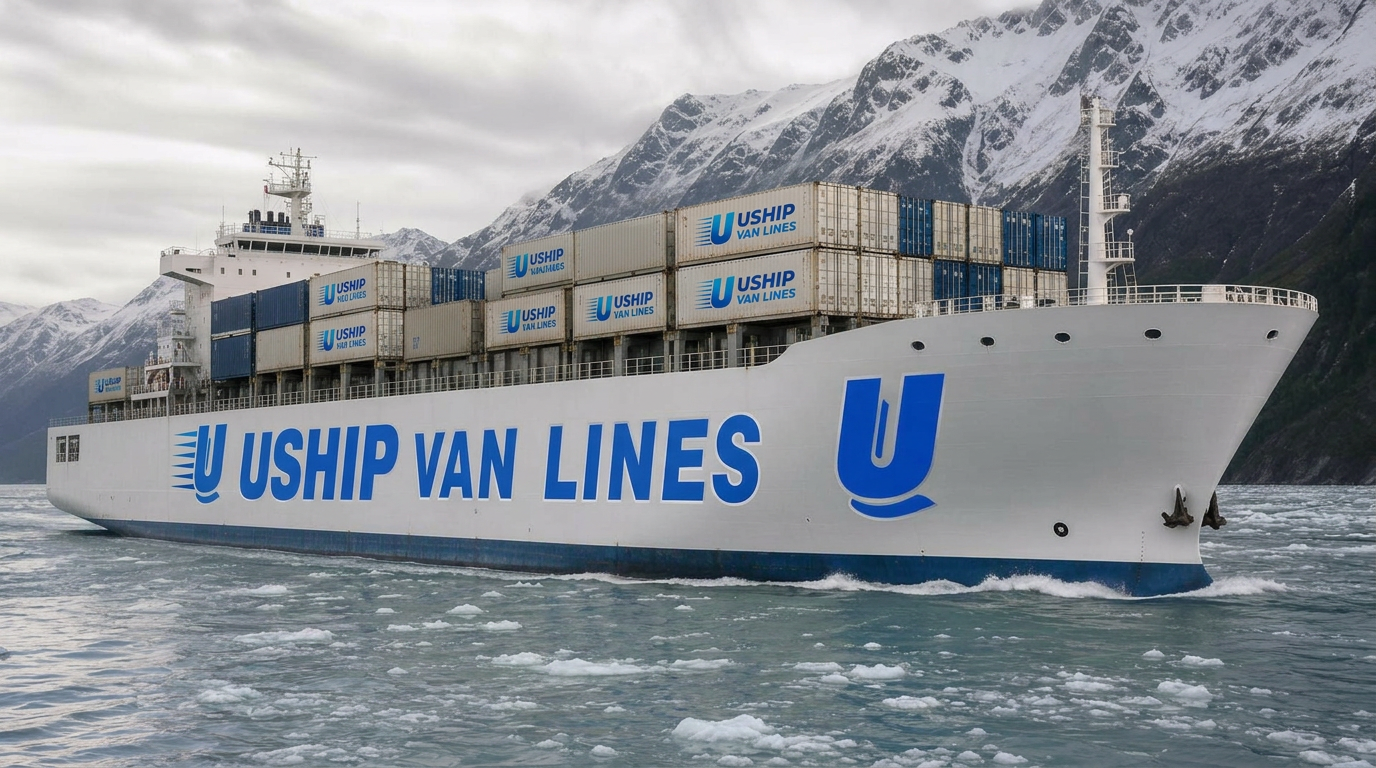
Relocating from Alaska to Jersey City, NJ means navigating one of the most complex moving routes in North America. Your household goods will travel by barge from a Port of Alaska location to the Port of Tacoma, then continue 2,800+ miles over the road through the Pacific Northwest, Midwest, and into the heart of the New York metro area. Jersey City's urban density, parking restrictions, and proximity to Manhattan add unique final-mile challenges that require experienced coordination.
Best Alaska & Hawaii Movers, powered by UShip Van Lines, specializes in exactly this kind of multi-modal move. We handle Alaska barge logistics, coordinate seamless handoffs at Tacoma, and manage the final delivery into Jersey City's tight neighborhoods. Ready to simplify your cross-continental move? Request your free, no-obligation quote today.
Route overview
Understanding the Alaska to Jersey City Moving Lane
This route requires true multimodal expertise. Most Alaska moves originate in Anchorage, Fairbanks, the Mat-Su Valley, or the Kenai Peninsula, with goods consolidated and transported to either the Port of Anchorage or Whittier for barge departure. The marine leg to Tacoma typically takes 5–7 days depending on weather and port schedules, with weekly or bi-weekly sailings during peak season (May–September) and less frequent winter service.
From Tacoma, your shipment travels approximately 2,850 miles across I-90 and I-80 through Washington, Idaho, Montana, Wyoming, Nebraska, Iowa, Illinois, Indiana, Ohio, Pennsylvania, and finally into New Jersey via the I-78 corridor. Jersey City presents its own logistical puzzle: narrow streets in neighborhoods like The Heights and Journal Square, strict parking enforcement in downtown areas near the waterfront, and building elevator reservations in the many high-rise communities near Exchange Place and Newport.
The total transit window from pickup in Alaska to delivery in Jersey City ranges from 14–28 days door-to-door, with variables including barge sailing schedules, weather delays (especially September–April), and final-mile coordination in the densely populated Hudson County area. This isn't a straightforward highway move—it demands carriers with Alaska-specific port experience and urban New Jersey delivery expertise.
How the moving process works
How Your Alaska to Jersey City Move Works: Step-by-Step
1. Initial Survey and Inventory Your move begins with a detailed inventory—virtual or in-home if you're in the Anchorage/Wasilla corridor. We assess volume (cubic feet), special items (vehicles, boats, ATVs common in Alaska households), and any items prohibited on barges (hazardous materials, propane, certain chemicals). This inventory determines your barge space reservation and trucking requirements.
2. Packing and Alaska Pickup Professional packing is strongly recommended for barge moves due to the marine environment and multiple handlings. Your goods are loaded into a container or dedicated truck space at your Alaska residence. If you're in remote areas like Kenai, Homer, or Fairbanks, we coordinate the initial leg to the barge departure point, typically adding 1–3 days to your timeline.
3. Container Staging and Barge Loading Your shipment is transported to the Port of Anchorage or Whittier and staged for the next available barge sailing. During peak season (May–September), weekly sailings offer flexibility; winter months may require 2–3 week waits between departures. Containers are secured for the marine crossing—proper blocking and bracing is critical for the sometimes-rough Gulf of Alaska waters.
4. Marine Transit to Tacoma (5–7 Days) The barge crosses approximately 1,450 nautical miles to the Port of Tacoma. Alaska Marine Lines and Tote Maritime are the primary carriers. Weather in the Gulf of Alaska can add 1–2 days during fall and winter storms. Your container remains sealed throughout the voyage.
5. Port Unloading and Customs Clearance At Tacoma, containers are offloaded, cleared through any necessary inspections, and transferred to our over-the-road carrier partners. This port processing typically takes 1–3 business days. Your goods are then loaded onto a long-haul truck for the transcontinental portion.
6. Cross-Country Transit (7–10 Days) The 2,850-mile truck journey crosses seven states via I-90 through Montana and the northern tier, then I-80 through the Midwest, and finally I-78 into New Jersey. Experienced drivers navigate mountain passes, Midwest weather, and finally the congested I-95 corridor approaching New York.
7. Jersey City Final Delivery Delivery in Jersey City requires careful coordination. We schedule with building management if you're in a high-rise, obtain Certificate of Insurance (COI) as required by many properties, reserve freight elevators, and secure parking permits for the moving truck in neighborhoods with strict regulations. Our team navigates narrow streets in areas like Bergen-Lafayette and completes your delivery, unpacking, and debris removal if contracted.
Estimated moving costs
What Does an Alaska to Jersey City Move Cost?
For a typical 2–3 bedroom household (1,200–1,800 cubic feet), expect total moving costs between $8,500 and $16,000. This wide range reflects the complexity and variables inherent in Alaska barge moves combined with cross-country trucking.
Key cost drivers include:
- Volume and weight: Barge shipping is priced per cubic foot or by container size (20ft or 40ft). A full 20ft container holds roughly 1,000–1,200 cubic feet; 40ft containers accommodate 2,000–2,400 cubic feet. Shipments under 800 cubic feet may qualify for consolidated/LTL rates.
- Seasonal timing: Peak summer moves (May–August) command premium pricing due to high demand and frequent barge sailings. Off-season moves (October–March) may offer 15–25% savings but face longer transit windows and weather risks.
- Origin location in Alaska: Moves from Anchorage or Wasilla are most economical. Fairbanks adds $800–1,500 for the initial haul to tidewater. Remote locations like Homer, Soldotna, or Kodiak (requiring additional barge or air freight) can add $2,000–4,000.
- Packing services: Professional full-pack services typically add $1,200–2,500 depending on home size and fragile inventory. Partial packing (kitchen, art, electronics) runs $400–900.
- Vehicle shipping: Adding a vehicle to your barge shipment costs $1,500–3,000 from Alaska to Tacoma, plus $1,200–1,800 for the Tacoma-to-Jersey City leg if continuing by truck.
- Storage: If barge schedules or Jersey City housing don't align, storage in Tacoma or New Jersey runs $150–400 per month depending on volume.
- Final-mile complexity: Jersey City high-rise deliveries with long carries, multiple flights of stairs (in walk-ups), or challenging street parking can add $300–800 in shuttle and labor fees.
We never guarantee prices without a detailed quote—every Alaska move has unique variables. Request your free estimate to receive a transparent breakdown tailored to your specific inventory and timeline.
Estimated transit times
How Long Does Moving from Alaska to Jersey City Take?
Plan for 14–28 days door-to-door, broken down as follows:
Alaska origin to port (1–3 days): Anchorage and Mat-Su Valley pickups can go directly to port same-day or next-day. Fairbanks requires 1–2 days for the haul south. Kenai Peninsula locations add 1 day. Remote bush communities requiring small plane or separate barge add 3–10 days.
Port staging and barge departure wait (1–14 days): During peak season (May–September), barge sailings depart weekly, so staging time is typically 1–4 days. Off-season (October–April) sailings may be bi-weekly or monthly, potentially requiring 7–14 day waits.
Marine transit (5–7 days): The Gulf of Alaska crossing to Tacoma averages 5–6 days in good weather. Fall and winter storms (September–March) can extend this to 7–8 days. Rare severe weather may cause 1–2 day port delays on either end.
Tacoma port processing (1–3 days): Container unloading, customs clearance if applicable, and transfer to truck typically takes 1–2 business days. Occasional port congestion can push this to 3 days.
Over-the-road transit (7–10 days): The 2,850-mile truck journey takes 7–9 days with experienced team drivers. Winter weather in Montana, Wyoming, or the Midwest can add 1–2 days. Summer construction zones occasionally cause minor delays.
Jersey City scheduling and delivery (0–2 days): Once the truck reaches New Jersey, final delivery is scheduled based on your availability and building requirements. High-rise deliveries requiring elevator reservations and COI processing may need 1–2 days advance coordination.
The tightest possible timeline (Anchorage origin, summer sailing, perfect weather, immediate Jersey City access) is 14–16 days. More realistic planning should assume 18–24 days, with winter moves potentially extending to 28+ days.
Regional logistics
Alaska-Specific Moving Logistics You Need to Know
Barge Ports and Access Most Alaska household goods ship through the Port of Anchorage (primary) or Whittier (secondary, often for Kenai Peninsula routes). Alaska Marine Lines and Tote Maritime are the dominant carriers. Your container is loaded, sealed, and secured with blocking to prevent shifting during the marine crossing. If you're shipping from remote Alaska locations not connected by road (Kodiak, Dutch Harbor, Southeast Alaska communities), additional barge or air freight legs are required at significantly higher cost.
Vehicle Shipping Coordination Many Alaska residents ship vehicles alongside household goods. Vehicles can travel on the same barge in a separate vehicle space (cannot be used for household storage—barge lines prohibit it). The vehicle must be empty, have no more than 1/4 tank of gas, and be in operable condition. From Tacoma, your vehicle can continue by auto transport truck to Jersey City ($1,200–1,800) or you can pick it up and drive. Note that Jersey City vehicle registration and insurance requirements differ significantly from Alaska—coordinate with your auto insurer and NJ Motor Vehicle Commission early.
Prohibited and Restricted Items Barge carriers prohibit hazardous materials: propane tanks (even empty), ammunition, gasoline, paint, certain cleaning chemicals, and lithium batteries not in devices. Alaska households often accumulate these items—dispose of or donate them before packing. Firearms must be declared and packed per federal regulations. Perishable foods won't survive the 14+ day journey. Plants face USDA and New Jersey agriculture restrictions; most aren't worth the cost and complexity.
Last-Mile Jersey City Challenges Jersey City's urban density requires special planning. High-rise buildings in downtown, Newport, and Exchange Place require Certificate of Insurance (COI) from your mover, elevator reservations (often weeks in advance), and specific delivery windows. Street parking for a 26ft or larger moving truck requires permits in most neighborhoods—your moving company should handle this, but confirm. Walk-up brownstones and older buildings in areas like The Heights, Bergen-Lafayette, and Journal Square may have narrow staircases requiring additional labor and protective measures. Communicate your specific building requirements during your quote process.
Insurance and Valuation Standard carrier liability (60 cents per pound) is woefully inadequate for a high-value, long-distance, multi-modal move like this. Purchase full-value protection or third-party moving insurance covering your actual replacement costs. Barge moves face additional risks from marine conditions—document high-value items with photos and appraisals before packing.
Seasonal considerations
Best Time to Move from Alaska to Jersey City
Summer (May–August): Peak Season This is the busiest and most expensive period, but for good reason. Weekly barge sailings provide flexibility, weather in the Gulf of Alaska is most favorable, and overland routes face minimal winter weather risk. Book 6–8 weeks in advance as container space fills quickly. Expect premium pricing—15–25% above off-season rates—but the most reliable transit times. Jersey City delivery is straightforward with long daylight hours and minimal weather concerns.
Fall (September–October): Shoulder Season Early fall offers a sweet spot: slightly reduced rates (10–15% below peak), still-regular barge sailings (often bi-weekly), and generally good weather. However, fall storms begin ramping up in the Gulf of Alaska by late September, and early winter weather can affect Montana and Wyoming passes by mid-October. Book 4–6 weeks ahead. This is often the best balance of cost and reliability.
Winter (November–March): Off-Season Expect the lowest rates—often 20–30% below summer pricing—but significant trade-offs. Barge sailings may run only 1–2 times monthly, adding potential 2–3 week waits. Gulf of Alaska weather is roughest, with delays common. Overland routes face snow, ice, and periodic interstate closures in mountain passes and the Midwest. Transit times can stretch to 25–35 days. However, if you have flexible timing and secure storage options, the cost savings are substantial. Book 8–12 weeks ahead to secure limited winter sailing slots.
Spring (April–Early May): Transition Barge schedules begin ramping back to weekly service. Weather improves but remains unpredictable—late-season Gulf storms and spring mountain snow are possible. Pricing begins climbing toward summer rates. This is a reasonable compromise if you can avoid the peak summer rush. Book 5–7 weeks in advance.
Jersey City housing market note: If you're coordinating with a lease or closing, summer and early fall are easiest for final delivery scheduling. Winter weather can complicate exact delivery dates, so build in buffer time.
Why choose Best Alaska & Hawaii Movers
Why Choose Best Alaska & Hawaii Movers for Your Alaska to Jersey City Relocation
-
True Alaska-New Jersey Expertise: We're not a general moving broker—we specialize in Alaska and Hawaii routes. Our carrier network includes companies with Alaska barge port access, relationships with Alaska Marine Lines and Tote Maritime, and proven experience navigating Jersey City's complex urban delivery environment.
-
Transparent, Detailed Quotes: You'll receive a comprehensive estimate breaking down barge costs, over-the-road trucking, packing services, insurance options, and potential accessorial charges. No surprises, no hidden fees—just honest pricing based on your actual inventory and route specifics.
-
End-to-End Coordination: You get a single point of contact managing every leg: Alaska pickup, port delivery, barge booking, Tacoma handoff, cross-country trucking, and final Jersey City delivery. We handle the complexity so you don't have to coordinate multiple vendors.
-
Powered by UShip Van Lines: Our partnership with UShip Van Lines gives us access to a vetted network of licensed, insured carriers nationwide, while maintaining our specialized focus on Alaska and Hawaii moves. You get national carrier resources with regional expertise.
-
Real-Time Tracking and Communication: You'll receive updates at each major milestone—departure from Alaska, barge sailing confirmation, Tacoma arrival, truck dispatch, and delivery scheduling. We proactively communicate delays or changes rather than leaving you wondering.