
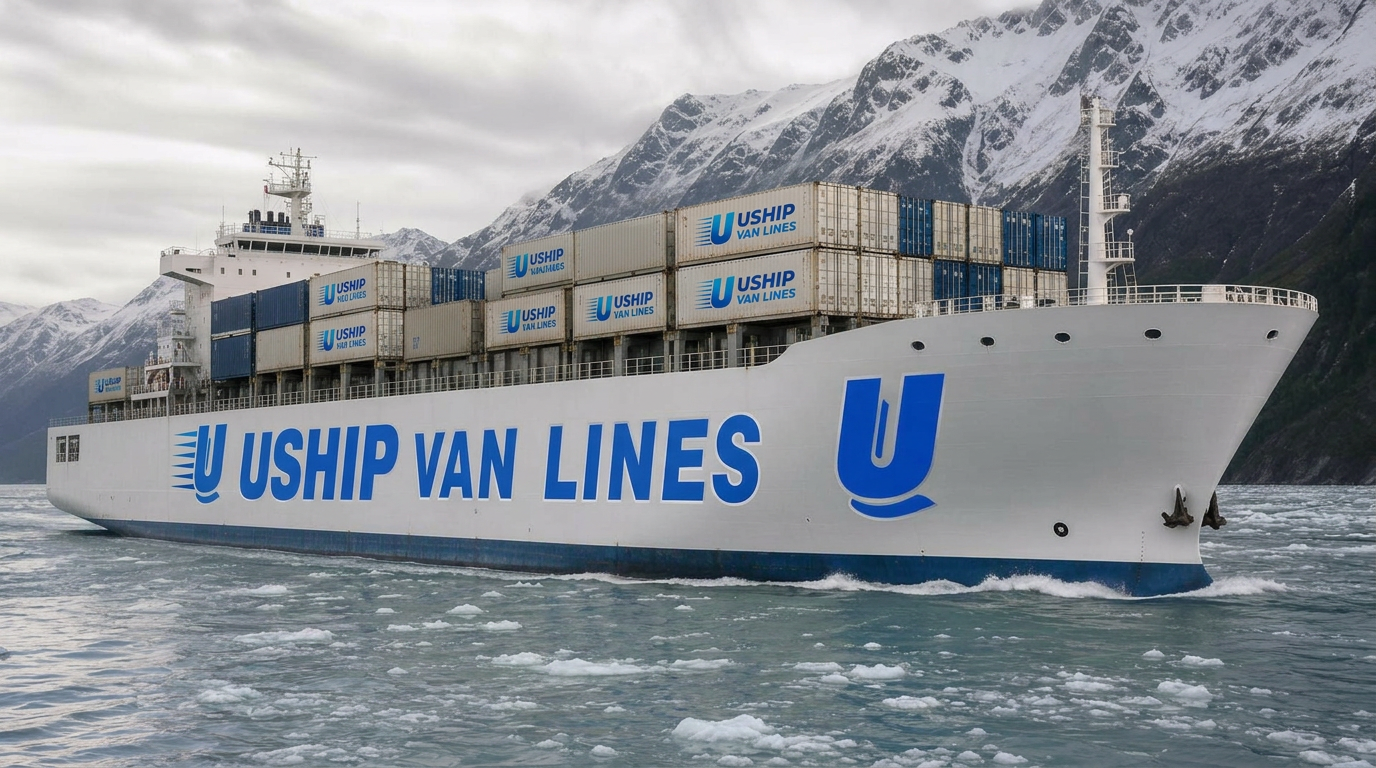
Moving from United States to Alaska
Moving from the contiguous United States to Alaska requires specialized logistics—your household goods will travel by truck to a West Coast port (typically Tacoma), then by ocean barge to Anchorage, before final delivery across Alaska's unique road system. Unlike standard long-distance moves, Alaska shipments involve marine freight, strict packing requirements, and careful timing around weather and sailing schedules.
Best Alaska & Hawaii Movers, powered by UShip Van Lines, coordinates every leg of this journey—from your front door in the Lower 48 to your new home in Anchorage, Fairbanks, the Mat-Su Valley, Kenai Peninsula, or even remote bush communities. Ready to simplify your Alaska move? Request a free, detailed quote tailored to your route and timeline.
Route overview
How Your Belongings Travel from the Lower 48 to Alaska
Your household goods begin their journey in a climate-controlled truck, traveling overland to the Port of Tacoma in Washington State. There, your shipment is loaded into a 20-foot, 40-foot, or 53-foot ocean container and placed aboard a weekly barge service operated by carriers like TOTE Maritime or Matson Navigation. The barge sails north through protected inside waters for approximately seven days, docking at the Port of Anchorage.
Once cleared through customs and port inspections, your container is unloaded and transferred to a final-delivery truck. If your destination is Anchorage or the Mat-Su Valley, delivery typically occurs within 1–3 days. Moves to Fairbanks, the Kenai Peninsula, or off-road-system communities require additional truck or air charter coordination. Total door-to-door transit usually ranges from 14 to 28 days, depending on barge schedules, port dwell time, and final destination.
Alaska's geographic isolation means flexibility is essential. Weather events, port labor schedules, and seasonal barge frequency all influence timing. Working with a specialist carrier ensures you have accurate sailing dates, real-time tracking, and contingency plans when conditions shift.
How the moving process works
Step-by-Step: Moving Your Household from the Lower 48 to Alaska
-
Request a Quote and Book Early
Contact Best Alaska & Hawaii Movers 6–12 weeks before your desired move date. Share your current address, Alaska destination, inventory size, and any vehicle shipments. You'll receive a detailed estimate covering truck, barge, and last-mile delivery. -
Coordinate Pickup and Port Delivery
A professional crew packs and loads your belongings in the Lower 48. The truck departs for the Port of Tacoma, arriving 3–5 days before your scheduled barge sailing. Your shipment is containerized and staged for loading. -
Barge Sailing and Ocean Transit
Your container boards a northbound barge, sailing every 7–10 days during peak season (May–September) and every 10–14 days in winter. Transit to Anchorage takes approximately 7 days via the Inside Passage. -
Port of Anchorage Clearance
Upon arrival, containers undergo customs inspection (if applicable) and port processing. Dwell time ranges from 1–3 days. You'll receive notification when your shipment is cleared for final delivery. -
Last-Mile Delivery Across Alaska
A local Alaska carrier transports your container to your new home. Deliveries to Anchorage or Mat-Su Valley occur within 1–3 days. Fairbanks deliveries add 2–4 days. Off-road-system locations may require barge-to-air or barge-to-river transfer. -
Unloading and Placement
Your delivery crew unloads all items, places furniture in rooms, and removes packing debris. Inspect your shipment thoroughly and note any issues on the delivery receipt for insurance purposes. -
Vehicle and Special Items Follow-Up
If shipping a vehicle separately, it will sail on the same or a subsequent barge. Vehicles typically arrive within the same 14–21 day window. Confirm VIN documentation and Alaska DMV requirements in advance.
Estimated moving costs
What Does a Move from the Lower 48 to Alaska Cost?
A typical 2-bedroom household (approximately 5,000–7,000 pounds) moving from the contiguous U.S. to Anchorage costs between $6,500 and $11,000 for full-service packing, barge freight, and delivery. A 3-bedroom home (8,000–12,000 pounds) generally ranges from $9,500 to $16,000. These estimates include overland truck to Tacoma, ocean container, and last-mile delivery within the Anchorage metro area.
Key cost drivers include:
- Distance from origin to Tacoma: Moves from the West Coast (California, Oregon, Washington) cost less in truck mileage than moves from the East Coast or Deep South.
- Container size: 20-foot containers suit studio to 2-bedroom moves; 40-foot and 53-foot containers serve larger homes. Shared (consolidated) containers reduce costs but add scheduling complexity.
- Peak vs. off-peak season: Summer sailings (June–August) carry premium rates due to high demand. Winter moves can save 10–20%.
- Final destination: Fairbanks deliveries add $800–$1,800 due to the 360-mile haul from Anchorage. Kenai Peninsula, Homer, and Kodiak routes add barge or ferry segments. Bush villages requiring air charter can add $3,000–$8,000.
- Packing services: Full professional packing costs $800–$2,200 for a 2-bedroom home. Self-packing reduces labor fees but shifts liability for fragile items.
- Vehicle shipping: Adding a car or truck to your barge shipment typically costs $1,200–$2,500 (Tacoma to Anchorage), depending on vehicle size and sailing schedule.
We never guarantee prices without a detailed inventory and route survey. Fuel surcharges, port fees, and seasonal adjustments apply. Request your personalized quote to lock in accurate pricing and sailing dates.
Estimated transit times
How Long Does a Move from the Lower 48 to Alaska Take?
Door-to-door transit from the contiguous U.S. to Anchorage typically requires 14 to 21 days. Fairbanks and remote Alaska destinations extend the timeline to 21 to 28 days. Breakdowns by leg:
- Overland truck to Port of Tacoma: 2–7 days, depending on your origin. West Coast pickups may deliver to the port in 1–2 days; East Coast or Midwest origins take 5–7 days.
- Port staging and containerization: 1–3 days. Your shipment waits for the next scheduled sailing, which departs weekly in summer and every 10–14 days in winter.
- Barge sailing (Tacoma to Anchorage): 7 days via the Inside Passage.
- Port of Anchorage clearance: 1–3 days for customs, inspection, and container release.
- Final delivery: 1–3 days for Anchorage and Mat-Su Valley; 2–4 additional days for Fairbanks; 5–10 days for Kenai Peninsula or Kodiak (which require additional barge or ferry segments).
Off-road-system communities (e.g., Bethel, Nome, Barrow, Dillingham) require air charter or seasonal river barge after Anchorage arrival, adding 7–21 days depending on flight availability and weather.
Plan conservatively. Winter weather, port labor slowdowns, and mechanical delays can add 3–7 days. Book your move 6–12 weeks in advance to secure preferred sailing dates and avoid peak-season congestion.
Regional logistics
Alaska-Specific Moving Logistics You Need to Know
Port of Entry and Customs
Alaska is a U.S. state, so customs inspections are minimal for domestic moves. However, the Port of Anchorage conducts agricultural inspections to prevent invasive species. Certain plants, soil, and untreated wood items are restricted. Declare all organic materials on your inventory to avoid fines or disposal fees.
Container Types and Consolidation
Full-service moves use 20-foot, 40-foot, or 53-foot ocean containers. Smaller moves (studio or 1-bedroom) may share a consolidated container with other shipments, reducing cost but requiring flexible delivery windows. Exclusive-use containers guarantee faster port clearance and delivery.
Vehicle Shipping
Vehicles travel on the same barges as household goods, secured in the vessel's vehicle deck. You must provide the title, registration, and a notarized letter of authorization if the vehicle is financed. Remove all personal items from the vehicle; only the spare tire, jack, and factory floor mats are allowed. Alaska DMV requires inspection and re-registration within 30 days of establishing residency.
Last-Mile Delivery Challenges
Alaska's road system serves only about 20% of the state's land area. Deliveries to Anchorage, Mat-Su Valley, Fairbanks, and the Kenai Peninsula are straightforward. Off-road-system communities (e.g., Juneau, Ketchikan, Sitka, Kodiak, Nome, Bethel) require additional barge, ferry, or air charter. Bush moves are quoted case-by-case and require close coordination with local air carriers or seasonal barge operators.
Packing for Marine Transit
Barge freight experiences motion, humidity, and temperature swings. Professional packers use reinforced cartons, moisture barriers, and extra padding for fragile items. Electronics, artwork, and antiques should be crated. Self-packers must use marine-grade materials; standard cardboard may fail in transit.
Storage Options
If your Alaska home isn't ready, Best Alaska & Hawaii Movers offers climate-controlled storage in Anchorage. Short-term (1–30 days) and long-term (monthly) options are available. Storage charges apply separately from the move cost.
Insurance and Valuation
Basic carrier liability covers $0.60 per pound per item. Full-value replacement insurance is strongly recommended for Alaska moves due to the marine leg. Discuss coverage limits and premium costs during your quote consultation.
Seasonal considerations
When Should You Move from the Lower 48 to Alaska?
Summer (June–August): Peak moving season. Barge sailings run weekly, roads are clear, and weather is predictable. However, demand is highest—expect premium pricing and the need to book 8–12 weeks ahead. Ideal if you must move during school breaks or before winter.
Spring (April–May) and Fall (September–October): Shoulder seasons offer moderate pricing, weekly or bi-weekly sailings, and fewer port delays. Weather is generally cooperative, though late-season snowstorms or early freeze-ups can occur in Interior Alaska (Fairbanks, Delta Junction). Excellent value if your schedule is flexible.
Winter (November–March): Off-peak season. Barge frequency drops to every 10–14 days, and pricing is 10–20% lower. Winter weather can delay final delivery to Fairbanks or remote areas due to icy roads or airport closures. Best for budget-conscious movers without tight deadlines. Note that some bush communities become inaccessible except by air.
Alaska-specific timing considerations:
- Permanent Fund Dividend (PFD) season (October): Many Alaskans move in early fall to establish residency for the following year's dividend eligibility. Expect moderate demand.
- Ice Road season (January–March): Some remote villages are accessible only via seasonal ice roads. Coordinate carefully if moving to these areas.
- Port labor and holidays: Thanksgiving, Christmas, and New Year can delay port operations by 3–7 days. Plan around these dates.
No matter the season, working with Alaska specialists ensures your shipment is routed on the best available sailing and delivered safely across Alaska's challenging terrain.
Why choose Best Alaska & Hawaii Movers
Why Best Alaska & Hawaii Movers for Your Lower 48 to Alaska Move
- Alaska Barge Specialists: We coordinate weekly sailings from Tacoma to Anchorage and manage the entire marine freight process—containerization, port clearance, and last-mile delivery across Alaska's road and off-road-system communities.
- Single-Source Accountability: Powered by UShip Van Lines, we handle every leg of your move—no handoffs to unknown subcontractors. You have one point of contact from pickup in the Lower 48 to delivery in Alaska.
- Transparent, Detailed Quotes: Our estimates break down truck mileage, barge freight, port fees, and final delivery costs. No hidden charges. No surprise fuel surcharges at delivery.
- Flexible Scheduling and Storage: We accommodate tight timelines, off-peak moves, and interim storage needs. Whether you're moving in summer's peak season or winter's budget window, we find the right sailing and delivery plan.
- Proven Track Record: We've successfully moved thousands of households to Anchorage, Fairbanks, Mat-Su Valley, Kenai Peninsula, and remote Alaska communities. Our team understands Alaska's unique logistics, weather, and regulatory environment.
- White-Glove Service Options: Full packing, crating, vehicle shipping, and unpacking services available. We tailor service levels to your budget and schedule, ensuring your belongings arrive safe and on time.