
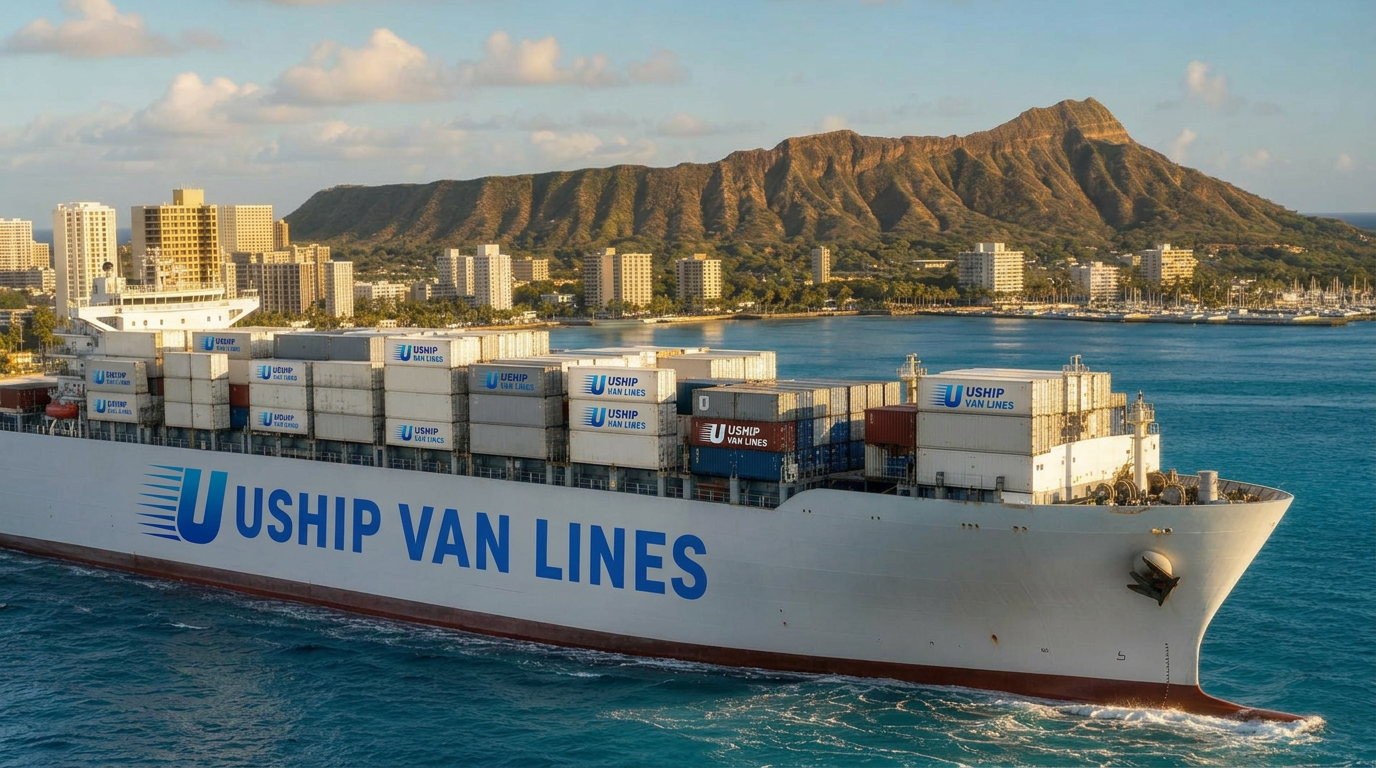
Moving from Tampa, FL to Hawaii
Moving from Tampa to Hawaii means coordinating a cross-country drive with transpacific ocean shipping—your household goods travel by truck to a West Coast port (typically Long Beach or Oakland), then by container ship to Honolulu, and potentially inter-island to Maui, Kauai, or the Big Island. The entire journey spans roughly 4,500 miles and combines mainland logistics with Hawaii-specific regulations, port schedules, and island delivery challenges.
Best Alaska & Hawaii Movers, powered by UShip Van Lines, specializes in this exact route. We handle the full coordination—land transport, port delivery, ocean container booking with Matson or Pasha, and final-mile delivery to your island address. Request a free quote today to see how we simplify your Tampa-to-Hawaii move.
Route overview
Tampa to Hawaii: A Two-Stage Ocean Move
Tampa sits on Florida's Gulf Coast, nearly 5,000 miles from Honolulu by the most efficient routing. Your belongings travel by long-haul truck across the southern United States—through Louisiana, Texas, Arizona, and California—to reach a West Coast departure port. Long Beach and Oakland serve as the primary Hawaii gateways, with weekly Matson and Pasha sailings departing year-round.
Once containerized and loaded aboard a cargo vessel, your shipment sails 2,400 nautical miles across the Pacific to Honolulu. Typical ocean transit is 5–7 days. If your final destination is Maui, Kauai, or the Big Island, cargo transfers to a smaller inter-island barge (Young Brothers), adding 3–7 additional days. Door-to-door, expect 14–28 days total, depending on scheduling, port congestion, and weather.
Hawaii enforces strict agricultural inspections and quarantine rules. Every shipment undergoes Department of Agriculture screening in Honolulu. Prohibited items—certain plants, soil, untreated wood, fresh produce—will be confiscated. Your mover's job is to prep your inventory correctly, ensure container sealing meets USDA standards, and coordinate customs clearance so your goods clear inspection without delay.
How the moving process works
How Your Tampa-to-Hawaii Move Works: Step by Step
-
In-home or virtual survey – A specialist catalogs your inventory, notes any oversized items (pianos, motorcycles, gun safes), and provides a binding or not-to-exceed estimate. Hawaii moves are priced by container space (cubic feet or linear feet), not simple weight.
-
Packing and loading in Tampa – Professional crews wrap furniture, box fragile items, and load your belongings into a 53-foot semi-trailer. All prohibited agricultural items are flagged and removed before departure.
-
Cross-country haul to the West Coast – Your truck drives I-10 and I-15 corridors to Long Beach or Oakland. Transit time is typically 4–7 days, depending on route and weather. The truck delivers your goods to a container freight station (CFS) near the port.
-
Containerization and ocean booking – Movers transfer your household into a 20-foot or 40-foot ocean container (shared or exclusive, depending on shipment size). The container is sealed, inspected, and loaded onto the next available Matson or Pasha sailing.
-
Ocean crossing to Honolulu – Ships depart weekly and sail 5–7 days. Cargo discharges at Sand Island terminal. Hawaii Department of Agriculture inspectors open and examine every container, checking for prohibited items and pests.
-
Inter-island transfer (if needed) – For Maui, Kauai, or Big Island destinations, your container moves to Young Brothers' barge service. Sailings run 2–4 times weekly per island, adding 3–7 days.
-
Final delivery and unloading – A local island crew transports your container to your residence, unloads, unpacks if contracted, and hauls away debris. You inspect and sign off on delivery.
Estimated moving costs
What Does a Tampa-to-Hawaii Move Cost?
A typical 2-bedroom move (approximately 1,000–1,500 cubic feet) from Tampa to Honolulu runs $6,500–$10,500, while a 3-bedroom household (2,000–2,500 cubic feet) costs $10,000–$16,000. These ranges reflect door-to-door service, including mainland haul, ocean freight, and Honolulu delivery. Moving to an outer island (Maui, Kauai, Big Island) adds $1,500–$3,000 for inter-island barge and local delivery.
Key cost drivers include:
- Shipment volume – Hawaii movers charge by space, not weight. A 20-foot container holds roughly 1,000–1,200 cubic feet; a 40-foot container, 2,000–2,400 cubic feet. Exclusive-use containers cost more but protect your goods and speed transit.
- Packing services – Full professional packing adds $800–$2,200. Many customers pack non-fragile items themselves and hire pros for kitchens, art, and electronics.
- Vehicle shipping – Cars and motorcycles ship separately via RORO (roll-on/roll-off) auto carriers. Tampa to Honolulu auto transport runs $1,400–$2,200 per vehicle, with 2–3 weeks transit.
- Storage – If your Hawaii residence isn't ready, warehouse storage in Honolulu costs $150–$400/month for a typical household.
- Season and fuel surcharges – Summer (May–August) sees higher demand and occasional fuel surcharges. Off-peak winter months may offer slightly lower rates.
Best Alaska & Hawaii Movers provides transparent, itemized quotes with no hidden fees. We never guarantee exact prices online—every move is unique—but we do promise accurate estimates based on real inventory and current freight rates.
Estimated transit times
How Long Does Tampa to Hawaii Take?
Door-to-door transit from Tampa to Honolulu averages 14–21 days. Outer-island destinations stretch that to 21–28 days. Here's the breakdown:
- Tampa to West Coast port (Long Beach/Oakland): 4–7 days by truck.
- Port staging and containerization: 1–3 days while your shipment is consolidated, loaded into a container, and scheduled for the next available sailing.
- Ocean crossing to Honolulu: 5–7 days.
- Agriculture inspection and customs clearance: 1–2 days in Honolulu. Most containers clear same-day, but complex shipments or red flags can add a day.
- Inter-island barge (Maui, Kauai, Big Island): 3–7 days, depending on sailing schedules and weather.
- Final delivery window: Local crews typically schedule delivery within 1–3 days of container arrival on your island.
Factors that can extend timelines:
- Port congestion – Long Beach and Oakland occasionally experience backups during peak shipping seasons (pre-holidays, summer).
- Weather delays – Pacific storms, hurricanes near Hawaii, or winter weather on I-10 can pause transport.
- Agricultural holds – If inspectors flag something in your container, resolution adds 1–3 days.
- Booking lead time – Scheduling your move 4–6 weeks in advance ensures you catch your preferred sailing. Last-minute bookings may wait an extra week for container space.
Best Alaska & Hawaii Movers tracks every leg in real time. You'll receive container numbers, sailing confirmations, and delivery updates via email and text.
Regional logistics
Hawaii-Specific Moving Logistics You Must Know
Ports and shipping lines
Matson Navigation and Pasha Hawaii dominate Hawaii freight. Both offer weekly sailings from Long Beach and Oakland to Honolulu, with Matson also serving Kahului (Maui), Nawiliwili (Kauai), and Hilo/Kawaihae (Big Island) on select schedules. Your mover books container space on your behalf, coordinating cut-off dates and documentation.
Agricultural restrictions
Hawaii's island ecosystem is fragile. The state bans soil, potted plants (unless certified), untreated wooden furniture, certain seeds, fresh fruits, and live plants. Before packing, review the Hawaii Department of Agriculture prohibited items list. Movers will flag risky items during the survey, but ultimate responsibility rests with you. Violations result in confiscation and potential fines.
Vehicle shipping
Cars, trucks, and motorcycles cannot travel inside household-goods containers. They ship separately via RORO carriers (Matson, Pasha, Horizon). Vehicles must be operable, registered, and empty (no personal items inside). Tampa to Honolulu auto transport costs $1,400–$2,200 and takes 2–3 weeks. Book your vehicle and household shipments simultaneously to coordinate arrival.
Firearms
Hawaii has strict gun laws. You must register firearms with the Honolulu Police Department (or your destination county) within 3 days of arrival. Your mover can transport firearms in your household shipment if properly declared, unloaded, and packed separately. Never hide firearms; customs penalties are severe.
High-rise and condo deliveries
Many Honolulu condos require advance elevator reservations, certificate-of-insurance filings, and building access coordination. Outer islands have fewer high-rises but more rural, narrow-road addresses. Share your exact delivery location (including gate codes, parking restrictions, and building rules) during booking so your crew can prep.
Storage and warehousing
If your Hawaii home isn't ready, your shipment can be warehoused in Honolulu (or on your destination island) in a climate-controlled facility. Rates run $150–$400/month depending on volume. Storage-in-transit (SIT) is common for military and corporate relocates awaiting housing.
Seasonal considerations
Best (and Worst) Times to Move from Tampa to Hawaii
Spring (March–May): Ideal conditions
Mild weather across the mainland, calm Pacific seas, and lighter port traffic make spring the sweet spot. Rates are moderate, and transit is predictable. Book 4–6 weeks ahead.
Summer (June–August): Peak season
Schools out, job relocations, and military PCS moves flood the lanes. Expect higher rates, tighter container availability, and occasional 1–2 week waits for sailings. Hurricane season begins in June for the Eastern Pacific (affecting southern California ports) and the Central Pacific (Hawaii). Early booking—8 weeks minimum—is critical.
Fall (September–November): Hurricane watch
Atlantic hurricane season (June–November) can disrupt Tampa departures if storms threaten the Gulf Coast. Central Pacific hurricane season peaks August–October, occasionally delaying Honolulu port operations or inter-island barges. Rates moderate after Labor Day, and availability improves. If booking September–October, build in a 1–2 day weather buffer.
Winter (December–February): Off-peak opportunity
Lowest demand, best pricing, and fastest scheduling. I-10 across the Southwest can see winter storms (especially in Arizona high country), adding 1–2 days to cross-country haul. Pacific seas are rougher, but cargo ships sail on schedule. Holiday moves (mid-December) see a mini-peak; avoid that window if you want true off-season rates.
Pro tip: If your Hawaii lease or closing date is flexible, target a March–April or October–November move for the best balance of cost, speed, and reliability.
Why choose Best Alaska & Hawaii Movers
Why Best Alaska & Hawaii Movers for Your Tampa-to-Hawaii Move?
- Specialized Hawaii expertise – We move households to and from Hawaii every week, navigating USDA inspections, inter-island logistics, and port coordination that general movers avoid.
- Transparent, itemized pricing – No hidden fees, no surprise fuel surcharges. You'll see exactly what you're paying for: mainland haul, ocean freight, port handling, island delivery, and optional packing.
- Real-time tracking and dedicated support – From Tampa pickup to Honolulu (or outer-island) delivery, you'll have a personal move coordinator, container tracking numbers, and proactive updates at every milestone.
- Powered by UShip Van Lines' nationwide network – Our mainland transportation runs on UShip Van Lines' vetted carrier network, ensuring reliable, professional service from Florida to the West Coast.
- Flexible scheduling and storage solutions – We accommodate tight timelines, early pack-outs, and storage-in-transit if your Hawaii residence isn't ready. Our warehouses in Honolulu and on neighbor islands keep your goods safe and climate-controlled.
- No false promises – We never claim guaranteed flat rates, fake licensing, or invented awards. We earn your business with honest estimates, proven logistics, and thousands of successful Hawaii moves.