
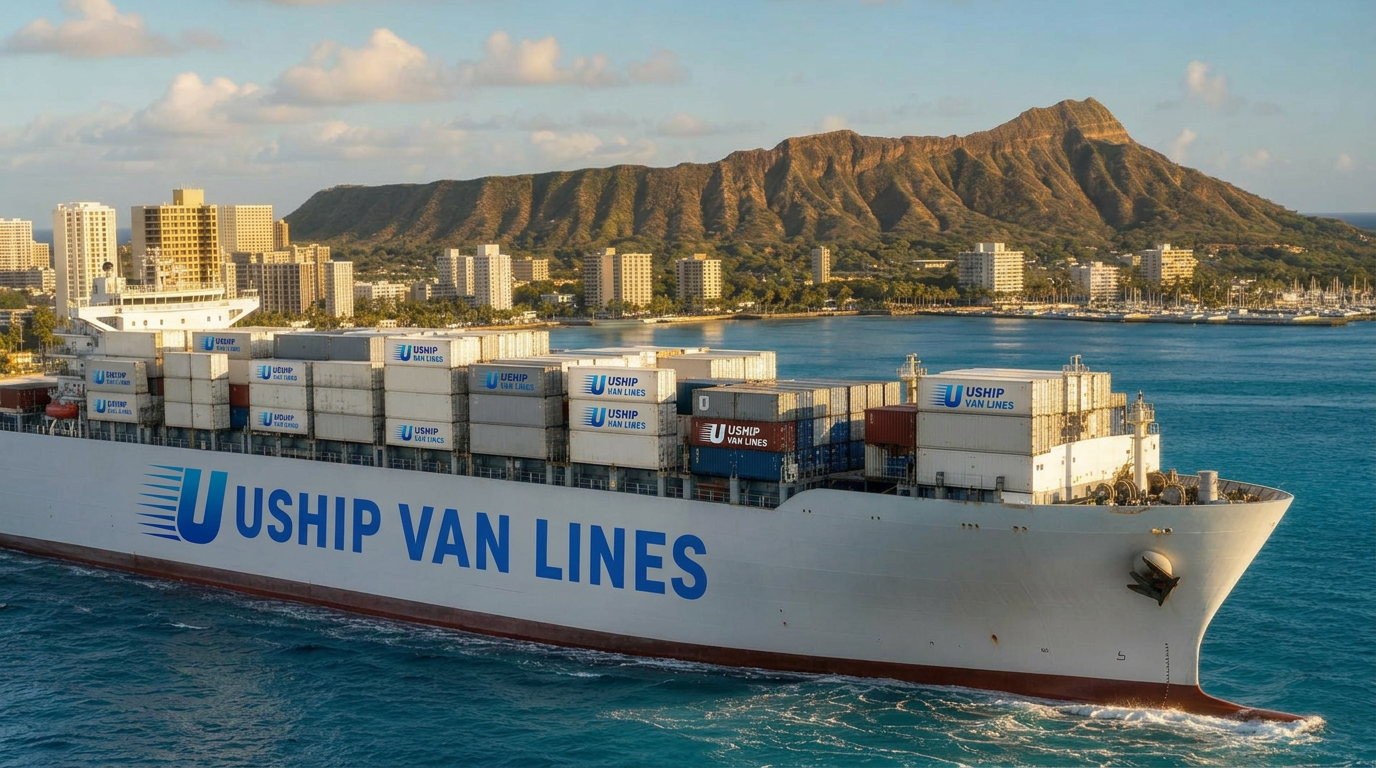
Moving from St Petersburg, FL to Hawaii
Moving from St Petersburg, Florida to Hawaii represents one of the most dramatic lifestyle changes you can make—trading the Gulf Coast for the Pacific, and replacing familiar mainland conveniences with island living. This cross-country, cross-ocean move requires significantly more planning than a typical long-distance relocation, involving ground transportation across the continental U.S. followed by ocean container shipping to the Hawaiian Islands.
Best Alaska & Hawaii Movers, powered by UShip Van Lines, specializes in these complex mainland-to-Hawaii relocations. We coordinate every leg of your journey—from pickup in St Petersburg through consolidation, ocean freight, and final delivery to your island home. Request your free, no-obligation quote today to begin planning your move with confidence.
Route overview
Understanding the St Petersburg to Hawaii Moving Route
Your belongings will travel approximately 4,700–5,000 miles from St Petersburg to Hawaii, depending on your final island destination. The journey begins with ground transportation from Florida's Gulf Coast to a West Coast consolidation point, typically Los Angeles or Oakland. There, your household goods are loaded into a 20-foot or 40-foot ocean container alongside other Hawaii-bound shipments.
The container then sails on Matson Navigation or Pasha Hawaii vessels to Honolulu (Oahu). Trans-Pacific crossing takes 8–12 days depending on route and weather. If you're moving to Maui, Kauai, or the Big Island, your container undergoes an additional inter-island voyage adding 3–7 days. Final delivery from the port to your new Hawaii residence completes the journey.
This routing strategy balances efficiency and cost. Direct shipping from Florida ports doesn't serve Hawaii regularly, making the cross-country consolidation model the industry standard for mainland-to-Hawaii household moves.
How the moving process works
Step-by-Step Moving Process: St Petersburg to Hawaii
-
Free In-Home or Virtual Survey – A moving specialist evaluates your inventory to determine container space requirements, identify items restricted or prohibited in Hawaii (plants, certain foods, some pets), and provide an accurate cost estimate. Lead time of 6–10 weeks is recommended for Hawaii moves.
-
Packing and Pickup in St Petersburg – Professional movers arrive at your Florida home, pack your belongings using ocean-worthy materials and crating for fragile items, and load everything onto a truck. Your inventory is documented with a detailed bill of lading.
-
Ground Transit to West Coast Port – Your shipment travels 2,700–3,000 miles across the U.S. to Los Angeles/Long Beach or Oakland/San Francisco. This leg typically takes 5–8 days depending on routing and whether the truck makes other pickups.
-
Container Loading and Port Processing – At the West Coast consolidation facility, your goods are loaded into a shared or exclusive-use ocean container. The container undergoes customs documentation, agricultural inspection prep, and USDA compliance checks before port delivery.
-
Ocean Voyage to Honolulu – Matson or Pasha vessels depart weekly from West Coast ports. The Pacific crossing takes 8–12 days. Containers arrive at Honolulu's Sand Island terminal or Pier 51, where they clear Hawaii Department of Agriculture inspection for invasive species and prohibited items.
-
Inter-Island Transfer (if applicable) – Moves to neighbor islands require container transfer to Young Brothers or Matson inter-island barges. Maui, Kauai, and Big Island deliveries add 3–7 days depending on barge schedules and destination port.
-
Final Delivery to Your Hawaii Home – A local Hawaii moving crew delivers your container to your residence, unloads, and places items in designated rooms. You inspect the shipment and note any damage or missing items on the delivery receipt for insurance purposes.
What to Expect on Moving Day
In St Petersburg, your moving crew will arrive with specialized packing materials designed for the lengthy journey. Ocean-bound shipments require reinforced cartons, extra padding, and often custom crating for artwork, mirrors, and electronics. The loading process typically takes 4–8 hours for a standard household.
Communicate any items requiring special handling—musical instruments, antiques, heirlooms. Hawaii's agricultural restrictions mean many common household items won't make the trip: houseplants, soil, fresh/dried fruits, seeds, wooden items with bark, and untreated wicker. Your moving team will identify restricted items during packing, but pre-move purging saves time and reduces costs.
Estimated moving costs
Cost Expectations for Your St Petersburg to Hawaii Move
A typical 2–3 bedroom household move from St Petersburg to Hawaii costs $6,500–$13,500 depending on volume, service level, and final island destination. This range reflects shared container service (consolidation with other shipments) for approximately 1,000–2,500 cubic feet of household goods.
Key cost drivers include:
- Volume and weight – Ocean freight charges by cubic foot or container size; a full exclusive-use 20-foot container costs significantly more than shared space but offers faster transit
- Packing services – Professional packing adds $800–$2,200 but ensures proper ocean-worthy protection; partial packing (fragiles only) provides middle-ground option
- Destination island – Oahu deliveries cost less; Maui, Kauai, and Big Island moves add $800–$2,000 for inter-island barge and additional handling
- Access and delivery – Difficult access, stairs, long carries, and shuttle requirements increase labor costs; rural Hawaii locations may incur extra delivery fees
- Timing – Peak summer moving season (May–August) commands premium rates; off-season moves (September–April, excluding holidays) can save 10–20%
- Insurance coverage – Basic carrier liability covers $0.60/lb; full replacement value protection costs 1–3% of declared inventory value
- Vehicle shipping – Cars ship separately via Matson/Pasha auto service; budget $1,200–$1,800 per vehicle from West Coast ports
Service level options:
- Shared container (consolidation) – Most economical; your goods share container space with other shipments; 6–10 week total transit typical
- Exclusive-use container – Faster, more secure; your household fills an entire 20' or 40' container; reduces handling and damage risk
- Express service – Premium option combining exclusive container with expedited ground transit and priority vessel booking; 4–5 week total transit
Request a detailed written estimate specifying all charges, transit timeline, container type, and insurance coverage. Reputable Hawaii movers provide transparent pricing with no hidden fees.
Estimated transit times
Realistic Timeline: St Petersburg to Hawaii Door-to-Door
Total transit time from St Petersburg pickup to final delivery in Hawaii typically ranges 35–70 days depending on service level, destination island, and seasonal factors.
Breakdown by leg:
- St Petersburg pickup to West Coast consolidation facility: 5–10 days (faster for direct transit, longer if truck makes multiple pickups)
- Consolidation and container loading: 3–10 days (waiting for sufficient volume for shared containers; exclusive-use containers load immediately)
- West Coast port processing and customs: 2–5 days (agricultural inspection, documentation, vessel scheduling)
- Ocean voyage to Honolulu: 8–12 days (weather-dependent; winter storms can add 1–3 days)
- Hawaii port clearance and agricultural inspection: 2–5 days (HDOA inspection can delay shipments with flagged items)
- Inter-island barge (neighbor islands only): 3–7 days (barge schedules vary; Big Island's Hilo/Kawaihae and Maui's Kahului receive more frequent service than Kauai's Nawiliwili)
- Final delivery scheduling and delivery: 1–5 days (coordinating crew availability and your schedule)
Fastest possible timeline: Exclusive-use container with expedited ground service to Oahu can complete in 28–35 days under ideal conditions.
More typical experience: Shared container service to neighbor islands averages 45–60 days during normal seasons.
Plan for delays: Hurricane season (June–November), holiday shipping peaks (November–December), and port congestion can extend timelines by 1–3 weeks. Build buffer time into your move plan, especially if you have firm lease start dates or closing deadlines.
Regional logistics
Hawaii-Specific Logistics and Requirements
Port operations: Your container arrives at Honolulu's Sand Island (Matson) or Pier 51 (Pasha) terminals. Hawaii Department of Agriculture inspectors examine containers for invasive species, pests, and prohibited items before release. Inspection delays of 1–3 days are normal; shipments flagged for concerns can face week-long holds while inspectors physically examine contents.
Prohibited and restricted items: Hawaii maintains the nation's strictest agricultural regulations to protect fragile island ecosystems. Absolutely prohibited: All live plants and cuttings, soil and sand, fresh fruits and vegetables, seeds, wood with bark attached, untreated wicker/rattan, used sporting equipment with soil residue, and pets (which require separate FAVN rabies testing and quarantine processes). Restricted but allowable with proper treatment/documentation: Some processed foods, treated lumber, certain outdoor equipment after cleaning. Your moving company should provide a comprehensive prohibited items list during booking.
Vehicle shipping: Cars, motorcycles, and boats ship separately through Matson or Pasha auto divisions. West Coast departure ports (Long Beach, Oakland, San Diego) offer weekly sailings. Budget $1,200–$1,800 per standard vehicle from West Coast to Honolulu, plus $300–600 for neighbor island delivery. Vehicles must be cleaned (no soil, no personal items inside), contain less than ¼ tank fuel, and pass agricultural inspection. Allow 2–3 weeks port-to-port, 3–4 weeks total door-to-door including ground delivery from St Petersburg to West Coast.
Container types: Standard 20-foot containers hold approximately 1,000–1,200 cubic feet (2–3 bedroom home). 40-foot containers hold 2,200–2,400 cubic feet (4–5 bedroom home). Shared/consolidated service means your goods occupy portion of a container with other shipments—economical but slower. Exclusive-use containers cost 40–60% more but offer faster transit, reduced handling, and lower damage risk.
Delivery challenges in Hawaii: Many Hawaii neighborhoods feature narrow streets, steep driveways, and limited truck access. Older apartment buildings may lack elevators or have weight restrictions. Rural properties on outer islands sometimes require shuttle trucks or even barge access for remote coastal areas. Discuss your Hawaii address specifics during booking—access issues discovered on delivery day create costly delays and additional fees.
Storage options: If your Hawaii residence isn't ready, most moving companies offer storage at West Coast facilities (before ocean shipping) or in Hawaii warehouses (after arrival). Costs run $150–400/month depending on volume and location. Hawaii real estate timing often requires flexibility—closing delays and lease complications are common.
Documentation: You'll need detailed inventory lists for customs and agricultural inspection, proof of Hawaii residency (lease, purchase agreement, or utility connection), and vehicle registration/title for auto shipments. Military members moving under PCS orders require additional DOD paperwork but may qualify for cost assistance.
Seasonal considerations
Best Times to Move from St Petersburg to Hawaii
Winter (December–February): Moderate moving demand but Pacific winter storms can delay ocean crossings by 2–5 days. Holiday periods (mid-December through early January) create port congestion and limited crew availability. However, January–February offers excellent rates once holiday rush subsides. St Petersburg weather is mild, making loading easy.
Spring (March–May): Excellent moving window. Ocean conditions improve, port operations run smoothly, and you'll avoid both winter storms and summer peaks. Rates remain reasonable through April, then increase as summer approaches. Book early for May moves as families target summer arrival.
Summer (June–August): Peak moving season with highest demand and premium pricing. June–July offer best Hawaii weather but expect 15–25% higher costs and fuller container schedules. Hurricane season officially begins June 1, though major storms remain rare until August. Florida's summer heat and afternoon thunderstorms can complicate St Petersburg loading days—schedule morning pickups when possible.
Fall (September–November): September–October represents the sweet spot for cost savings (10–20% below summer rates) despite being peak hurricane season. November brings Thanksgiving complications and the start of holiday shipping volume. Atlantic hurricane season (affecting Florida departure) peaks August–October, while Pacific hurricane season affects Hawaii-bound vessels most in August–September. Modern forecasting and routing minimize actual storm delays.
Hurricane season considerations: Both Florida and Hawaii face hurricane risks, but timing differs. Atlantic storms threaten St Petersburg June–November (peak August–October). Pacific storms affect Hawaii June–November (peak August–September). Reputable movers monitor forecasts and adjust schedules proactively. Your shipment insurance should cover weather-related damages.
Booking lead time: Reserve your move 8–12 weeks ahead for summer dates, 6–8 weeks for other seasons. Last-minute Hawaii moves (under 4 weeks) face limited container availability and premium emergency rates.
Why choose Best Alaska & Hawaii Movers
Why Choose Best Alaska & Hawaii Movers for Your St Petersburg to Hawaii Move
-
Specialized Hawaii expertise – We focus exclusively on mainland-to-Hawaii and Alaska relocations, not general long-distance moving; our teams understand Hawaii agricultural restrictions, port operations, and inter-island logistics that general movers miss
-
Transparent, all-inclusive pricing – Your written estimate details every charge: ground transportation, ocean freight, port fees, inter-island barge (if applicable), delivery, and insurance; no surprise fees or hidden costs on delivery day
-
End-to-end coordination powered by UShip Van Lines – One point of contact manages your entire move from St Petersburg pickup through Hawaii delivery; we coordinate ground carriers, ocean freight, port processing, agricultural compliance, and final delivery crews
-
Flexible service levels – Choose shared container consolidation for budget-conscious moves, exclusive-use containers for faster transit and added security, or expedited service when timing is critical; partial packing and full-service options accommodate every need
-
Proven claims support – Damage happens despite best efforts; our partnership with UShip Van Lines provides responsive claims processing and fair settlements when issues arise; we guide you through documentation and resolution
-
Real-time shipment tracking – Monitor your container's progress from Florida pickup through ocean voyage to island delivery; receive proactive updates on vessel departures, port arrivals, and delivery scheduling