
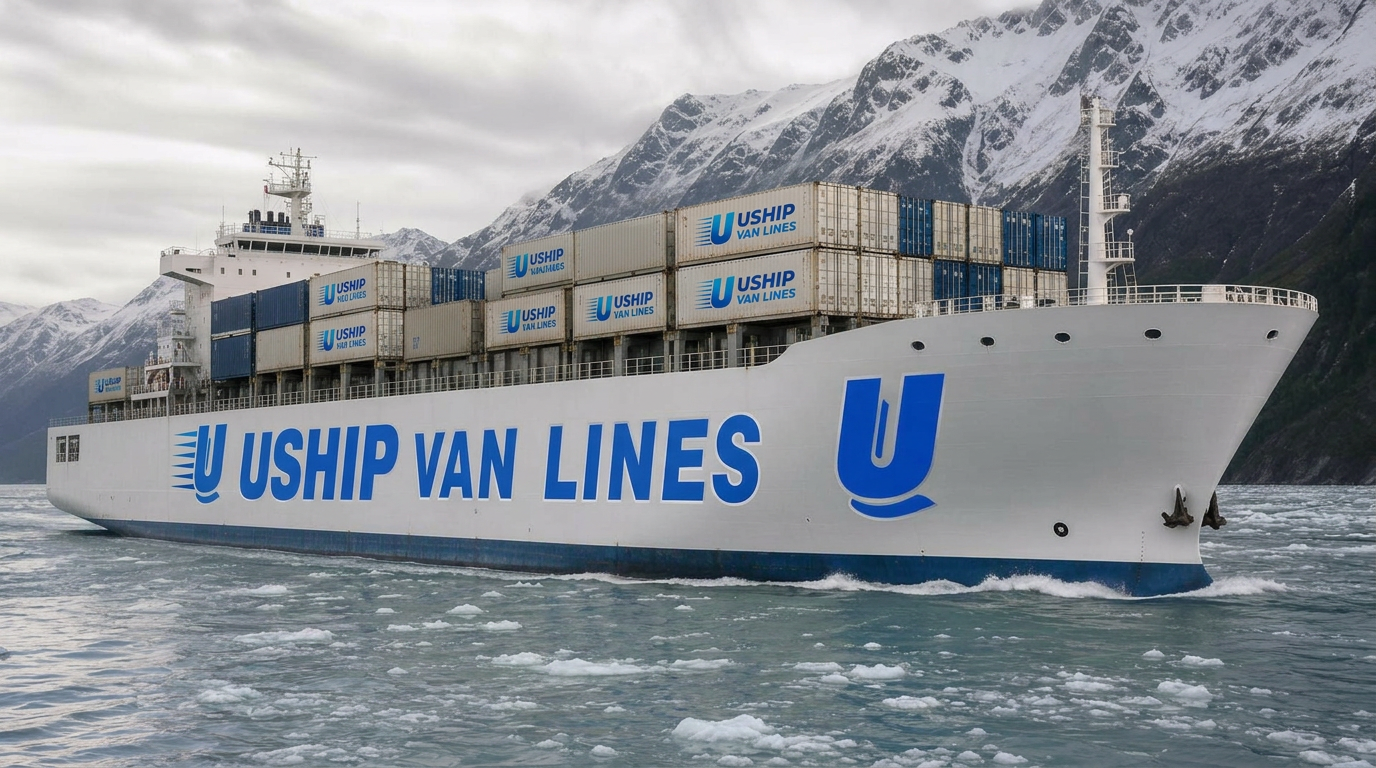
Moving from Shelton, CT to Alaska
Moving from Shelton, Connecticut to Alaska represents one of the most significant relocations you can make—crossing over 3,400 miles and requiring specialized maritime logistics. Unlike standard continental moves, your household goods will travel by truck from Shelton to the Pacific Northwest, then aboard a dedicated barge service to Alaska, followed by final delivery to your destination community.
Best Alaska & Hawaii Movers, powered by UShip Van Lines, coordinates every phase of this complex journey. From residential neighborhoods in Shelton to Anchorage, Fairbanks, the Mat-Su Valley, Kenai Peninsula, or even remote bush communities, we handle the specialized routing, documentation, and last-mile coordination your Alaska move demands. Request your free quote today to get started with accurate pricing and timeline planning.
Route overview
The Shelton, CT to Alaska Moving Route
Your belongings begin their journey in Shelton, a valley community in Fairfield County, approximately 65 miles northeast of New York City. The initial phase involves professional packing and loading at your Connecticut residence, followed by over-the-road transport spanning approximately 3,000 miles to a Pacific Northwest consolidation terminal—typically the Port of Tacoma in Washington State.
From Tacoma, your household goods join a dedicated Alaska barge service, crossing the Gulf of Alaska to reach the Port of Anchorage. This maritime leg covers roughly 1,400 nautical miles and operates on weekly or bi-weekly schedules depending on season. The barge transit represents the longest phase of your move, typically requiring 7–10 days of ocean transport plus port processing time on both ends.
Upon arrival in Alaska, last-mile delivery depends on your final destination. Anchorage and Mat-Su Valley locations receive direct truck delivery from the port. Destinations like Fairbanks require additional over-the-road transport of approximately 360 miles. Kenai Peninsula communities add ferry or truck routes. Remote bush locations may necessitate air cargo or seasonal ice road access, requiring specialized coordination and extended timelines.
How the moving process works
Step-by-Step: How Your Shelton to Alaska Move Works
-
Free Consultation & Quote – Contact Best Alaska & Hawaii Movers for a detailed inventory assessment. We'll discuss your Shelton pickup date, Alaska destination, special items (vehicles, boats, ATVs), and any storage needs. You'll receive a comprehensive quote breaking down truck transport, barge fees, and last-mile delivery costs.
-
Pre-Move Planning & Documentation – Approximately 4–6 weeks before your move, we coordinate your pickup window and Alaska delivery preferences. You'll receive guidance on items restricted for barge transport (hazardous materials, certain perishables, pressurized containers) and complete any required documentation for vehicle shipments or firearms.
-
Professional Packing & Loading in Shelton – Our crew arrives at your Connecticut home with appropriate materials for long-distance, multi-modal transport. Furniture receives protective wrapping designed to withstand both truck and maritime environments. Fragile items get extra cushioning, and inventory documentation ensures tracking throughout the journey.
-
Over-the-Road Transport to Pacific Northwest – Your shipment travels approximately 3,000 miles to our Tacoma consolidation terminal. This phase typically takes 5–7 days depending on routing and weather conditions. Your goods are secured in a climate-controlled trailer designed for long-haul transport, then staged for barge loading.
-
Barge Loading & Maritime Transit – At the Port of Tacoma, your belongings transfer to a dedicated Alaska barge service. Containers or trailer units are loaded aboard vessels specifically designed for Alaska routes. The maritime crossing to Anchorage takes 7–10 days, with your shipment secured against ocean conditions and tracked via vessel position systems.
-
Port Clearance & Alaska Customs – Upon arrival at the Port of Anchorage, your shipment undergoes standard port processing and any required inspections. While Alaska is part of the United States, certain agricultural inspections may apply. This port clearance typically adds 1–2 business days before last-mile delivery begins.
-
Final Delivery to Your Alaska Home – The last mile depends on your destination. Anchorage-area deliveries occur within 1–3 days of port clearance. Fairbanks adds 1–2 days for the Interior Alaska haul. Kenai Peninsula, Mat-Su communities, or bush locations require coordination based on road conditions, ferry schedules, or seasonal access. Our team confirms your delivery window 48–72 hours in advance and completes a thorough inventory check at unload.
Estimated moving costs
Cost Expectations for Your Shelton, CT to Alaska Move
A typical 2–3 bedroom household moving from Shelton to Alaska generally ranges between $8,500 and $14,500 for full-service door-to-door delivery. Studio and 1-bedroom moves may start around $5,500–$7,000, while larger 4-bedroom homes or those with substantial garage/shop contents can exceed $16,000–$20,000. These figures represent realistic estimates for spring/summer peak season; actual costs depend on multiple variables unique to your situation.
Key Cost Drivers:
-
Volume and Weight – Alaska barge pricing incorporates both cubic footage and weight. A 1,200 cubic foot shipment (typical 2BR home) costs significantly less than 2,000+ cubic feet. Heavy items like gun safes, shop equipment, or extensive book collections increase costs beyond standard furniture loads.
-
Distance to Final Destination – Anchorage represents the base delivery zone. Fairbanks adds $800–$1,500 for the additional 360-mile Interior haul. Kenai Peninsula communities, Homer, Soldotna, or Seward may add $500–$1,200. Remote bush destinations requiring air cargo or seasonal barge/ice road access incur substantial premiums—sometimes doubling base costs.
-
Seasonal Timing – Peak summer months (May–August) see highest barge demand and premium pricing. Shoulder seasons (April, September) offer moderate savings of 10–15%. Winter moves (October–March) may provide 15–25% discounts but face weather delays, reduced barge frequency, and potential road closures affecting last-mile delivery.
-
Vehicle & Additional Items – Adding a vehicle to your barge shipment typically costs $1,400–$2,200 depending on size (compact car vs. full-size truck). Boats, ATVs, snowmachines, and trailers incur separate charges. Firearms require special documentation but no additional shipping fees when properly declared.
-
Packing Services & Insurance – Full packing service adds $1,200–$2,500 depending on home size. Partial packing (fragiles, kitchen only) runs $400–$800. Standard liability coverage (60¢ per pound) is included; full replacement value insurance typically adds 2–3% of shipment value.
-
Storage Requirements – If your Alaska home isn't ready upon arrival, storage in Anchorage costs approximately $150–$250 per month for a typical household. Some situations require temporary storage in Tacoma during barge scheduling gaps, with similar monthly rates.
Best Alaska & Hawaii Movers provides detailed, binding estimates after a thorough inventory assessment. We break down every cost component so you understand exactly what you're paying for—no hidden barge fees or surprise last-mile charges.
Estimated transit times
How Long Does Moving from Shelton, CT to Alaska Take?
Door-to-door delivery from Shelton to Alaska typically requires 18–28 days for Anchorage-area destinations, with additional time for locations beyond Southcentral Alaska. This timeline breaks down into distinct phases, each with its own scheduling considerations.
Phase-by-Phase Timeline:
-
Pickup to Pacific Northwest Terminal (5–7 days) – Over-the-road transport from Shelton to Tacoma covers approximately 3,000 miles. Professional drivers navigate this route in 5–7 days depending on weather, routing, and mandatory rest periods. Your shipment arrives at our consolidation terminal for barge staging.
-
Terminal Processing & Barge Scheduling (2–5 days) – At the Port of Tacoma, your goods undergo containerization or trailer loading for maritime transport. Barge departures operate on weekly or bi-weekly schedules. Summer peak season offers more frequent sailings; winter service may require longer waits between departures. We coordinate to minimize terminal dwell time.
-
Maritime Transit to Anchorage (7–10 days) – The ocean crossing from Tacoma to the Port of Anchorage takes 7–10 days depending on weather conditions, vessel speed, and any intermediate port calls. Barges travel at approximately 12–15 knots and follow established Alaska Marine Highway routes. Rough Gulf of Alaska weather can add 1–2 days during fall and winter storms.
-
Port Clearance in Anchorage (1–2 days) – Upon arrival, your shipment clears port processing, undergoes any required inspections, and transfers from maritime to ground transport operations. Most shipments clear within 1–2 business days barring unusual circumstances.
-
Last-Mile Delivery (1–5 days) – Anchorage and Mat-Su Valley deliveries typically occur within 1–3 days of port clearance. Fairbanks requires an additional 1–2 days for the Interior Alaska haul. Kenai Peninsula destinations depend on ferry schedules and road conditions. Remote bush communities may add 1–2 weeks for seasonal barge service or air cargo coordination.
Seasonal Variations:
Summer moves (June–August) benefit from optimal weather, frequent barge schedules, and reliable road access, usually hitting the lower end of timeline estimates. Winter moves face potential weather delays, reduced barge frequency (sometimes 10–14 day gaps between sailings), and challenging road conditions for last-mile delivery. Spring breakup (April–May) can severely impact rural Alaska access. Fall moves (September–October) offer good weather but decreasing barge frequency as winter approaches.
We recommend booking 6–8 weeks ahead for summer moves, 4–6 weeks for shoulder seasons, and understanding that winter timelines carry greater variability despite lower demand.
Regional logistics
Alaska-Specific Moving Logistics from Shelton, CT
Port Operations & Barge Service
Your shipment routes through the Port of Tacoma, the primary gateway for Alaska-bound household goods. Best Alaska & Hawaii Movers coordinates with established barge carriers operating regular Alaska service—these specialized vessels are designed for the unique challenges of Gulf of Alaska crossings. Your belongings travel in either sealed containers or trailer units that remain secure throughout the maritime journey. We handle all port documentation, terminal fees, and coordination with vessel schedules, so you're not navigating complex maritime logistics independently.
Vehicle Shipping Considerations
Many Connecticut residents moving to Alaska include a vehicle in their shipment. Vehicles travel on the same barge as household goods, secured in designated vehicle deck areas. You'll need to ensure the vehicle is in running condition (brakes, steering functional), relatively clean (Alaska agricultural inspections), and prepared to standard (quarter tank of fuel, no personal items inside except vehicle emergency equipment). Some residents choose to drive the Alaska Highway—a spectacular 2,200-mile journey from the Lower 48 through Canada—then ship their second vehicle by barge. We'll help you evaluate the best approach based on your timeline, budget, and vehicle situation.
Restricted & Prohibited Items
Barge transport prohibits certain items for safety reasons: hazardous materials (paint, gasoline, propane tanks, ammunition in bulk, certain cleaning chemicals), aerosol cans under pressure, and perishable foods. Firearms are permitted with proper declaration and documentation—Alaska is a firearms-friendly state, but federal maritime regulations apply. Plants may face agricultural inspection upon Alaska arrival; most survive the journey with proper packing. Prescription medications, important documents, jewelry, and irreplaceable items should travel with you personally rather than in the shipment.
Last-Mile Delivery Zones
Alaska's road system is limited compared to the contiguous states. Anchorage, Mat-Su Valley (Wasilla, Palmer), and Eagle River receive straightforward truck delivery. Fairbanks requires a 360-mile haul up the Parks Highway—a well-maintained paved route that operates year-round but can face weather closures during severe winter storms. The Kenai Peninsula (Soldotna, Kenai, Homer) connects via the Seward Highway and Sterling Highway—add ferry or extended truck routing. Bush communities—Bethel, Kotzebue, Nome, Dillingham, Kodiak, and hundreds of smaller villages—lack road connections entirely. These require maritime barge service to local ports or air cargo, often doubling or tripling standard delivery costs and adding weeks to timelines. Southeast Alaska communities (Juneau, Ketchikan, Sitka) receive barge service via different routes through the Inside Passage. Clearly communicate your exact Alaska destination so we can plan appropriate last-mile logistics.
Timing & Scheduling Flexibility
Unlike moves within the Lower 48 where delivery windows are measured in days, Alaska moves require week-wide or even multi-week windows due to barge schedules, weather dependencies, and last-mile logistics. We provide estimated arrival periods and update you as your shipment progresses through each phase. Build flexibility into your Alaska housing timeline—avoid committing to exact move-in dates until your shipment clears the Port of Anchorage. Many Alaska newcomers arrange temporary housing or extended-stay accommodations for their first 1–2 weeks while awaiting household goods arrival.
Seasonal considerations
Alaska Moving Seasons: When to Schedule Your Move from Shelton
Summer Peak Season (June–August)
The most popular and expensive period for Alaska moves. Barge services run most frequently—often weekly sailings from Tacoma. Weather conditions are optimal for both maritime transit and last-mile delivery throughout Alaska. Road access to remote areas is fully open. Expect premium pricing (10–25% above shoulder season rates) and book 6–8 weeks in advance to secure preferred dates. Delivery timelines are most predictable, and crews are fully staffed. Ideal if budget is secondary to reliability and you're coordinating with school calendars or Alaska employment start dates.
Spring Shoulder Season (April–May)
Moderate pricing with increasing barge frequency as peak season approaches. Weather improves through the period but "breakup" (spring thaw) creates the worst road conditions of the year in Alaska. Many rural roads become impassable in late April and early May, potentially delaying last-mile delivery by 1–3 weeks. Excellent for Anchorage and Fairbanks destinations on paved highways; risky for gravel-road communities. Barge transit times are reliable, but plan flexibility for final delivery. Pricing typically 10–15% below peak summer rates.
Fall Shoulder Season (September–October)
Another moderate pricing window before winter. Barge schedules begin reducing frequency—bi-weekly sailings become common by late September. Weather remains generally favorable through September but deteriorates in October. First snows can impact Interior Alaska and higher elevations by mid-October. Road access to remote areas begins closing for winter. Good balance of cost savings (15–20% below peak) and reasonable logistics. Book 4–6 weeks ahead. Suitable for most Alaska destinations if scheduled early in the window.
Winter Off-Season (November–March)
Lowest pricing period with discounts reaching 20–25% below peak summer rates. However, barge services run infrequently—sometimes only 1–2 sailings per month. Winter storms in the Gulf of Alaska can delay vessels by several days. Last-mile delivery faces the most challenges: extreme cold, snow-covered roads, limited daylight for northern destinations, and many remote areas completely inaccessible until spring. Anchorage and Fairbanks remain accessible year-round via paved highways. Best for flexible timelines, budget-conscious movers, and those willing to accept potential weather delays. Not recommended for remote bush communities or time-sensitive relocations.
Why choose Best Alaska & Hawaii Movers
Why Choose Best Alaska & Hawaii Movers for Your Shelton to Alaska Move
-
Alaska Logistics Specialists – We focus exclusively on Alaska and Hawaii moves, meaning we've navigated the unique challenges of Tacoma port coordination, barge scheduling, Alaska last-mile delivery, and remote destination logistics hundreds of times. This isn't a side service—it's our core expertise.
-
Transparent, All-Inclusive Pricing – Our quotes include every phase: pickup in Shelton, over-the-road transport to Tacoma, barge fees, port charges, Alaska customs processing, and final delivery to your destination. No hidden maritime surcharges or surprise last-mile fees. You'll know your total cost upfront with binding estimates.
-
End-to-End Coordination – You work with a single point of contact who manages your entire move from Connecticut departure through Alaska arrival. We coordinate with trucking partners, barge carriers, port terminals, and Alaska delivery teams so you're not juggling multiple vendors across time zones.
-
UShip Van Lines Partnership – Powered by UShip Van Lines' established network, we combine specialized Alaska expertise with the resources of a larger logistics platform. This means access to vetted carriers, consolidated shipping schedules, and the support infrastructure that standalone small movers can't match.
-
Realistic Expectations & Proactive Communication – Alaska moves involve variables beyond any mover's control—weather, barge schedules, port processing times. We provide honest timelines, explain potential delays before they occur, and keep you updated throughout your shipment's journey. No false promises, just experienced guidance through a complex relocation process.