
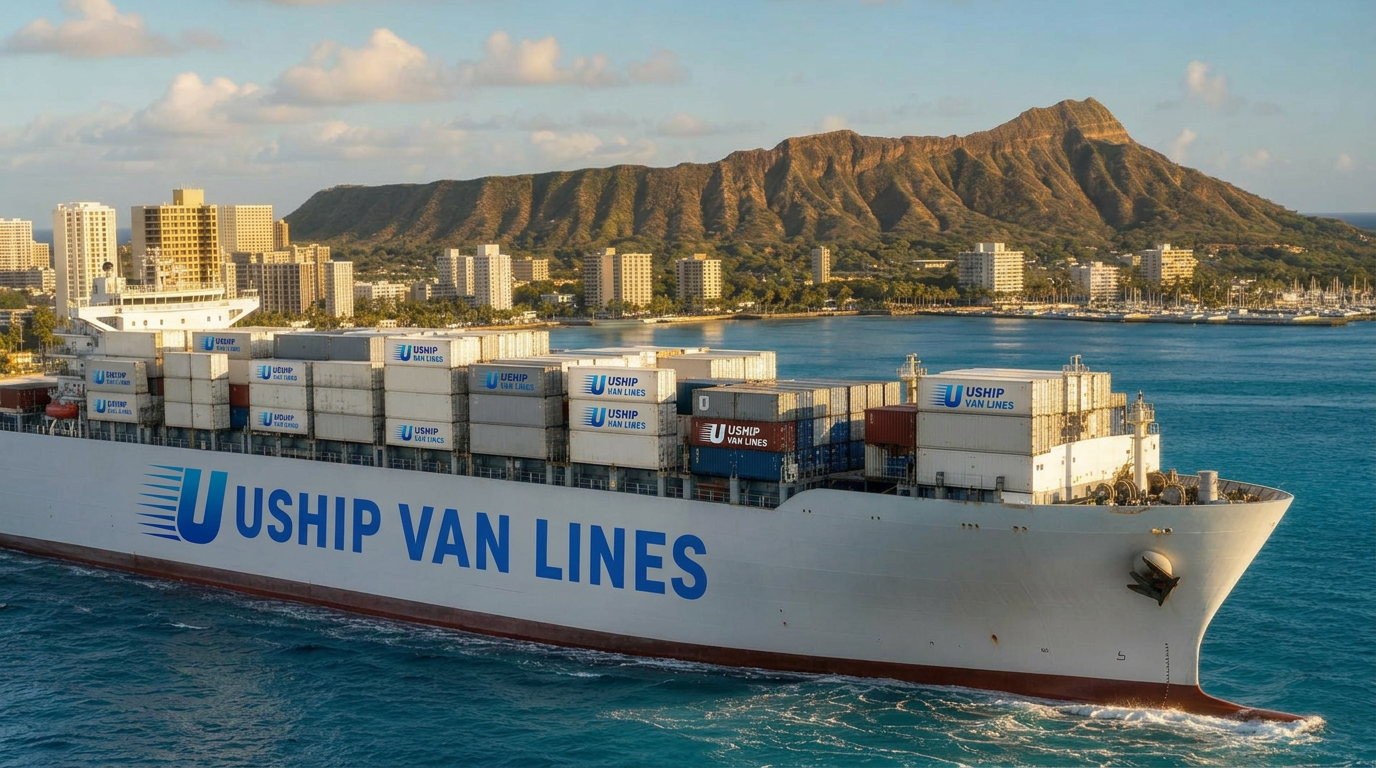
Moving from Seattle, WA to Hawaii
Moving from Seattle to Hawaii means trading the Pacific Northwest's evergreen landscapes for year-round island living—but the logistics require careful planning. Your household goods will travel by truck to a West Coast port, cross 2,500+ miles of ocean via container ship, and reach your Hawaiian island address through a multi-modal shipping network.
Best Alaska & Hawaii Movers, powered by UShip Van Lines, specializes in Pacific relocations that blend mainland trucking with ocean freight expertise. We handle every step—from pickup in your Seattle neighborhood to final delivery on Oahu, Maui, Kauai, or the Big Island. Ready to start your island move? Request a free quote today.
Route overview
Seattle to Hawaii: A Cross-Pacific Relocation
The Seattle-to-Hawaii corridor is one of the most popular mainland-to-island routes, serving military families, remote workers, and retirees seeking warmer climates. Your move begins with ground transportation from Seattle (or surrounding cities like Bellevue, Tacoma, or Everett) to consolidation facilities near major West Coast shipping ports—typically Long Beach or Oakland, California.
From there, your containerized household goods board Matson Navigation or Pasha Hawaii vessels, which maintain weekly sailings to Honolulu. Ocean transit takes 5–7 days depending on weather and port schedules. Once your container clears customs and port operations in Honolulu, goods destined for neighbor islands (Maui, Kauai, Big Island) are transferred to inter-island barges, adding 2–5 days. Final delivery to your home involves local Hawaiian trucking partners who understand island road conditions, narrow driveways, and community access requirements.
Total door-to-door transit typically ranges 14–28 days, with summer moves often experiencing tighter schedules due to high seasonal demand and West Coast port congestion. Winter months generally offer smoother logistics but bring potential weather delays during Pacific storm systems.
How the moving process works
How Your Seattle-to-Hawaii Move Works: Step-by-Step
1. Free In-Home or Virtual Survey
We assess your household volume (typically measured in cubic feet) and identify special-handling items—pianos, antiques, or oversized furniture. This determines container size and generates an accurate quote.
2. Packing and Pickup in Seattle
Professional crews pack your belongings using ocean-grade materials (moisture barriers, reinforced boxes, securing straps). Pickup is scheduled based on your desired delivery window, working backward from port sailing dates.
3. Overland Transport to West Coast Port
Your goods travel by truck to Long Beach or Oakland—approximately 1,100–1,200 miles. Transit takes 2–4 days, with cargo staged at port-side warehouses for container loading.
4. Ocean Freight to Honolulu
Containers are loaded onto Matson or Pasha vessels. Ocean crossing takes 5–7 days. You receive sailing confirmation and estimated port arrival dates.
5. Customs Clearance and Port Processing
All Hawaii shipments pass through USDA agricultural inspection and standard customs. Processing takes 1–3 days. We handle all documentation—you provide a detailed inventory and proof of residence.
6. Inter-Island Transfer (If Applicable)
Moves to Maui, Kauai, or Big Island require barge transfer from Oahu. This adds 2–5 days depending on barge schedules and destination port.
7. Final Delivery to Your Hawaii Home
Local Hawaiian crews deliver and unload at your address. We coordinate delivery windows closely, as island logistics require precise scheduling due to limited warehouse space and strict delivery appointment systems.
Estimated moving costs
What Does a Seattle to Hawaii Move Cost?
A typical 2–3 bedroom household (1,000–1,500 cubic feet) moving from Seattle to Hawaii generally costs $6,500–$12,000, with variations based on:
- Volume and weight: Larger homes (3,500+ cubic feet) can reach $15,000–$22,000
- Destination island: Oahu moves are least expensive; Big Island and Kauai cost 10–20% more due to inter-island barge fees
- Packing services: Full-service packing adds $800–$2,200; self-packing reduces costs but increases risk of damage claims
- Shipping season: June–September peak season commands premium rates (15–25% higher) due to high demand and port congestion
- Vehicle shipping: Adding a car costs $1,200–$1,800 via roll-on/roll-off (RORO) service from Tacoma or Seattle ports
- Storage: Warehouse storage (if your Hawaii home isn't ready) runs $150–$350/month
Cost-saving tip: Book 8–12 weeks in advance during off-peak months (October–April) to secure lower rates and flexible scheduling.
Note: These are estimated ranges based on typical moves. Final costs depend on your specific inventory, services selected, and current market conditions. We never guarantee prices without a detailed survey.
Estimated transit times
How Long Does Seattle to Hawaii Shipping Take?
Total door-to-door timeline: 14–28 days, broken down by leg:
- Seattle pickup to West Coast port: 2–4 days (truck transit + warehouse staging)
- Port dwell time: 1–3 days (awaiting vessel loading)
- Ocean crossing to Honolulu: 5–7 days (weather-dependent)
- Honolulu port processing: 1–3 days (customs, USDA inspection, unloading)
- Inter-island barge (Maui/Kauai/Big Island): +2–5 days
- Final delivery scheduling: 1–2 days (coordination with local crews)
Express options are limited but available during off-peak periods, potentially reducing timelines to 12–16 days for Oahu deliveries. Conversely, peak summer moves (July–August) can extend to 25–30 days due to port congestion at Long Beach and Oakland.
Tracking: You receive updates at each milestone—pickup confirmation, port arrival, vessel sailing, Honolulu customs clearance, and delivery appointment scheduling.
Regional logistics
Hawaii-Specific Moving Logistics
Port Infrastructure
Your goods land at Honolulu's Sand Island Terminal (Piers 51–53), Hawaii's primary cargo hub. Neighbor island deliveries route through Kahului (Maui), Nawiliwili (Kauai), or Hilo/Kawaihae (Big Island). Each port has distinct unloading schedules and processing requirements.
USDA Agricultural Inspection
All Hawaii-bound shipments undergo mandatory agricultural screening to prevent invasive species. Prohibited items include soil, plants (except pre-inspected varieties), certain woods, and some food products. Pack a detailed inventory to expedite inspection. Processing typically adds 1 day but can extend to 3 days if inspectors flag items for secondary review.
Vehicle Shipping
Cars ship separately via RORO service from Seattle/Tacoma or West Coast ports. Cost: $1,200–$1,800 per vehicle. Transit: 7–14 days. Vehicles must be clean (exterior and interior), under ¼ tank fuel, and contain no personal items. Matson and Pasha operate dedicated auto carriers.
High-Rise and Condo Deliveries
Many Hawaii residents live in high-rise buildings with strict delivery windows, elevator reservations, and loading dock protocols. Waikiki, Kakaako, and Lahaina condos often require 48–72 hours' advance notice and building management approvals. We coordinate all logistics, but expect delivery scheduling to be less flexible than mainland moves.
Narrow Roads and Access
Island neighborhoods (especially Maui's Hana Highway, Kauai's North Shore, Big Island's Puna district) feature narrow streets, tight turns, and limited truck access. Some remote properties require shuttle services (smaller trucks) for final delivery, adding $300–$800 to costs.
Storage Solutions
If your Hawaii home isn't ready, we offer warehouse storage near destination ports. Rates: $150–$350/month. Island storage is expensive due to limited warehouse space—plan your move timeline carefully to minimize storage needs.
Seasonal considerations
Best Times to Move from Seattle to Hawaii
Spring (March–May)
Ideal moving window. Mild Pacific weather, lower demand, competitive pricing. Port operations run smoothly. Book 6–8 weeks out for best rates.
Summer (June–September)
Peak season. Expect 20–30% higher costs and tighter schedules. West Coast ports experience congestion; Honolulu warehouse capacity fills quickly. Hurricane season (June–November) rarely disrupts Matson/Pasha routes but can delay sailings by 1–2 days. Book 10–12 weeks in advance.
Fall (October–November)
Excellent value period. Demand drops post-Labor Day. Weather remains favorable. Occasional Pacific storms may cause minor delays. Best time for budget-conscious moves.
Winter (December–February)
Holiday moves (mid-December) are expensive and complicated—avoid if possible. January–February offers lowest rates but brings increased risk of winter storms affecting Pacific crossings (delays of 2–4 days possible). Port operations can slow during holiday shutdowns.
Hurricane season note: While Hawaii experiences tropical storms June–November, modern tracking systems allow carriers to reroute. Actual shipping disruptions are rare—fewer than 5% of sailings face significant delays.
Why choose Best Alaska & Hawaii Movers
Why Best Alaska & Hawaii Movers for Your Seattle-to-Hawaii Move
-
Pacific Specialists: We focus exclusively on Alaska and Hawaii relocations, giving us deep expertise in ocean freight logistics, port operations, and island delivery challenges that general moving companies lack.
-
Transparent Pricing: Detailed quotes with no hidden fees. We explain every cost component—ocean freight, port handling, inter-island barge, packing, insurance—so you understand exactly what you're paying for.
-
End-to-End Coordination: One point of contact manages your entire move from Seattle pickup through Hawaii delivery. We handle trucking, ocean carrier booking, customs paperwork, USDA compliance, and final-mile coordination.
-
Proven Carrier Network: Partnerships with Matson Navigation, Pasha Hawaii, and licensed Hawaiian trucking companies ensure reliable service. Our UShip Van Lines backing provides additional resources and support.
-
Flexible Scheduling: We work around your timeline, coordinating pickup dates with port sailing schedules to minimize storage and delays. Real-time tracking keeps you informed at every stage.
-
Island Delivery Expertise: Our Hawaiian partners know local roads, building requirements, and community access protocols. We've successfully delivered to remote Big Island properties, Maui upcountry homes, and Honolulu high-rises.