
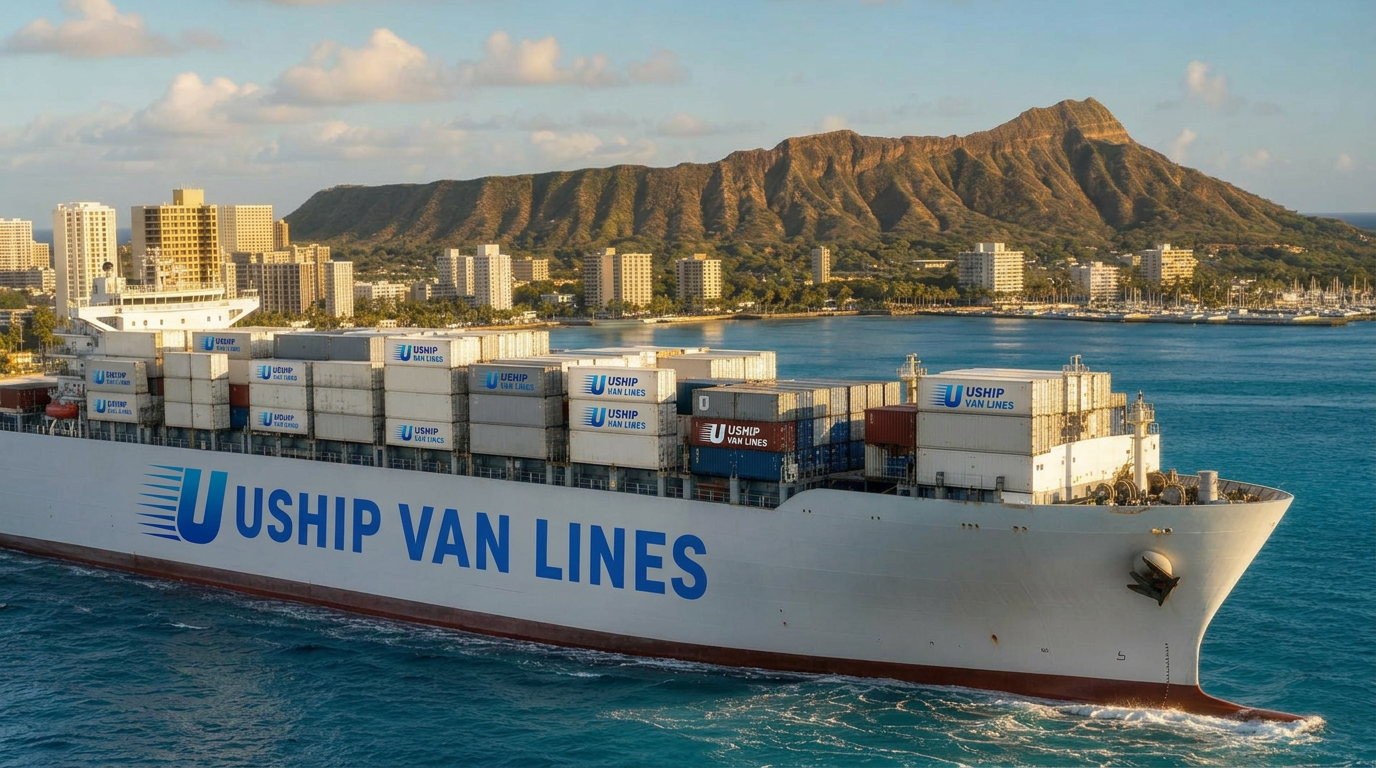
Moving from Roanoke, VA to Hawaii
Moving from Roanoke's Blue Ridge Mountains to the Hawaiian Islands represents one of the most complex domestic relocations you can undertake. This cross-country, cross-ocean move requires coordination between overland transport across the continental U.S. and ocean freight to the Pacific, with strict Hawaii agricultural inspections and container logistics that differ fundamentally from standard moves.
Best Alaska & Hawaii Movers, powered by UShip Van Lines, specializes in exactly this type of multi-modal relocation. We coordinate the entire journey from packing your Roanoke home through final delivery to Honolulu, Maui, Kauai, or the Big Island, managing every handoff so you don't have to. Ready to start planning your island move? Request a detailed quote tailored to your timeline and household size.
Route overview
The Roanoke to Hawaii Moving Route
Your belongings will travel approximately 2,600 road miles from Roanoke to the West Coast (typically Long Beach or Oakland), then another 2,400+ nautical miles across the Pacific Ocean. The overland leg crosses Virginia, West Virginia or Tennessee, then westward through states like Missouri, Kansas, Utah, and Nevada before reaching California ports. This transcontinental haul typically takes 5–7 days under normal conditions.
Once at port, your household goods are loaded into 20-foot or 40-foot ocean containers and shipped via Matson Navigation or Pasha Hawaii—the two primary carriers serving the Hawaii trade lane. These vessels sail on fixed weekly schedules to Honolulu, with inter-island barges then distributing containers to neighbor islands. The ocean voyage alone spans 5–7 days of actual sailing time, plus port processing on both ends.
Unlike moves within the Lower 48, Hawaii relocations require compliance with strict agricultural inspection protocols administered by the Hawaii Department of Agriculture. Wooden furniture, certain plants, soil, and many food items are restricted or require treatment certificates. Planning for these inspections and documentation requirements is critical to avoiding costly delays or item rejections at Honolulu port.
How the moving process works
How Your Roanoke to Hawaii Move Works: Step-by-Step
-
Initial consultation and agricultural pre-inspection – We survey your household inventory, identify restricted items (plants, soil-containing pots, untreated wood), and provide a detailed quote covering overland transport, ocean freight, and Hawaii delivery. You'll receive guidance on what cannot be shipped and what requires special treatment or documentation.
-
Professional packing and loading in Roanoke – Our crew packs your household goods using ocean-rated materials (reinforced boxes, moisture barriers, extra padding for the long journey). Items are loaded onto a moving van for the cross-country leg. High-value items like vehicles are prepared separately for roll-on/roll-off vessel transport if you're shipping a car.
-
Overland transport to West Coast port (Long Beach or Oakland) – Your goods travel 2,600 miles across the continental U.S., typically on I-81 to I-40 or I-70 corridors, then I-15 or I-80 into California. Transit time is 5–7 days, with the van delivering directly to the port consolidation warehouse.
-
Container loading and ocean freight – At the port warehouse, your goods are loaded into a dedicated or shared ocean container (depending on shipment size and service level). Containers are sealed, inspected, and loaded aboard Matson or Pasha vessels departing weekly. The ocean crossing to Honolulu takes 5–7 sailing days.
-
Hawaii agricultural inspection and customs clearance – Upon arrival in Honolulu, containers undergo mandatory agricultural inspection. HDOA inspectors examine shipments for prohibited items, pests, and soil. Properly documented and prepared shipments clear in 1–2 days; issues can add 3–5 days or result in item destruction.
-
Inter-island transfer (if applicable) – If your destination is Maui, Kauai, or the Big Island, your container is transferred to Young Brothers or Aloha Marine inter-island barge service. This leg adds 1–3 days depending on the island and barge schedule.
-
Final delivery and unpacking – A local Hawaii moving crew delivers your container to your new residence, unloads, and can provide unpacking services if requested. You'll conduct a final inventory check, and the move is complete. Total door-to-door timeline is typically 14–28 days from Roanoke to your Hawaii address.
Estimated moving costs
What Does It Cost to Move from Roanoke to Hawaii?
For a typical 2–3 bedroom household (approximately 5,000–8,000 pounds), expect to invest $8,500–$16,000 for a full-service move from Roanoke to Hawaii. This range reflects the complexity and distance of combining cross-country overland transport with ocean container shipping.
Key cost drivers include:
- Shipment volume and weight – Ocean freight is priced by container size (20-foot vs. 40-foot) or cubic footage in shared containers. A dedicated 20-foot container handles roughly 2–3 bedrooms; larger homes may require a 40-foot container or multiple 20-footers.
- Service level – Exclusive-use containers cost more but offer faster transit and fewer handling points. Consolidated (shared) containers reduce cost but add time and handling risk.
- Packing services – Full professional packing for an ocean move adds $1,200–$2,500 but is strongly recommended given the long journey and moisture/salt air exposure.
- Vehicle shipping – Adding a car to your move costs $1,400–$2,200 from the West Coast to Hawaii via RORO (roll-on/roll-off) vessel. Overland car transport from Roanoke to the port adds another $900–$1,400.
- Final island destination – Delivery to Oahu (Honolulu) is the base rate; neighbor islands (Maui, Kauai, Big Island) add $800–$1,800 for inter-island barge and local delivery.
- Storage – If you need temporary storage in California or Hawaii (common when closing dates don't align), expect $150–$300 per month for container storage.
- Time of year – Summer months (June–August) see peak demand and higher rates, sometimes 15–20% above winter pricing.
These figures are estimates based on typical shipments; your actual cost will depend on your specific inventory, service selections, and timing. We never guarantee prices without a detailed in-home or virtual survey, and we recommend getting quotes from multiple Hawaii-specialist carriers.
Estimated transit times
How Long Does the Move Take?
Door-to-door transit from Roanoke to Hawaii typically requires 14–28 days, with the timeline broken down as follows:
-
Overland to West Coast port (5–7 days) – Your household goods travel by truck from Roanoke to Long Beach or Oakland. This leg covers 2,600 miles across the continental U.S., with transit time varying by route, weather, and any required rest stops for the driving team.
-
Port consolidation and container loading (2–5 days) – At the port warehouse, your goods are staged, inventoried, and loaded into the ocean container. Exclusive-use containers can be loaded and released quickly; consolidated shipments wait for other customers' goods to fill the container.
-
Ocean voyage (5–7 days) – Matson and Pasha vessels sail on fixed weekly schedules from California to Honolulu. The actual sailing time is consistent, but you may wait up to a week for the next departure if you miss a sailing window.
-
Agricultural inspection and port clearance (1–3 days) – All shipments undergo mandatory HDOA inspection in Honolulu. Well-prepared shipments clear quickly; those with documentation issues, restricted items, or pest concerns can face delays of 3–7 days or more.
-
Inter-island barge (1–3 days, if applicable) – Delivery to Maui, Kauai, or Big Island requires transfer to Young Brothers or Aloha Marine barge. Barge frequency varies by island, adding 1–3 days to the timeline.
-
Final delivery scheduling (1–3 days) – Once cleared and on-island, the local delivery team schedules your delivery window. High-demand periods or remote locations can push this out a few days.
The wide range (14–28 days) reflects variables like whether you're using exclusive or consolidated service, which island you're moving to, seasonal port congestion, and how smoothly agricultural inspection proceeds. Experienced Hawaii movers can often expedite by timing container departures to match vessel schedules and ensuring perfect documentation for ag inspection.
Regional logistics
Hawaii-Specific Moving Logistics You Need to Know
Port operations and container handling: Your goods will route through either the Port of Long Beach or Port of Oakland (occasionally Seattle/Tacoma). These are the primary West Coast departure points for Hawaii-bound cargo. Once in Hawaii, nearly all shipments enter through Honolulu's Sand Island container terminal, even if your final destination is a neighbor island. Understanding this hub-and-spoke model helps you plan realistic timelines.
Agricultural inspection requirements: The Hawaii Department of Agriculture (HDOA) inspects every incoming shipment to protect the islands' fragile ecosystem. Prohibited items include most live plants (except those with import permits), soil, certain wood products, untreated wicker, and many food items. Restricted items like wooden furniture may require fumigation certificates. Work with your mover to identify issues during the pre-move survey—items discovered during inspection can be destroyed, quarantined at your expense, or refused entry entirely. Proper documentation (packing lists, treatment certificates) is essential for smooth clearance.
Vehicle shipping: If you're bringing a car, motorcycle, or boat, it ships separately via RORO (roll-on/roll-off) vessel. Matson and Pasha both operate auto carriers on the same approximate schedule as container ships. Vehicles must be cleaned (undercarriage, interior, wheel wells) to pass ag inspection, and personal items cannot be left inside. Expect 2–3 weeks door-to-door for vehicles from Roanoke, including overland transport to the port and ocean crossing.
Inter-island logistics: Oahu (Honolulu) delivery is straightforward—your container is trucked directly from Sand Island to your address. Maui, Kauai, and Big Island deliveries require an extra step: Young Brothers inter-island barge. These barges sail 2–3 times weekly to each island, adding 1–3 days. Remote areas on neighbor islands (North Shore Kauai, Hana Maui, South Point Big Island) may incur additional delivery fees due to difficult access.
Condo and high-rise delivery: Many Hawaii residences are condos with elevator reservations, loading dock restrictions, and move-in deposit requirements. Waikiki, Kakaako, and other urban Honolulu areas have strict building rules. Notify your mover early if you're moving into a condo—they'll coordinate with building management for COI (certificate of insurance), elevator padding, and time slots. Some buildings charge move-in fees ($200–$500) and require deposits ($500–$2,000) refundable after move-out.
Storage options: Need to store household goods while you secure housing or wait for closing? Warehouse storage is available at California ports ($150–$250/month per container) and in Honolulu ($200–$350/month). Island storage is more expensive due to limited warehouse space and high real estate costs. Some movers offer combined storage-and-delivery services where your container stays in a yard until you're ready for delivery.
Insurance and valuation: Ocean moves carry higher risk than domestic trucking due to longer transit, container handling, and salt-air exposure. Basic carrier liability (60 cents per pound) is inadequate for most households. Purchase full-value protection or third-party moving insurance covering replacement cost. Typical premiums run 1–2% of declared value (e.g., $100–$200 per $10,000 insured). Always photograph high-value items before packing and maintain detailed inventories.
Seasonal considerations
Best Times to Move from Roanoke to Hawaii
Winter (December–February): Lower demand means better pricing—sometimes 10–15% below peak—and more flexible scheduling. West Coast ports are less congested, and ocean carriers have more container availability. However, winter storms across the continental U.S. can delay the overland leg, and Pacific winter swells occasionally slow vessel transit. This is an excellent window if you have flexible dates and want to save money.
Spring (March–May): Moderate demand and good weather make this the sweet spot for many moves. The overland leg from Roanoke encounters less severe weather, and ocean conditions are generally calm. Pricing is mid-range, and port operations run smoothly. Book 6–8 weeks ahead to secure your preferred dates. Late May sees the start of increased demand as families prepare for summer relocations.
Summer (June–August): Peak moving season brings premium pricing, tighter scheduling, and port congestion. Families moving before the school year drive demand up across all Hawaii routes. Expect to pay 15–20% more than off-season rates and book 8–12 weeks in advance. The benefit: predictable weather on both the overland and ocean legs. June 1 also marks the official start of Pacific hurricane season, though hurricanes rarely impact the California-Hawaii shipping lane directly.
Fall (September–November): Demand tapers after Labor Day, bringing pricing back to moderate levels. September and October are peak hurricane months for Hawaii (though strikes are rare), and you may encounter brief delays if tropical systems approach the islands. Port operations are less congested than summer, and the overland leg from Roanoke enjoys pleasant fall weather. This is another good value window, particularly mid-September through October.
Hurricane season note: While Hawaii is far less hurricane-prone than the Gulf Coast or Atlantic, the official Pacific hurricane season runs June 1–November 30. Major storms are infrequent (averaging one direct hit per decade), but tropical storms can delay vessel departures or port operations by 1–3 days. Movers typically build buffer time into quotes during these months, and marine insurance covers weather-related delays.
Why choose Best Alaska & Hawaii Movers
Why Choose Best Alaska & Hawaii Movers for Your Roanoke to Hawaii Relocation
-
Specialized Hawaii expertise – We focus exclusively on Alaska and Hawaii moves, managing the unique challenges of ocean container logistics, agricultural inspections, and inter-island delivery. This isn't a side service—it's what we do every day, powered by the UShip Van Lines network of vetted carriers.
-
End-to-end coordination – One point of contact manages your entire move from Roanoke packing through Hawaii delivery, coordinating the overland carrier, port warehouse, ocean freight, ag inspection, and final island delivery. You don't juggle multiple vendors or track handoffs yourself.
-
Transparent pricing with no hidden fees – We provide detailed, itemized quotes covering every leg of your journey. You'll know exactly what you're paying for overland transport, ocean freight, port fees, agricultural compliance, and delivery, with no surprise charges at delivery.
-
Agricultural compliance guidance – Our team walks you through Hawaii's strict import rules during the pre-move survey, identifying prohibited items and arranging necessary treatment certificates. This proactive approach prevents costly delays, rejected items, and inspection headaches.
-
Flexible service levels – Choose exclusive-use containers for fastest transit and minimal handling, or consolidated service to share container space and reduce cost. We offer full-pack, partial-pack, or self-pack options to match your budget and timeline.
-
Proven carrier network – As part of UShip Van Lines, we connect you with licensed, insured carriers experienced in cross-country and Hawaii routes. Every partner is vetted for safety records, customer reviews, and Hawaii-specific capabilities.