
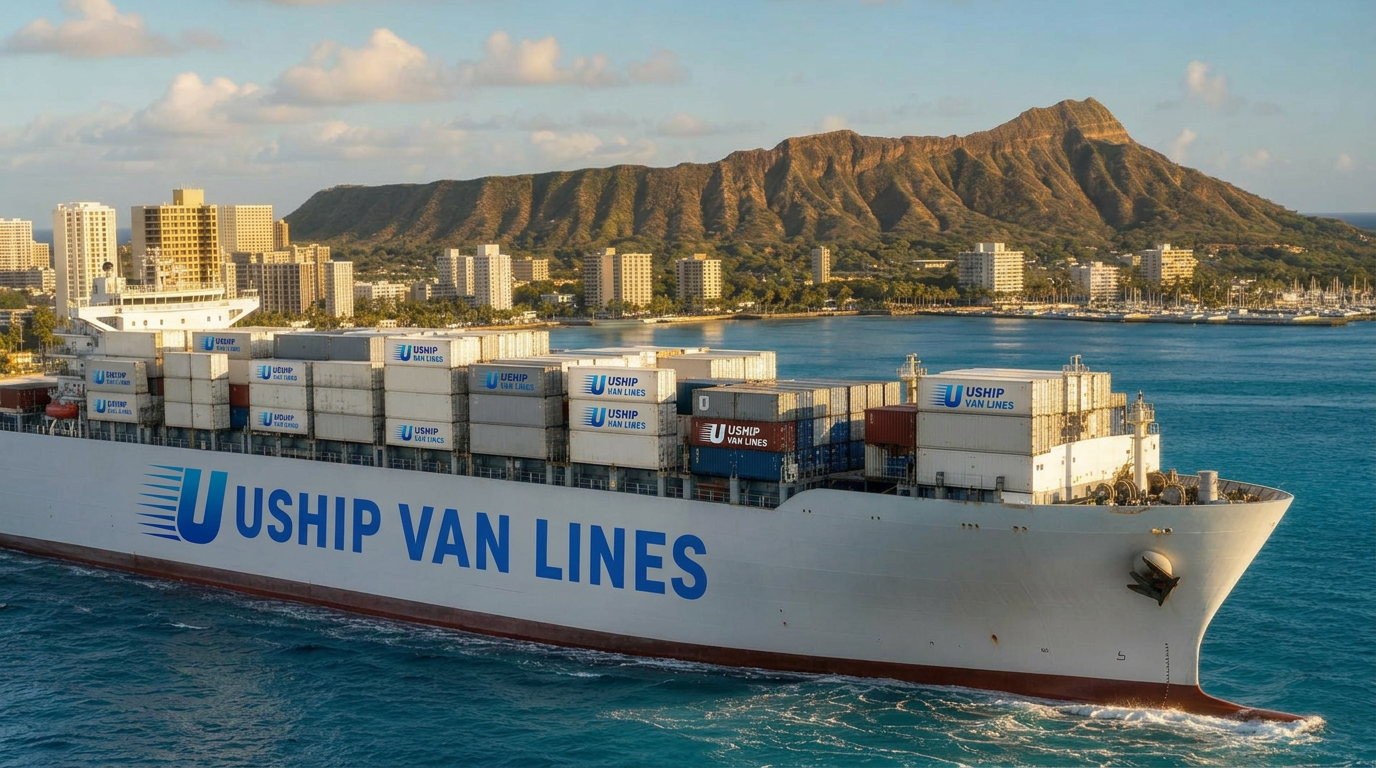
Moving from Kansas City, MO to Hawaii
Moving from the heart of the Midwest to the Hawaiian Islands represents one of the most dramatic lifestyle shifts you can make. Kansas City's four-season climate, affordable cost of living, and landlocked geography give way to year-round tropical warmth, island culture, and the Pacific Ocean at your doorstep—but this transformation requires careful planning and a specialized moving strategy that few carriers can execute.
Best Alaska & Hawaii Movers, powered by UShip Van Lines, coordinates the complex logistics chain your Kansas City to Hawaii move demands: ground transport from your Missouri home to West Coast ports, ocean container booking with Matson or Pasha Lines, customs clearance, and final delivery across the Hawaiian Islands. Request your free quote today to start your island journey with a team that understands every mile of this unique route.
Route overview
Understanding the Kansas City to Hawaii Moving Route
Your household goods will travel approximately 1,200 miles overland from Kansas City to the Port of Long Beach or Oakland, California, then cross 2,400 nautical miles of the Pacific Ocean to Honolulu. This two-stage journey—continental trucking followed by ocean freight—requires coordination between ground carriers, port terminals, steamship lines, and Hawaiian delivery teams.
The continental leg typically takes 2–4 days, depending on your exact pickup location in the Kansas City metro (whether you're in Missouri proper, Overland Park, Leawood, or Independence). Once your container reaches the West Coast, sailing schedules to Honolulu run weekly, with transit times of 5–7 days at sea. If you're moving to a neighbor island—Maui, Kauai, or the Big Island—add another 3–5 days for inter-island barge service and final delivery.
Unlike standard cross-country moves, Hawaii relocations are subject to agricultural inspections, container weight limits (typically 20,000 lbs for a 40-foot container), and strict shipping line requirements. Planning 6–8 weeks ahead ensures you secure space during peak summer months when container availability tightens and rates climb.
How the moving process works
How Your Kansas City to Hawaii Move Works: Step by Step
-
Initial consultation and inventory—Your move coordinator conducts a virtual or in-home survey of your Kansas City residence, documenting furniture, appliances, boxes, and any special items (pianos, artwork, fragile antiques). This inventory determines container size (20-foot or 40-foot) and generates your detailed quote.
-
Booking and scheduling—Once you approve the estimate, we reserve your ground transport slot and coordinate ocean container space with Matson or Pasha Lines. You'll receive a pickup window (typically a 2–3 day range) and a projected delivery window in Hawaii.
-
Packing and loading in Kansas City—Professional movers arrive at your Kansas City home, wrap and pad furniture, box remaining items if you've chosen full-service packing, and load everything into the truck. The ground carrier departs for California the same day or next morning.
-
Overland transit and port delivery—Your shipment travels west on I-70 through Colorado and Utah, or I-40 through the Southwest, reaching Long Beach or Oakland in 2–4 days. The truck delivers directly to the port terminal where your goods are transferred into the ocean container.
-
Ocean voyage to Honolulu—Matson or Pasha loads your container onto the next available sailing (departures typically Tuesday or Wednesday each week). The ship crosses the Pacific in 5–7 days, arriving at Honolulu's Sand Island terminal.
-
Customs clearance and agricultural inspection—All Hawaii shipments pass through USDA inspection for prohibited plants, soil, and pests. Your mover handles the paperwork; you may need to provide documentation for certain items (wooden furniture, outdoor equipment).
-
Final delivery to your Hawaiian home—If you're on Oahu, delivery can occur within 1–3 days of port arrival. For neighbor islands, your container transfers to an inter-island barge (Young Brothers), sails to Kahului, Nawiliwili, or Hilo/Kona, then trucks to your address—adding 3–5 days to the timeline.
Estimated moving costs
What Does It Cost to Move from Kansas City to Hawaii?
A typical 2-bedroom apartment or small house (approximately 5,000–7,000 lbs) from Kansas City to Honolulu costs $6,500–$9,500 for a shared container service, or $9,500–$14,000 for an exclusive-use 20-foot container. A larger 3–4 bedroom home (10,000–15,000 lbs) requiring a 40-foot container ranges from $12,000–$18,000, depending on exact volume, packing services, and destination island.
Key factors that influence your final price:
- Distance from Kansas City to West Coast port—Longer continental hauls (to Oakland vs. Long Beach) add $500–$1,200 in ground freight.
- Container type and exclusivity—Sharing a container (consolidated service) costs less but requires flexible timing; exclusive use gives you control of the schedule and eliminates commingling risk.
- Packing services—Professional packing adds $800–$2,500 depending on home size and the number of fragile items requiring custom crating.
- Destination island—Oahu deliveries are most economical; Maui, Kauai, and Big Island destinations add $800–$2,000 for inter-island barge and outer-island delivery.
- Seasonal demand—May through September sees 20–30% higher rates due to peak moving season; book early or consider an off-peak move (October–April) for better pricing.
- Vehicle shipping—Adding a car costs $1,200–$1,600 Kansas City to Honolulu (vehicle ships separately via RORO carrier, not in your household goods container).
We provide transparent, itemized quotes with no hidden fees. Every estimate breaks down ground transport, ocean freight, port handling, insurance, and delivery charges so you understand exactly what you're paying for.
Estimated transit times
How Long Does a Kansas City to Hawaii Move Take?
Door-to-door transit from Kansas City to your Hawaiian home typically requires 14–21 days for Oahu, or 18–26 days for neighbor islands. This timeline assumes normal conditions—no port congestion, weather delays, or extended agricultural inspections.
Breakdown by leg:
- Kansas City to West Coast port: 2–4 days ground transport, depending on your pickup location and the carrier's route.
- Port dwell time: 1–3 days for container loading, terminal processing, and ship departure coordination. (During peak season, dwell time can extend to 5–7 days if container space is limited.)
- Ocean crossing: 5–7 days at sea from Long Beach/Oakland to Honolulu.
- Customs and agricultural inspection: 1–2 days at Honolulu port for clearance and USDA review.
- Oahu final delivery: 1–3 days from port clearance to your address.
- Neighbor island transit: Add 3–5 days for inter-island barge to Maui/Kauai/Big Island, plus final trucking.
The longest delays typically occur during summer peak season (June–August) when mainland families relocate before the school year, and during late August through October when hurricane season can disrupt shipping schedules. If you need guaranteed delivery by a specific date—say, a job start date or housing lease—communicate this upfront so we can build buffer time into your schedule and explore expedited options.
Many customers choose to fly to Hawaii a few days after their shipment departs Kansas City, arriving before or just as their container clears customs. We recommend bringing 7–10 days of essentials in checked luggage (clothing, toiletries, work items, important documents) to bridge the gap before your full household arrives.
Regional logistics
Hawaii-Specific Moving Logistics You Need to Know
Ports and carriers—All Kansas City to Hawaii shipments funnel through the Port of Long Beach or Port of Oakland, the only West Coast terminals offering regular Hawaii service. Matson Navigation and Pasha Hawaii are the primary carriers, operating weekly sailings to Honolulu with connecting barge service to neighbor islands via Young Brothers. Your mover coordinates container pickup, terminal delivery, and steamship line booking—you don't interact with the port directly.
Container types and weight limits—Most household moves use 20-foot containers (holds a 1–2 bedroom home, max 20,000 lbs) or 40-foot containers (3–4 bedrooms, max 20,000 lbs—yes, the weight limit is the same regardless of container size). Steamship lines strictly enforce weight caps; overweight containers incur penalties of $100–$300 per 1,000 lbs over limit. Professional movers weigh your goods during loading to avoid surprises.
Agricultural restrictions—Hawaii's isolated ecosystem means strict USDA rules: no soil, no live plants (except with special permits), no certain seeds, no wooden items with bark attached. Outdoor furniture, garden tools, and sports equipment must be cleaned thoroughly. Mattresses and upholstered furniture occasionally face extra scrutiny if inspectors suspect pest contamination. Your mover provides a prohibited items list during booking; review it carefully and discard or donate anything questionable before packing day.
Vehicle shipping—Cars, trucks, and motorcycles ship separately via RORO (roll-on/roll-off) carriers like Matson or Pasha Auto. You cannot pack household items inside your vehicle (carriers reject loaded cars at the terminal). The vehicle must be operable, empty, and have less than 1/4 tank of fuel. Cost runs $1,200–$1,600 Kansas City to Honolulu; transit time mirrors household goods (14–21 days total).
Last-mile delivery challenges—Oahu addresses are straightforward, but neighbor islands present complications. Narrow roads in upcountry Maui, remote Big Island locations, and Kauai's winding highways can require smaller delivery trucks or shuttle services (adding 1–2 days and $300–$800 to your cost). Condos and apartments often have elevator reservations, loading dock rules, and move-in deposit requirements; communicate these details to your coordinator during booking.
Insurance and valuation—Standard carrier liability covers $0.60 per pound (a 50-lb TV = $30 coverage). For comprehensive protection, purchase full-value insurance ($10–$15 per $1,000 of declared value). Given the ocean crossing and multiple handling points, most customers opt for full coverage. High-value items (jewelry, art, collectibles) may require separate riders or professional appraisal before shipping.
Seasonal considerations
Best Times to Move from Kansas City to Hawaii
Winter (December–February)—The slowest season for Hawaii moves brings lower rates and better container availability, but ocean crossings can be rougher due to North Pacific winter storms. Kansas City winter weather (ice, snow) can complicate your pickup, so schedule a flexible loading window and confirm your crew has experience with cold-weather logistics. This is an excellent time to move if you're flexible on timing and want the best price.
Spring (March–May)—Rates begin climbing in April as families plan summer relocations, but availability remains good through early May. Kansas City weather improves, making loading easier. Ocean conditions calm as winter storms subside. If you're moving for a summer job start or school enrollment, booking in March or April ensures you secure space before the peak rush.
Summer (June–August)—Peak moving season brings the highest rates (20–30% above winter baseline) and tightest container space. Book 8–10 weeks ahead to guarantee your preferred dates. Kansas City heat and humidity can make packing challenging, so consider early-morning load times. Ocean crossings are smooth, but port congestion increases as volume spikes. Hurricane season officially begins June 1, though major storms rarely impact shipping until late August or September.
Fall (September–November)—Rates drop after Labor Day, but September and October fall during Hawaii's hurricane season. While direct hits are rare (the Islands average one hurricane every 10–15 years), tropical storms can delay sailings by 3–7 days. November is ideal: rates remain low, hurricane season ends (official close November 30), and Kansas City's mild fall weather makes packing pleasant. Thanksgiving week can create brief container shortages, so avoid that narrow window if possible.
For the best combination of cost, weather, and availability, target late September through early November or late January through March.
Why choose Best Alaska & Hawaii Movers
Why Best Alaska & Hawaii Movers for Your Kansas City to Hawaii Relocation
-
Specialized Hawaii expertise—We coordinate Alaska and Hawaii moves exclusively, giving us deep relationships with West Coast ports, Matson/Pasha steamship lines, Hawaiian delivery teams, and USDA agricultural inspectors. This isn't a side service; it's our core focus.
-
Transparent, itemized pricing—Every quote breaks down ground transport, ocean freight, port fees, insurance, and delivery charges. No hidden fuel surcharges, no surprise "peak season" add-ons revealed after you've committed.
-
Single point of contact—Your dedicated move coordinator manages the entire chain from Kansas City pickup through Hawaiian delivery. One phone number, one email, one person who knows your shipment's status at every stage.
-
Flexible scheduling and storage options—If your Hawaiian housing isn't ready when your container arrives, we offer secure Honolulu-area storage ($150–$300/month). If you need to vacate your Kansas City home before your ship date, we provide mainland storage to bridge the gap.
-
Powered by UShip Van Lines' network—Our partnership with UShip Van Lines gives us access to vetted ground carriers nationwide, ensuring reliable pickup in Kansas City and seamless handoff to our Hawaii shipping partners.
-
Real-time tracking and proactive communication—We don't wait for you to call asking "Where's my stuff?" You receive updates at every milestone: truck dispatched, arrived at port, container loaded, ship departed, customs cleared, out for delivery. Track your shipment online 24/7 through our customer portal.