
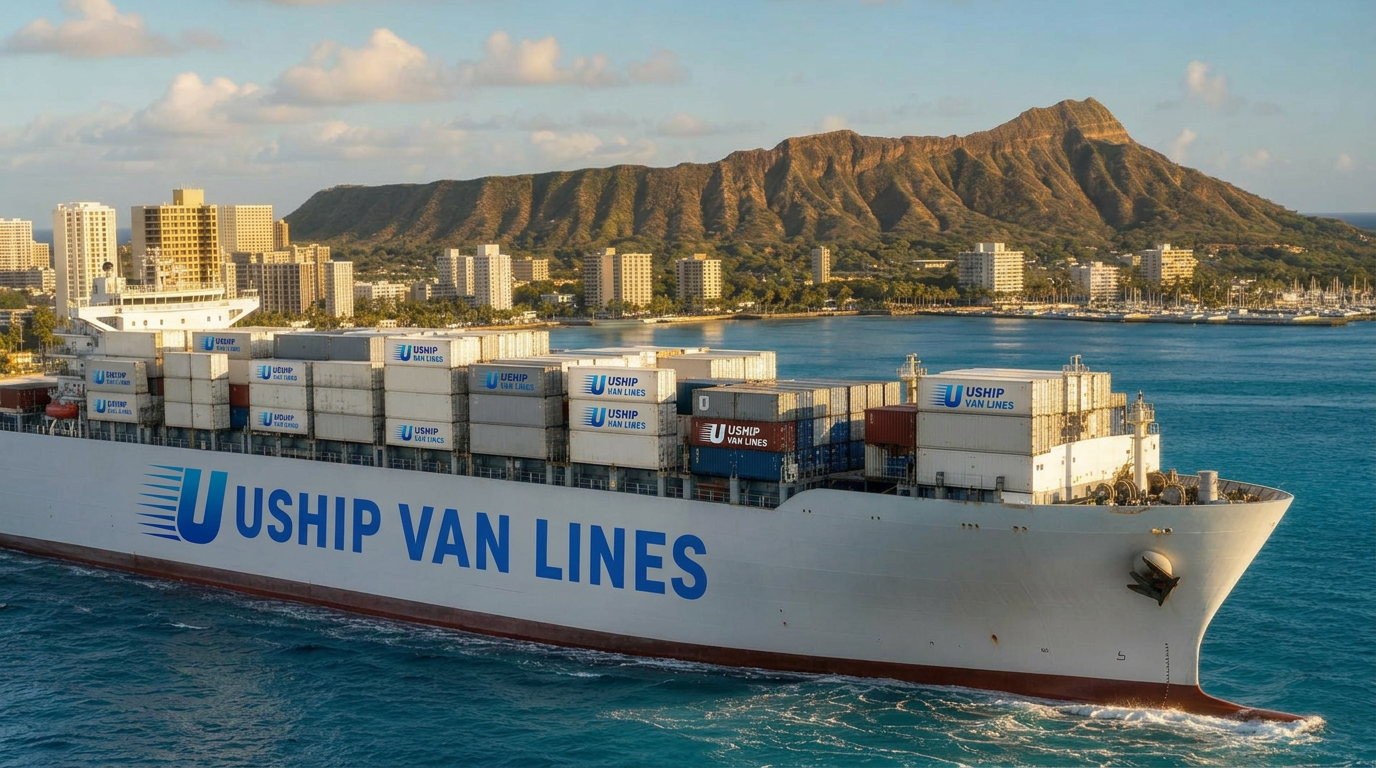
Moving from Hawaii to Waltham, MA
Moving from Hawaii to Waltham, MA means trading island breezes for historic New England charm—and navigating one of the most logistically complex long-distance moves in the continental United States. Your belongings will travel roughly 5,100 miles across the Pacific Ocean by container ship, then overland to the Greater Boston area, requiring careful coordination between ocean carriers, customs clearance, and cross-country trucking.
Best Alaska & Hawaii Movers, powered by UShip Van Lines, specializes in these multi-modal Hawaii relocations. We manage every step—from port booking and container loading in Honolulu to final delivery at your Waltham doorstep—so you can focus on settling into your new Massachusetts community. Request a free, no-obligation quote today to see how we make island-to-mainland moves seamless.
Route overview
The Hawaii-to-Waltham Moving Route
Your household goods depart from one of Hawaii's major ports—typically Honolulu on Oahu, though inter-island consolidation from Maui, Kauai, or the Big Island is common. Container ships operated by Matson Navigation or Pasha Hawaii carry cargo across 2,400 nautical miles to West Coast terminals in Long Beach, Oakland, or Seattle. After U.S. Customs clearance and container unloading, your shipment transfers to a long-haul truck for the 3,000-mile cross-country journey to Waltham.
Waltham sits just west of Boston along the Charles River, a city of roughly 65,000 known for its biotech corridor, historic Watch City heritage, and proximity to universities like Brandeis. The final delivery navigates New England's narrow colonial streets and seasonal weather—snow and ice in winter, spring mud season, humid summers. Timing your move around these conditions can streamline the process.
This route demands expertise in ocean freight documentation, DOT regulations for overland transit, and familiarity with both Hawaii's laid-back port rhythms and Massachusetts' fast-paced logistics hubs. A single point of contact who coordinates all legs prevents delays and miscommunication.
How the moving process works
How Your Hawaii-to-Waltham Move Works: Step-by-Step
-
Free In-Home or Virtual Survey: A moving consultant inventories your belongings—furniture, appliances, boxes, vehicles if applicable—and provides a detailed cost estimate based on cubic feet or container size. Virtual surveys via video call work well for Hawaii customers.
-
Container Selection and Booking: Most 2–3 bedroom homes fit a 20-foot ocean container (approx. 1,100 cubic feet) or share space in a 40-foot container for partial loads. We book space on the next available Matson or Pasha sailing and reserve overland trucking capacity to Massachusetts.
-
Packing and Container Loading (Hawaii): Professional packers wrap fragile items, disassemble furniture, and load your container at your Hawaii residence or a consolidation warehouse. The container is sealed, labeled, and transported to the port (Honolulu, Kahului, Nawiliwili, or Hilo).
-
Ocean Transit to the Mainland: The container ship crosses the Pacific in 5–7 days to Long Beach, Oakland, or Seattle. Matson and Pasha operate weekly sailings, though schedules vary by season and fuel costs.
-
Customs Clearance and Deconsolidation: Upon arrival, U.S. Customs inspects the container (usually non-intrusive scans unless flagged). The container is unloaded at the port, and your goods transfer to a 53-foot over-the-road trailer.
-
Cross-Country Trucking: The truck departs for Waltham, typically via I-80 or I-90 (the Mass Pike). Transit time is 7–10 days depending on weather, driver hours-of-service rules, and route.
-
Final Delivery in Waltham: Our crew unloads at your new address, places furniture in rooms, and removes packing materials. You inspect for damage and sign the final bill of lading. Any claims are filed within the carrier's policy window.
Estimated moving costs
What Does a Hawaii-to-Waltham Move Cost?
For a typical 2–3 bedroom household (approximately 7,000–10,000 pounds or 1,000–1,400 cubic feet), expect to invest $6,500–$11,500 for a full-service door-to-door move. Larger homes with 4+ bedrooms or specialty items (pianos, hot tubs, vehicles) can reach $14,000–$18,000 or more.
Key cost drivers include:
- Container type and space: Exclusive use of a 20-foot container (1,100 cu.ft.) costs more than sharing a 40-foot container. Consolidated/partial loads reduce price but may add time.
- Packing services: Full-pack (we pack everything) adds $1,200–$2,500; partial-pack (fragile items only) runs $400–$800. Self-packing saves money but increases damage risk.
- Origin and destination access: Multi-story walk-ups, long carries from truck to door, or narrow Waltham streets requiring shuttle trucks add labor fees ($200–$600).
- Seasonality: Summer (June–August) is peak moving season; rates climb 15–25%. Winter offers discounts but brings New England weather delays.
- Insurance/valuation: Basic carrier liability covers $0.60/pound. Full-value protection costs 1–2% of declared value (e.g., $100–$200 per $10,000 of goods).
- Vehicle shipping: Adding a car to the container (if space allows) or booking separate auto transport adds $1,200–$2,200 Hawaii-to-East Coast.
We never guarantee prices without a formal survey. Fuel surcharges, port congestion fees, and tariff changes can shift costs. Always request a binding or binding-not-to-exceed estimate in writing.
Estimated transit times
How Long Does a Hawaii-to-Waltham Move Take?
Door-to-door transit typically spans 3–5 weeks, broken down as follows:
- Packing and port drayage (Hawaii): 1–3 days to pack, load the container, and deliver it to the port.
- Port dwell and vessel departure: 2–7 days waiting for the next scheduled sailing (Matson and Pasha sail weekly, but space books fast in summer).
- Ocean voyage: 5–7 days at sea from Honolulu to Long Beach/Oakland/Seattle.
- Customs clearance and deconsolidation: 1–3 days for inspection, container unloading, and transfer to overland trailer.
- Cross-country trucking: 7–10 days from the West Coast to Waltham, factoring in mandatory driver rest periods and potential weather delays (winter snowstorms in the Rockies or Great Plains can add 1–3 days).
- Final delivery window: You'll receive a 2–3 day delivery window once the truck is en route to Massachusetts.
Expedited service (dedicating a driver team for straight-through trucking) can shave 2–4 days off the overland leg but costs 20–30% more. Off-season moves (October–April, excluding holidays) often enjoy faster port and trucking availability.
Plan to live without your household goods for at least a month. Ship essentials separately via air freight or pack a suitcase for your flight to Boston.
Regional logistics
Hawaii-Specific Logistics: What You Need to Know
Ports and inter-island consolidation: If you're on Maui, Kauai, or the Big Island, your container typically consolidates through Honolulu (the state's primary deep-water port) via inter-island barge. Young Brothers operates regular barge service, adding 2–5 days to your timeline. Alternatively, some shippers load containers directly at Kahului (Maui), Nawiliwili (Kauai), or Hilo (Big Island) when volume justifies a direct sailing.
Customs and agriculture inspections: Even though you're moving within the U.S., Hawaii has strict outbound agriculture rules to prevent invasive species. Soil, plants, certain woods, and fresh produce are prohibited or require USDA inspection. Mainland-bound containers undergo less scrutiny than international shipments, but inspectors can flag items. Wooden furniture, potted plants, and outdoor equipment should be cleaned thoroughly. Expect minimal delays (a few hours) unless contraband is found.
Vehicle shipping: Shipping a car from Hawaii to Massachusetts costs $1,200–$2,200 via roll-on/roll-off (RoRo) vessel or container (if space allows). RoRo is cheaper; the car is driven onto the ship and off at the mainland terminal, then trucked to Waltham. Container shipping (car shares space with household goods) protects from salt spray but costs more. Battery disconnect, quarter-tank fuel rule, and vehicle inspection apply. Transit mirrors household goods: 5–7 days ocean, 7–10 days overland.
Packing tips for ocean transit: Ocean containers endure Pacific swells, stacking weight, and temperature swings. Use double-walled boxes for fragile items, wrap furniture in padded blankets, and secure loads with straps to prevent shifting. Electronics and valuables (jewelry, documents, heirlooms) should travel with you on the plane—insurance rarely covers full replacement value. Humidity-sensitive items (books, photos) benefit from silica gel packs.
Delivery challenges in Waltham: Waltham's historic neighborhoods feature narrow streets (some date to the 1700s), low-clearance bridges, and parking restrictions. Large trucks may require a shuttle (smaller box truck relays goods from the main truck parked blocks away), adding $200–$500. Communicate your exact address—triple-deckers, condos with freight elevators, or homes on steep hills—during the survey so the crew arrives prepared.
Storage options: If your Waltham lease or closing date doesn't align with delivery, many movers offer storage-in-transit (SIT). Your container sits in a secure warehouse near Boston for 30–90 days (first month often free, then $100–$300/month). Confirm climate control for electronics, wood furniture, or pianos.
Seasonal considerations
Best Times to Move from Hawaii to Waltham
Summer (June–August): Peak season for both Hawaii departures and mainland arrivals. Families relocate before the school year; demand spikes; prices rise 15–25%. Port congestion in Long Beach/Oakland can add 3–5 days. Waltham's warm, humid summers make unloading easier, but book 8–12 weeks ahead.
Fall (September–November): Ideal window. Hurricane season winds down in the Pacific (official season ends November 30), port traffic eases post-Labor Day, and New England weather remains mild through October. Rates drop 10–15% after Labor Day. Early November is sweet spot before Thanksgiving.
Winter (December–February): Lowest rates—sometimes 20–30% below summer—but trade-offs exist. Pacific storms (November–March) can delay sailings by 1–2 days. Mainland winter weather is the bigger risk: nor'easters, ice storms, and snow in the Rockies, Midwest, and Massachusetts can halt trucks for days. Waltham's snowy streets require careful timing; frozen ground complicates heavy furniture placement. Request guaranteed delivery windows and purchase full-value insurance.
Spring (March–May): Rates begin climbing in April as demand returns. New England's
Why choose Best Alaska & Hawaii Movers
Why Choose Best Alaska & Hawaii Movers for Your Waltham Relocation
-
Hawaii-to-mainland specialists: We've coordinated hundreds of island relocations. We know Matson and Pasha schedules, Hawaii port quirks, and how to navigate Boston-area logistics—no learning curve at your expense.
-
Single point of accountability: One coordinator manages ocean booking, customs paperwork, overland dispatch, and final delivery. No blame-shifting between ocean carrier, trucking company, and local crew.
-
Transparent, binding estimates: After a thorough survey, we provide a binding-not-to-exceed quote. You'll never pay more than the agreed price (barring customer-requested changes like extra stops or packing).
-
Flexible service tiers: Choose full-service white-glove (we pack, load, ship, unload, unpack) or a hybrid approach (you pack boxes; we handle furniture and transport). Partial-load consolidation saves money for smaller households.
-
Powered by UShip Van Lines: Our carrier network and volume discounts mean competitive rates without sacrificing service quality. We're not a broker—we own the customer relationship end-to-end.
-
Comprehensive insurance options: Beyond basic carrier liability, we offer full-value protection, vehicle coverage, and claims assistance. Damage happens rarely, but when it does, we make the process simple.