
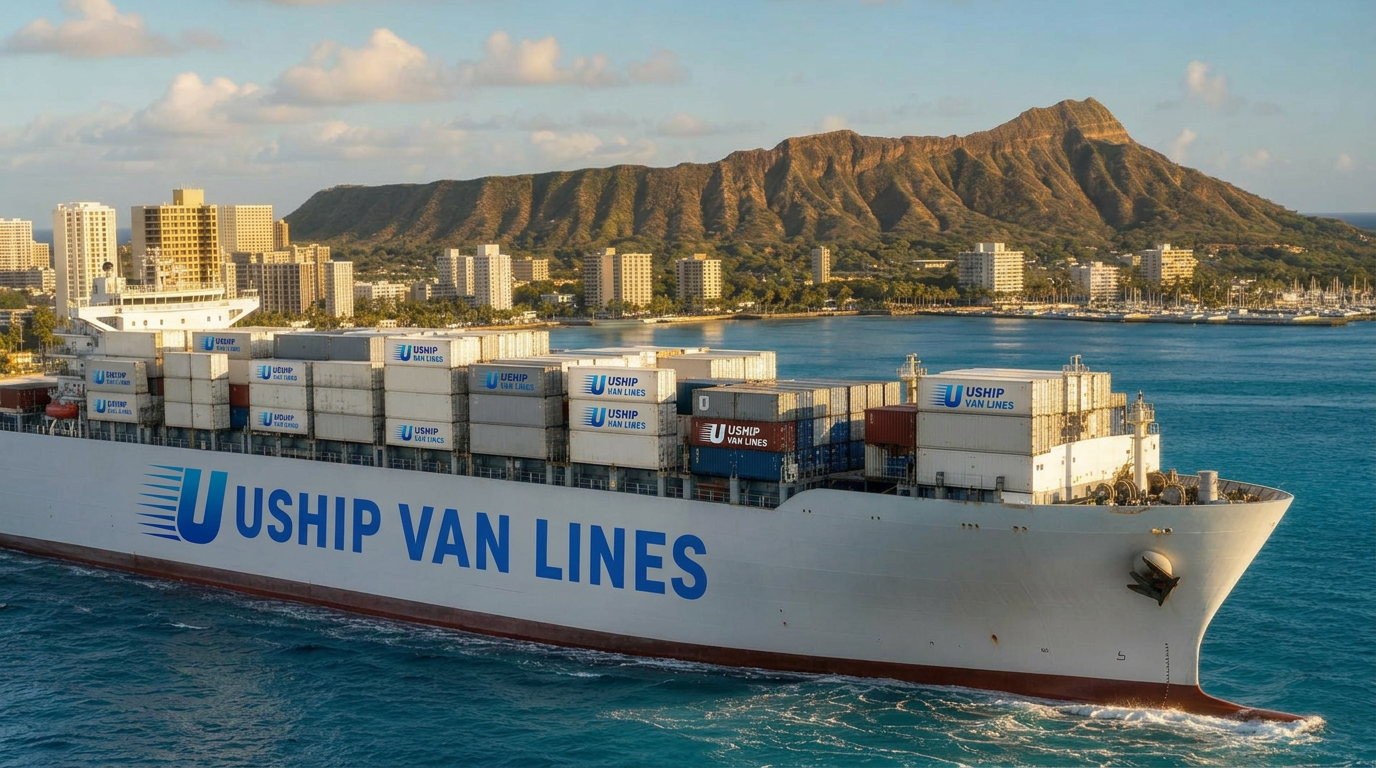
Moving from Hawaii to Omaha, NE
Relocating from the Hawaiian Islands to Omaha, Nebraska requires careful coordination of ocean freight and overland transport across two distinct logistics networks. Whether you're leaving Oahu, Maui, Kauai, or the Big Island, your household goods will travel by container ship to the West Coast, then overland nearly 1,500 miles to the heart of the Midwest.
Best Alaska & Hawaii Movers, powered by UShip Van Lines, specializes in Hawaii-to-mainland moves, managing every step from island pickup to your Omaha doorstep. Request a free, no-obligation quote to see how we can simplify your cross-Pacific relocation.
Route overview
Route Overview: Hawaii to Omaha, NE
This move spans approximately 3,400 nautical miles by sea from Honolulu to Long Beach or Oakland, followed by 1,400–1,500 road miles to Omaha. The ocean leg is handled by Matson Navigation or Pasha Hawaii, the primary carriers serving Hawaii with weekly sailings. After your container clears customs and is unloaded at the West Coast port, it transfers to an overland carrier for the cross-country haul through Nevada, Utah, Wyoming, and into Nebraska.
Omaha sits at the crossroads of I-80 and I-29, making final delivery straightforward once your shipment reaches the Great Plains. The city's central location and excellent highway infrastructure mean predictable transit times for the overland portion. Most households moving to Omaha are drawn by the lower cost of living, strong job market in finance and technology, and four-season climate—a dramatic shift from Hawaii's year-round warmth.
Timing is critical: ocean sailing schedules, port dwell times, and cross-country trucking availability all affect your door-to-door timeline. Planning 6–8 weeks ahead ensures you secure space on your preferred sailing and coordinate arrival with your Omaha move-in date.
How the moving process works
The Moving Process: Hawaii to Omaha, Step-by-Step
-
Free Estimate and Booking
Contact Best Alaska & Hawaii Movers for a detailed quote based on your inventory, origin island, and Omaha delivery address. Provide a room-by-room list or video walkthrough for accuracy. Book 6–8 weeks before your desired ship date to secure container space. -
Pre-Move Planning and Restricted Items
Review USDA and shipping line restrictions: no plants, soil, fresh foods, propane, or ammunition. Confirm vehicle shipping if needed (cars travel separately on a car carrier). Arrange temporary housing or storage if your Omaha home isn't ready. -
Packing and Island Pickup
Professional packers arrive at your Hawaii residence to wrap, box, and inventory your belongings. Fragile items receive extra cushioning for the ocean voyage. The crew loads your goods into a 20-foot or 40-foot container, sealed on-site or at a consolidation warehouse. -
Ocean Transit to West Coast
Your container ships from Honolulu (or via inter-island barge if you're on a neighbor island) to Long Beach or Oakland. Sailing time is 5–7 days. The container clears U.S. Customs (usually 1–2 days) and is unloaded at the port terminal. -
Cross-Country Overland Transport
A semi-truck picks up your container or transfers goods to a van for the 1,400-mile drive to Omaha. Transit across I-80 typically takes 4–6 days, depending on weather and driver hours-of-service rules. -
Final Delivery and Unloading in Omaha
The driver schedules delivery to your Omaha address. The crew unloads, places furniture in rooms, and removes packing debris. Inspect for damage and note any issues on the delivery receipt. -
Post-Move Support
File claims for any damaged items within the carrier's deadline (usually 9 months). Keep your inventory list and photos as documentation. Best Alaska & Hawaii Movers assists with claims coordination.
Estimated moving costs
Cost Estimate: What to Expect
A typical 2–3 bedroom household moving from Hawaii to Omaha ranges from $6,500 to $12,000, depending on volume, packing services, and timing. Key cost drivers include:
- Container size and weight: A 20-foot container (1,000–1,200 cubic feet) costs less than a 40-foot (2,200–2,400 cubic feet). Partial container loads (consolidated with other shipments) can reduce costs but add transit time.
- Origin island: Neighbor island pickups (Maui, Kauai, Big Island) add $500–$1,200 for inter-island barge and local trucking to Honolulu.
- Packing services: Full-service packing runs $800–$2,000; DIY packing saves money but increases your labor.
- Vehicle shipping: Cars ship separately via roll-on/roll-off (RoRo) carrier, adding $1,200–$1,800 Honolulu to West Coast, plus overland to Omaha.
- Insurance: Basic carrier liability (60¢/pound) is included; full-value protection costs 1–2% of declared value (recommended for high-value items).
- Seasonal demand: Summer and early fall see higher rates due to peak military and civilian moves.
Request itemized quotes from multiple brokers to compare services and pricing. Never pay the full amount upfront—reputable movers collect a deposit (10–25%) at booking and the balance at delivery. Always verify the moving company's USDOT number and read contract terms carefully.
Estimated transit times
Transit Time: Door-to-Door Timeline
Plan for 3–5 weeks total from island pickup to Omaha delivery:
- Island pickup and port delivery (neighbor islands): 2–5 days for inter-island barge and Honolulu port drop-off.
- Ocean sailing: 5–7 days Honolulu to Long Beach/Oakland.
- Port clearance and unloading: 1–3 days for customs, terminal processing, and drayage to trucking yard.
- Overland transit: 4–6 days for the 1,400-mile drive across I-80 to Omaha.
- Final delivery window: Carriers typically offer a 1–3 day delivery window; expect a call 24 hours before arrival.
Weather can extend timelines: winter snowstorms in the Rockies or Wyoming, Pacific storms delaying sailings, or port congestion in Long Beach/Oakland (especially during peak shipping seasons). Hurricane season in the Pacific (June–November) occasionally disrupts schedules. Build a 1-week buffer if your Omaha lease or closing date is firm.
Expedited service is rarely available for Hawaii moves due to fixed sailing schedules, but exclusive-use containers (not consolidated) shave 3–5 days off the overland leg.
Regional logistics
Hawaii-Specific Logistics: Ports, Paperwork, and Details
Ports and Shipping Lines
Most Hawaii moves route through Honolulu's Sand Island terminal, served by Matson and Pasha with weekly sailings to Long Beach (5 days) and Oakland (6 days). Neighbor island residents should coordinate inter-island barge service (Young Brothers) to consolidate goods in Honolulu before the mainland sailing. Direct neighbor-island sailings are infrequent and expensive.
Agricultural Inspections and Customs
Hawaii-to-mainland shipments clear U.S. Customs as domestic moves (no international customs forms). However, USDA inspects for prohibited agricultural items at the West Coast port. Do not pack plants, seeds, soil, fresh produce, or wooden items with bark. Violations result in fines and disposal.
Vehicle Shipping
Cars ship separately via Matson or Pasha RoRo service. Vehicles must be clean (no soil), registered, and operable (or declared inoperable for a surcharge). Ship only ¼ tank of gas. Personal items in the car (up to 100 pounds in the trunk) are allowed but not insured. Vehicles typically arrive 7–10 days after household goods.
Last-Mile Delivery in Omaha
Omaha's residential streets and driveways are truck-accessible year-round, though winter snow can require rescheduling. For apartments or condos, confirm elevator reservations and loading dock hours with your building management. Some Omaha neighborhoods have narrow streets; inform your mover if a smaller shuttle truck is needed.
Storage Options
If your Omaha home isn't ready, request storage-in-transit (SIT). Goods remain in the container at a West Coast or Omaha-area warehouse (typical cost: $100–$300/month). SIT simplifies logistics but adds handling fees when goods are reloaded for final delivery.
Seasonal considerations
Seasonal Considerations: Timing Your Hawaii-to-Omaha Move
Summer (June–August)
Peak moving season drives up prices 15–25% and reduces container availability. Military PCS moves flood the Hawaii market in June and July. Book 8–10 weeks ahead. West Coast ports see heavy volume. Omaha weather is warm and humid—ideal for move-in, but air conditioning is essential.
Fall (September–November)
Hurricane season peaks in August–September; tropical storms can delay sailings by 3–7 days. October and November offer moderate pricing and good availability. Omaha temperatures drop quickly after October; prepare for potential early snow in November.
Winter (December–February)
Lowest demand and best pricing (10–20% below summer). Ocean sailings run on schedule (Pacific winter storms are rare in the shipping lanes). Overland transit faces risks: I-80 through Wyoming and Nebraska can close for blizzards, adding 2–5 days. Omaha winters are cold (average January high 33°F); ensure your new home's heating system is functional before arrival.
Spring (March–May)
Moderate demand and pricing. Spring storms in the Midwest (tornadoes, severe thunderstorms) rarely affect moves but can delay final delivery by 1–2 days. Omaha spring is unpredictable—pack layered clothing. Booking 6 weeks ahead is sufficient.
For maximum savings and flexibility, target late September through March and avoid the June–August rush.
Why choose Best Alaska & Hawaii Movers
Why Choose Best Alaska & Hawaii Movers for Your Hawaii-to-Omaha Move
- Hawaii-Mainland Expertise: We coordinate ocean and overland legs seamlessly, managing Matson/Pasha bookings, port paperwork, and cross-country trucking so you deal with one point of contact.
- Transparent Pricing: Detailed, itemized quotes with no hidden fees. You'll know exactly what you're paying for container space, packing, insurance, and delivery.
- Flexible Service Levels: Choose full-service packing and white-glove delivery, or opt for a more budget-friendly partial pack and standard unload. We tailor solutions to your needs and budget.
- Real-Time Tracking: Receive updates at every milestone—container loaded, sailing departed, port cleared, overland in transit, delivery scheduled—so you're never left wondering.
- Claims Support: If damage occurs, our team walks you through the claims process with the carrier, ensuring documentation is complete and follow-up is prompt.
- Powered by UShip Van Lines: Access to a vetted network of licensed carriers (verify USDOT and MC numbers at fmcsa.dot.gov) and volume pricing that independent brokers can't match.