
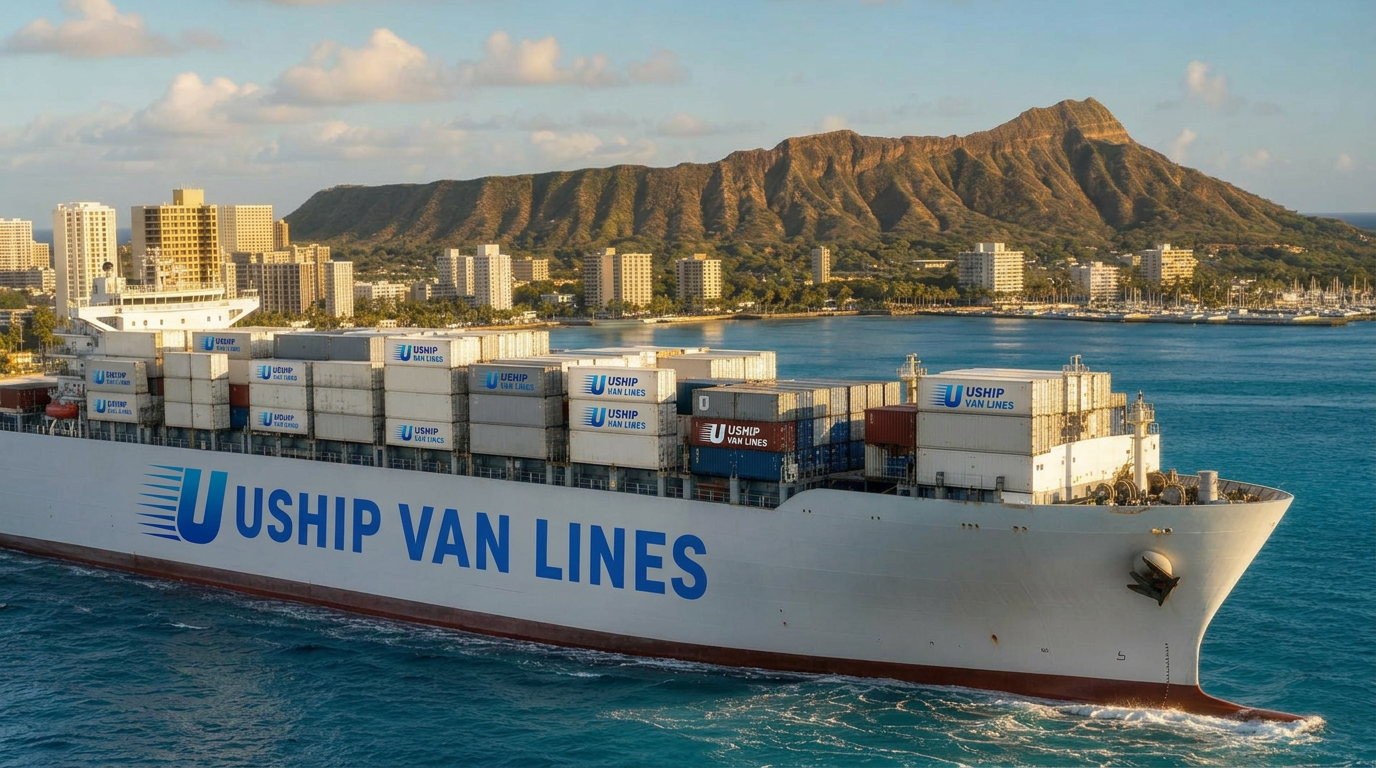
Moving from Hawaii to New Mexico
Moving from Hawaii to New Mexico means trading Pacific island life for high desert landscapes and Southwestern culture. This ocean-to-mainland relocation requires specialized logistics: your belongings travel by container ship from Hawaiian ports to the West Coast, then overland approximately 1,000 miles to cities like Albuquerque, Santa Fe, or Las Cruces.
Best Alaska & Hawaii Movers, powered by UShip Van Lines, coordinates every step of your Hawaii-to-New Mexico move. Our network handles ocean freight booking, port transfers, and final delivery to your New Mexico address. Request a free quote today to see how straightforward your island-to-desert transition can be.
Route overview
Route Overview: Hawaii to New Mexico
The Hawaii-to-New Mexico corridor serves families, military personnel relocating to bases like Kirtland Air Force Base and Cannon Air Force Base, and professionals seeking New Mexico's lower cost of living and unique cultural environment. Your household goods ship via Matson or Pasha Lines from Honolulu, Kahului (Maui), Nawiliwili (Kauai), or Hilo/Kona (Big Island) to Long Beach or Oakland, California.
From West Coast ports, your container transfers to a truck for the inland journey across California, Arizona, and into New Mexico. The route typically follows I-40 through Flagstaff and Gallup, or I-10 and I-25 for southern New Mexico destinations. This combination of ocean and overland transport makes timing and coordination critical.
New Mexico's elevation—Albuquerque sits at 5,312 feet, Santa Fe at 7,199 feet—and dry climate represent dramatic changes from Hawaii's sea-level humidity. Understanding the logistics of this unique move helps you plan appropriately for transit times, climate preparation, and settling into the Land of Enchantment.
How the moving process works
The Moving Process: Hawaii to New Mexico
-
Free Quote & Move Survey – Contact Best Alaska & Hawaii Movers for a detailed estimate. We assess your inventory, discuss vehicle shipping if needed, and explain the ocean-plus-overland timeline. Book 6–8 weeks ahead for summer moves, 4–6 weeks for off-peak periods.
-
Container Booking & Packing – We reserve your 20' or 40' ocean container and schedule professional packing at your Hawaii residence. Items are loaded, inventoried, and sealed. If you're shipping a vehicle separately, we coordinate roll-on/roll-off (RoRo) auto transport simultaneously.
-
Ocean Transit to California – Your container sails from your Hawaiian port to Long Beach or Oakland (7–14 days). Matson and Pasha offer weekly departures, though schedules vary by island. We monitor vessel arrivals and customs clearance.
-
Port Drayage & Customs – At the mainland port, your container clears customs (typically 1–2 days for domestic moves) and transfers to our partner trucking network. We handle all paperwork and container release.
-
Overland Transport to New Mexico – A semi-truck hauls your container approximately 800–1,100 miles (depending on your New Mexico destination). Transit takes 2–4 days, with routing through Arizona.
-
Delivery & Unloading – Our team delivers to your New Mexico address, unloads your belongings, and performs a walk-through inventory check. We remove packing materials and answer any questions about your shipment.
-
Vehicle Delivery (if applicable) – If you shipped a car or truck separately, it typically arrives within a similar timeframe via dedicated auto carrier from the West Coast.
Estimated moving costs
Cost Estimate: What to Expect
A typical 2–3 bedroom household move from Hawaii to New Mexico ranges from $6,200 to $11,500, depending on volume, island of origin, and final New Mexico destination. This estimate includes ocean freight, port handling, overland trucking, basic liability coverage, and standard delivery.
Key cost drivers:
- Shipment volume – A 20' container (approximately 1,100 cu. ft.) suits smaller apartments and 2BR homes; a 40' container (approximately 2,200 cu. ft.) accommodates larger 3–4BR households. Shared/consolidated container options may reduce costs for smaller loads.
- Island of origin – Moves from Oahu (Honolulu) are typically less expensive due to more frequent sailings. Neighbor island pickups (Maui, Kauai, Big Island) add inter-island barge fees and coordination time.
- New Mexico destination – Albuquerque and Santa Fe enjoy better truck access; rural or northern New Mexico addresses may incur additional mileage or limited-access fees.
- Packing services – Full professional packing adds $800–$1,800; fragile-only or partial packing reduces this cost.
- Vehicle shipping – Transporting one car from Hawaii to New Mexico separately runs $1,200–$1,800 via RoRo service.
- Insurance – Basic carrier liability is included; full-value protection costs approximately 1–2% of declared shipment value.
- Season – Summer (June–August) sees highest demand and pricing; November–March offers better availability and potential savings.
We never guarantee prices without a detailed survey. Request a free, no-obligation quote to receive a precise estimate based on your inventory and move dates.
Estimated transit times
Transit Time: Door-to-Door Timeline
Plan for 14–28 days total door-to-door transit time from your Hawaii residence to your New Mexico home. This includes ocean crossing, port processing, and overland delivery.
Breakdown by leg:
- Hawaii pickup & port delivery: 1–3 days, depending on your island and port schedule.
- Ocean voyage (Hawaii to California): 7–14 days. Honolulu to Long Beach/Oakland is fastest (7–9 days); neighbor island origin adds inter-island barge time (2–4 extra days).
- Port clearance & drayage: 1–3 days at Long Beach or Oakland for customs processing and container release.
- Overland trucking (California to New Mexico): 2–4 days. Albuquerque and Las Cruces are closer to the I-40/I-10 corridors; Santa Fe, Taos, and northern destinations may add a day.
- Scheduling & coordination buffer: 1–3 days for appointments, dock availability, and unforeseen delays.
Factors affecting speed:
- Sailing frequency – Matson and Pasha typically offer weekly service, but neighbor island sailings are less frequent.
- Port congestion – West Coast ports occasionally experience backups, especially during peak import seasons (late summer/fall).
- Weather – Winter Pacific storms or New Mexico snowstorms (November–March) can delay ocean or mountain-pass trucking.
- Holiday periods – Thanksgiving, Christmas, and New Year's slow port and trucking operations.
We provide tracking updates at each milestone so you're never guessing where your belongings are.
Regional logistics
Hawaii-Specific Logistics: Ports, Paperwork, and Delivery
Ports and container handling:
Hawaii moves originate from Honolulu Harbor (Oahu), Kahului Harbor (Maui), Nawiliwili Harbor (Kauai), or Hilo/Kawaihae (Big Island). Containers are loaded at your residence, trucked to the port, and loaded onto Matson or Pasha vessels. Inter-island moves require an additional barge leg, adding 2–4 days. On the mainland, Long Beach and Oakland are the primary receiving ports; your container clears customs and transfers to a chassis for the New Mexico haul.
Agricultural inspections:
Hawaii has strict outbound agricultural rules to prevent pest spread. USDA inspectors may examine your shipment for soil, plant material, or restricted items (certain woods, seeds). Professional movers pre-screen and clean items to minimize delays. New Mexico has no inbound agricultural restrictions for household goods.
Vehicle shipping:
Many clients ship one vehicle separately via RoRo auto carriers (Matson, Pasha). The car is driven onto the vessel, secured, and offloaded in California, then trucked to New Mexico. This runs $1,200–$1,800 and takes roughly the same timeframe as your household goods. If you have two vehicles, consider driving one cross-country as a road-trip adventure; it's often cost-comparable to shipping both.
New Mexico delivery conditions:
Albuquerque, Santa Fe, and Las Cruces have good semi-truck access. Rural areas, pueblos, and mountain communities (Taos, Angel Fire, Ruidoso) may require smaller shuttle trucks for final delivery, adding $200–$500. Narrow historic streets in Santa Fe's old town or gated communities may also require shuttles. Confirm delivery access during your quote survey.
Elevator and stair fees:
New Mexico has fewer high-rises than Hawaii, but condo or apartment moves in Albuquerque may incur elevator reservation or long-carry fees. Walk-up apartments (common in older Santa Fe buildings) add stair charges if movers carry items up multiple flights.
Storage options:
If your New Mexico home isn't ready, we offer short-term storage in Albuquerque or on the West Coast. Storage-in-transit (SIT) is billed monthly; coordinate timing to minimize extra costs.
Seasonal considerations
Seasonal Considerations: Timing Your Move
Summer (June–August):
Peak moving season for families and military relocations. Higher demand means premium pricing and tighter container availability. Hawaii weather is ideal, but book early—6–8 weeks in advance. New Mexico summer heat (90–100°F in Albuquerque, 80s in Santa Fe) means your belongings transition from humid tropical to arid high desert; electronics and wood furniture acclimate quickly once unloaded.
Fall (September–November):
September is the height of Pacific hurricane season, though direct strikes on Hawaii are rare; expect occasional sailing delays if storms develop. Port congestion on the West Coast peaks in October–November due to holiday import cargo. New Mexico fall is stunning—comfortable temperatures, clear skies—but book before Thanksgiving to avoid holiday slowdowns.
Winter (December–February):
Off-peak for moving; better pricing and container availability. Ocean crossings are generally smooth, though winter Pacific swells can occur. New Mexico winters bring snow to higher elevations (Santa Fe, Taos, Los Alamos), and I-40 can experience closures during heavy storms. If delivering to northern New Mexico, coordinate closely to avoid weather delays. Lower humidity in New Mexico helps prevent moisture issues during unloading.
Spring (March–May):
Ideal shoulder season. Ocean weather calms, New Mexico emerges from winter, and pricing is moderate. Military PCS orders often execute in late spring, so book by early April for May/June moves. New Mexico's spring winds (March–April) are strong but don't affect indoor unloading. This season offers the best balance of cost, availability, and weather on both ends.
Hurricane watch:
June 1–November 30 is the Central Pacific hurricane season. While Hawaii rarely faces direct hits, tropical storms can delay sailings by 2–5 days. We monitor forecasts and communicate proactively if your move window overlaps a named system.
Why choose Best Alaska & Hawaii Movers
Why Choose Best Alaska & Hawaii Movers
- Hawaii-mainland specialists: We coordinate ocean and overland segments daily, managing Matson/Pasha bookings, port drayage, and New Mexico trucking with a single point of contact—no handoffs between disconnected carriers.
- Transparent, all-inclusive quotes: Our estimates cover ocean freight, port fees, overland transport, and standard delivery. No surprise fuel surcharges or hidden container fees.
- Powered by UShip Van Lines: Our nationwide partner network ensures reliable trucking from California ports to every corner of New Mexico, from Farmington to Carlsbad.
- Real-time tracking & updates: You receive notifications at each milestone—container loaded, vessel departed, port cleared, truck dispatched, delivery scheduled—so you're always informed.
- Flexible scheduling & storage: Whether you need expedited service or short-term storage while house-hunting in Santa Fe, we tailor logistics to your timeline and budget.
- Dedicated move coordination: Your move coordinator handles everything from packing schedules to New Mexico delivery appointments, answering questions and solving problems before they escalate.