
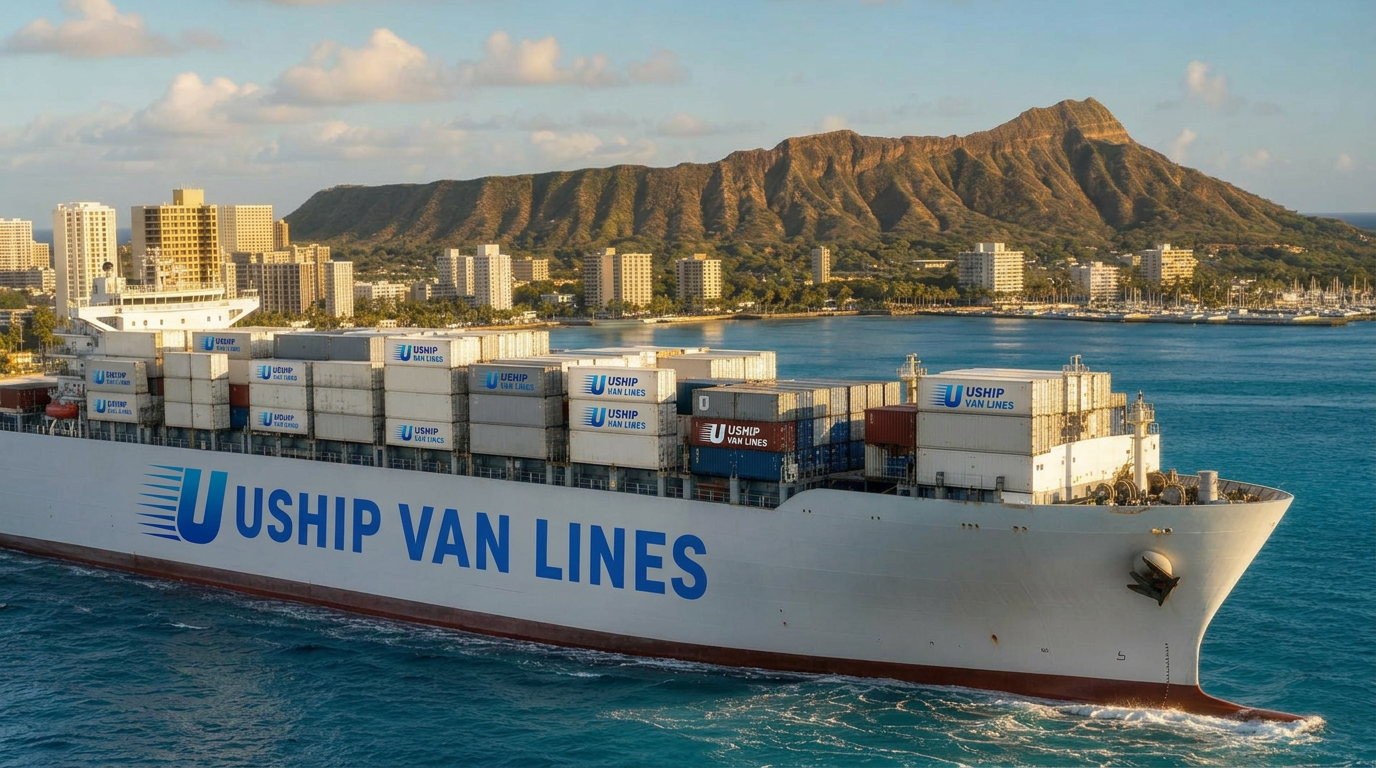
Moving from Hawaii to New Brunswick, NJ
Relocating from the Hawaiian Islands to New Brunswick, NJ means orchestrating a complex ocean-and-land move spanning roughly 5,000 miles. Your belongings will ship by container from Honolulu, Hilo, Kahului, or Nawiliwili to the West Coast, then travel overland across the continental United States to the Garden State city known for Rutgers University and vibrant downtown.
Best Alaska & Hawaii Movers, powered by UShip Van Lines, specializes in these multi-modal Hawaii relocations. We coordinate the entire journey—port paperwork, container booking, customs clearance, cross-country trucking, and final delivery to your New Brunswick address. Ready to simplify your island-to-mainland transition? Request your free, no-obligation quote today.
Route overview
Route Overview: Hawaii Islands to New Jersey
Your move originates at one of Hawaii's four commercial ports—Honolulu (Oʻahu), Hilo or Kawaihae (Big Island), Kahului (Maui), or Nawiliwili (Kauaʻi)—and sails via Matson Navigation or Pasha Hawaii to either Long Beach or Oakland, California. The ocean leg typically takes 5–7 days, weather and port congestion permitting. Once your container clears customs and is unloaded, a long-haul carrier transports it approximately 2,800 miles east through Nevada, Utah, Wyoming, Nebraska, Iowa, Illinois, Indiana, Ohio, Pennsylvania, and finally into New Jersey.
New Brunswick sits in Middlesex County, roughly 35 miles southwest of Manhattan. The city straddles the Raritan River and offers a blend of college-town energy, historic neighborhoods, and easy access to both New York City and the Jersey Shore. Whether you're moving for Rutgers employment, Johnson & Johnson's nearby headquarters, or family reasons, you'll find a compact urban core with good public transit and affordable housing compared to Manhattan. Your delivery truck will navigate Route 1, the New Jersey Turnpike, or local roads depending on your neighborhood—Highland Park, downtown New Brunswick, or one of the surrounding suburbs.
Understanding the full logistics—container booking lead times, port cutoff dates, cross-country transit windows—is critical to a smooth move. Most Hawaii departures require booking 10–21 days in advance, especially during peak summer and late-December holiday seasons when space is tight.
How the moving process works
Step-by-Step Moving Process
-
Request a detailed quote and schedule your move. Contact us 4–8 weeks before your target move date. We'll survey your inventory (virtually or in-home if on Oʻahu), provide a binding or not-to-exceed estimate, and reserve your container slot with the steamship line. Summer and year-end require even longer lead times.
-
Prepare your household goods. Professional packers can wrap furniture, box fragile items, and crate artwork. If you self-pack, use sturdy boxes and proper cushioning—your belongings will endure ocean swells and 3,000 miles of highway vibration. Remove batteries from electronics; drain gasoline from small engines.
-
Container loading and port delivery. Our crew loads your 20-foot or 40-foot container at your Hawaii residence (or you deliver a packed container to our facility). We transport it to the port, submit the required bill of lading, customs declaration, and hazmat certifications, and ensure the container meets the steamship line's cutoff (usually 48–72 hours before sailing).
-
Ocean transit to the mainland. Your container sails to Long Beach or Oakland. Matson and Pasha publish weekly schedules; actual sailing depends on your booking. The voyage takes 5–7 days. You'll receive a container number and vessel name for tracking.
-
Customs clearance and drayage. Upon arrival, U.S. Customs inspects and releases the container (usually same-day for household goods, occasionally 1–2 days if selected for exam). We arrange drayage to our partner terminal or directly onto a long-haul chassis.
-
Cross-country trucking to New Brunswick. A dedicated driver or team hauls your container east on I-80 or I-70, covering roughly 2,800 miles in 4–6 days of driving time (including mandatory rest breaks). Total overland transit is typically 5–8 calendar days after port release.
-
Final delivery and unpacking. The truck arrives at your New Brunswick address; our crew unloads, places furniture in rooms, and hauls away packing materials if requested. Inspect for damage, note any issues on the delivery receipt, and settle the balance. You're home.
Estimated moving costs
What Does a Hawaii-to-New Brunswick Move Cost?
A typical 2-bedroom household (roughly 5,000–7,000 pounds or a 20-foot container) runs $6,500–$10,500 door-to-door. A 3-bedroom home or large 2BR (requiring a 40-foot container, 10,000–14,000 pounds) often falls in the $10,500–$16,000 range. These are illustrative figures; your final price depends on actual weight, container size, accessorial services, and seasonal demand.
Key cost drivers:
- Container size and weight. Steamship lines charge per container (20' vs. 40') and may add weight surcharges above certain thresholds. More cubic footage = higher base rate.
- Island of origin. Neighbor-island moves (Maui, Kauaʻi, Big Island) incur an extra inter-island barge or small-vessel leg to Honolulu, adding $800–$1,800 to the total.
- Packing and crating. Full-service packing for a 2BR can add $1,200–$2,500; custom crates for pianos, artwork, or antiques are extra.
- Vehicle shipping. Cars ship separately via roll-on/roll-off service; expect $1,200–$1,800 per sedan (Hawaii to California), then additional overland transport to New Jersey ($600–$1,000).
- Season and port congestion. Summer (June–August) and late December see premium rates and longer booking windows. Off-peak months (September–November, January–April) may offer better availability and pricing.
- Storage. If your New Brunswick home isn't ready, warehouse storage at our mainland facility runs $100–$250/month for a full container.
- Insurance. Basic carrier liability covers $0.60/pound; full-value replacement protection costs 1–3% of declared value and is strongly recommended for ocean moves.
We provide transparent, itemized quotes with no hidden fees. Never accept a
Estimated transit times
How Long Does the Move Take?
Total door-to-door transit: 14–21 days is the realistic window from your Hawaii pickup to New Brunswick delivery. Here's the breakdown:
- Packing and container loading: 1–2 days (or more for large homes).
- Port drayage and steamship cutoff: 1–2 days before sailing.
- Ocean voyage: 5–7 days (Honolulu/neighbor islands to Long Beach or Oakland).
- Customs clearance: Same day to 2 days (rarely longer unless inspection required).
- Cross-country trucking: 5–8 days (approximately 2,800 miles at legal driving speeds, including mandatory rest).
- Final delivery window: We'll provide a 2–3 day delivery window; exact appointment scheduled 24–48 hours out.
Expedited service is possible but expensive: air freight for a small shipment (a few hundred pounds) can reach New Jersey in 3–5 days but costs $4–$8 per pound—impractical for a full household. For most families, the standard ocean-truck combination offers the best balance of cost and reliability.
Delays can happen. Weather (tropical storms in Hawaii or winter storms crossing the Rockies/Midwest), port congestion (West Coast terminals occasionally face labor or equipment issues), and holiday peaks (Thanksgiving, Christmas/New Year's) can add 2–5 days. Build buffer time if your New Brunswick lease or closing date is firm.
Regional logistics
Hawaii-Specific Logistics You Need to Know
Ports and container types. Hawaii moves use standard 20-foot or 40-foot dry containers (the same intermodal boxes that cross oceans worldwide). Matson and Pasha dominate the Hawaii–mainland trade; both offer weekly sailings from Honolulu. Neighbor-island cargo often consolidates in Honolulu before the mainland voyage, or smaller vessels sail direct to the West Coast from Kahului, Hilo, or Nawiliwili (schedules vary).
Prohibited and restricted items. You cannot ship hazardous materials (paint, propane, aerosols, lithium batteries in bulk), perishable foods, or live plants in the container. Hawaii has strict agricultural export rules—USDA inspects for pests and soil. Potted plants require permits and often aren't worth the hassle; many families leave plants with friends or donate them. Firearms must be declared and packed per federal regulations (unloaded, locked case, ammo separate).
Vehicle shipping. If you're taking a car, book roll-on/roll-off (RoRo) service separately. Matson and Pasha both offer auto transport; your car sails on the same vessel or a parallel schedule. Expect $1,200–$1,800 Hawaii to California, then arrange overland transport (drive-away service or enclosed trailer) to New Jersey for another $600–$1,200. Total vehicle cost: roughly $1,800–$3,000 door-to-door. Some families sell their car in Hawaii (no rust, strong used market) and buy in New Jersey—run the numbers.
Paperwork and customs. Moving from Hawaii to the mainland is a domestic move (no international customs), but the steamship line requires a detailed packing list/inventory, shipper's declaration, and bill of lading. If you have foreign-made items purchased abroad (not previously imported and duty-paid), technically you should declare them; in practice, used household goods rarely trigger duty. U.S. Customs reserves the right to inspect any container; compliance ensures smooth release.
Last-mile delivery in New Jersey. New Brunswick has narrow downtown streets, on-street parking restrictions, and occasional delivery challenges near the Rutgers campus. If you're moving into a walk-up apartment or a street with overhanging trees, confirm truck access with your moving coordinator. We'll arrange a smaller shuttle truck if needed (additional fee). Most single-family homes and garden apartments are straightforward.
Seasonal considerations
Best Time of Year to Move from Hawaii to New Brunswick
Summer (June–August): Peak season. Families move between school years; container space is tight; rates are highest. Book 6–8 weeks ahead. Hurricane season officially runs June 1–November 30, but Central Pacific storms (affecting Hawaii) are most common August–October. Carriers monitor weather closely and may delay sailings if a system threatens.
Fall (September–November): Shoulder season. Rates soften slightly after Labor Day; availability improves. September and October still fall within hurricane season—watch forecasts if booking mid-autumn. Cross-country trucking faces minimal weather risk until late November (early winter storms in the Rockies and Plains).
Winter (December–February): Mixed bag. Late December is busy (holiday relocations, military PCS moves); rates spike. January and February are slower, sometimes offering the year's best pricing. However, cross-country trucking can face snow delays in the Midwest and Appalachians. New Jersey itself sees occasional nor'easters—ensure your New Brunswick delivery address is snow-cleared. The ocean leg is smooth (no hurricane risk), but port labor and chassis shortages can occur around Christmas/New Year's.
Spring (March–May): Excellent window. Demand rises as families plan summer moves, but availability remains good. Weather is favorable in Hawaii and on the mainland. Book 4–6 weeks out for best rates and flexibility. May is particularly popular as college graduates and corporate transferees start new jobs.
Bottom line: If your schedule is flexible, aim for January–February or late March–early May for lower costs and predictable timelines. If you must move in summer or late December, book early and budget for premium pricing.
Why choose Best Alaska & Hawaii Movers
Why Choose Best Alaska & Hawaii Movers (Powered by UShip Van Lines)
-
Specialized Hawaii-mainland expertise. We handle the unique complexities of island moves—port coordination, steamship line contracts, agricultural inspections, and cross-country logistics—every day. You get one point of contact for the entire journey, not a patchwork of brokers and subcontractors.
-
Transparent, all-inclusive quotes. Our estimates clearly break out ocean freight, container drayage, long-haul trucking, packing, and accessorials. No surprise fees at delivery. You'll know what you're paying and why.
-
Flexible service levels. Choose full-service packing and white-glove delivery, or save money with a hybrid approach (you pack boxes, we load and transport). We tailor the move to your budget and timeline.
-
Reliable carrier network. UShip Van Lines partners with vetted, licensed motor carriers for the overland leg and maintains strong relationships with Matson and Pasha. Your container ships on time; your delivery window is honored.
-
Comprehensive insurance options. We offer full-value protection plans underwritten by reputable insurers, giving you peace of mind for high-value items during the long ocean-and-road journey.