
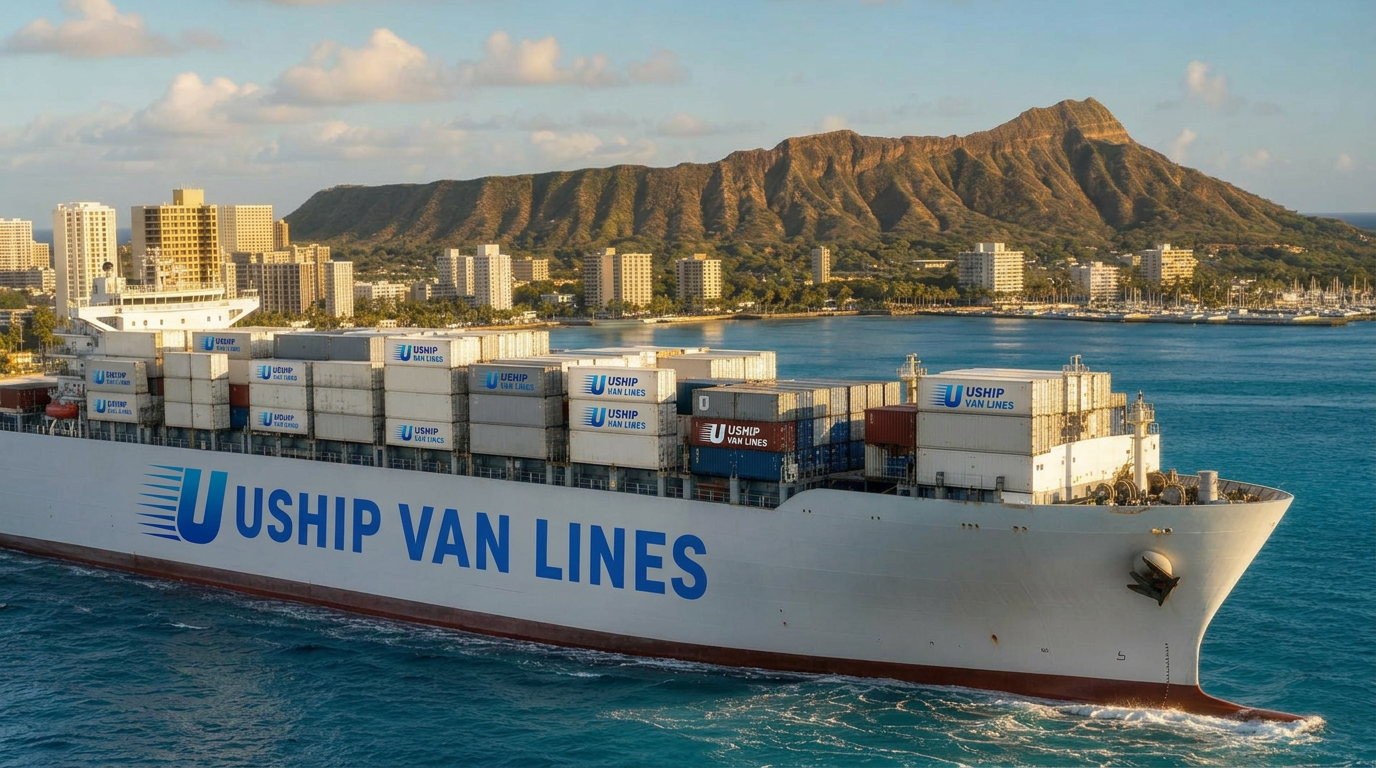
Moving from Hawaii to Mesa, AZ
Relocating from the islands to Arizona's East Valley brings unique logistical challenges that mainland moves simply don't face. Your household goods must travel by ocean container from Hawaii to a West Coast port—typically Long Beach or Oakland—then truck overland approximately 750 miles across the Southwest desert to Mesa, a growing city just east of Phoenix with over 500,000 residents.
Best Alaska & Hawaii Movers, powered by UShip Van Lines, specializes in precisely this type of multi-modal move. We coordinate ocean shipping, customs clearance, and final delivery to your Mesa doorstep. Ready to simplify your transition from island life to the Sonoran Desert? Request a free, no-obligation quote tailored to your household size and timeline.
Route overview
Understanding the Hawaii-to-Mesa Route
Mesa sits in Maricopa County at roughly 1,200 feet elevation, a dramatic contrast to sea-level island living. Your belongings will depart from Honolulu Harbor (or Nawiliwili on Kauai, Kahului on Maui, or Hilo/Kawaihae on the Big Island) aboard Matson Navigation or Pasha Hawaii vessels. These carriers run scheduled weekly sailings to Long Beach and Oakland, where containers are offloaded, cleared through Agriculture inspection, and transferred to long-haul trucks.
From the California port, your shipment travels Interstate 10 eastbound through the Coachella Valley, crosses into Arizona near Blythe, and continues through Phoenix's western suburbs before reaching Mesa. The final delivery navigates Mesa's grid of numbered streets and avenues—drivers appreciate the city's logical layout, though summer heat and monsoon storms can occasionally affect scheduling.
This route requires coordination between three distinct service providers: the Hawaii freight forwarder, the ocean carrier, and the overland trucking company. Best Alaska & Hawaii Movers manages every handoff, so you never chase down separate vendors or wonder where your household goods are between Waikiki and Superstition Springs.
How the moving process works
How Your Hawaii-to-Mesa Move Works (Step by Step)
-
Free In-Home or Virtual Survey – We assess your household volume, identify non-shippable items (propane tanks, aerosols, plants, certain foods), and provide a binding or not-to-exceed estimate. Virtual surveys work well for studio or one-bedroom apartments; larger homes benefit from in-person walkthroughs.
-
Container Selection and Booking – Most two- to three-bedroom households fill a 20-foot ocean container (roughly 1,100 cubic feet); larger homes may require a 40-foot unit (2,400 cubic feet). We reserve space on the next available Matson or Pasha sailing, typically one to two weeks out during off-peak months, longer during summer rush.
-
Professional Packing and Loading (Hawaii) – Our island-based crew arrives at your residence, wraps furniture in moving blankets and shrink wrap, boxes fragile items with marine-grade packing materials, and loads the container in your driveway or at a nearby consolidation warehouse. All items are inventoried with condition noted.
-
Ocean Transit to California – Sailing time from Honolulu to Long Beach averages five to seven days; Oakland sailings run six to eight days. Inter-island moves (Maui, Kauai, Big Island to Oahu) add two to four days for barge transfer to the main port before the transpacific leg begins.
-
Port Processing and USDA Inspection – U.S. Agriculture officials inspect all Hawaii containers for invasive species (particularly snails, roaches, and plant material). Clean, well-packed shipments clear in one to two business days; any issues can add delays and re-inspection fees ($150–$400).
-
Overland Trucking to Mesa – Once released, your container is loaded onto a chassis and hauled by commercial truck. The 750-mile journey typically takes two to three days, accounting for mandatory driver rest periods and highway conditions.
-
Delivery and Unpacking – Our Mesa delivery team contacts you 24–48 hours in advance to schedule a delivery window. They unload, place furniture in designated rooms, reassemble beds and tables, remove packing debris, and have you sign off on the final inventory.
Total door-to-door timeline: 14–28 days under normal conditions, longer during peak summer or if you're moving from an outer island.
Estimated moving costs
What You'll Pay: Realistic Cost Ranges
A typical two-bedroom apartment move from Honolulu to Mesa runs $4,800–$7,200, while a three-bedroom house averages $7,500–$11,000. These estimates assume full-service packing, a 20-foot container, and standard delivery.
Key cost drivers include:
- Container size – 20-foot vs. 40-foot containers; consolidated (shared) vs. exclusive use
- Origin island – Neighbor island pickups (Maui, Kauai, Big Island) add $800–$1,500 for inter-island barge and handling
- Packing services – Self-pack can save $600–$1,200, but increases your liability for damage and complicates USDA inspections
- Access challenges – High-rise buildings without freight elevators, narrow Honolulu streets, or gated communities with restricted truck access incur extra labor charges ($150–$400)
- Seasonality – June through August sees 20–30% rate premiums due to military PCS moves and mainland-bound college students
- Insurance level – Basic carrier liability covers $0.60/lb; full-replacement-value coverage adds 1–3% of declared shipment value
- Vehicle shipping – Cars ship separately via roll-on/roll-off vessels; budget $1,100–$1,500 Honolulu to Long Beach, plus $400–$650 Long Beach to Mesa overland
We never quote guaranteed prices over the phone. Every estimate reflects your actual household inventory, service level, and current carrier tariffs. Request your personalized quote to see exactly what your move will cost—no hidden fees, no surprises at delivery.
Estimated transit times
How Long Your Move Takes: Door-to-Door Timeline
Total Transit: 14–28 Days (sometimes longer during peak season or from outer islands)
- Packing and Container Loading (Hawaii): 1–2 days, depending on home size
- Container Drayage to Honolulu Port: Same day or next business day
- Inter-Island Transfer (if applicable): 2–4 days for barge from Maui, Kauai, or Big Island to Oahu
- Ocean Sailing to California: 5–7 days to Long Beach; 6–8 days to Oakland
- Port Processing and USDA Inspection: 1–3 business days (clean shipments clear fastest)
- Overland Truck to Mesa: 2–3 days (750 miles, I-10 corridor)
- Final Delivery Scheduling: 1–2 days buffer to coordinate your availability
Factors that extend timelines:
- Sailing schedules – If you miss a weekly departure, you wait seven days for the next vessel
- Summer congestion – Long Beach and Oakland ports handle peak cargo June–August; container offloads can lag by 48–72 hours
- USDA holds – Packages with food residue, potted plants, or outdoor furniture with soil trigger re-inspection
- Weather – Pacific storms (November–March) occasionally delay sailings by 24–48 hours; Arizona monsoons (July–September) can pause final delivery during severe thunderstorms
- Holiday weeks – No deliveries December 24–26 or January 1; Memorial Day, July 4th, and Labor Day weekends see reduced schedules
We provide tracking updates at every handoff: container loaded, vessel departed, port arrival, customs cleared, truck dispatched, delivery scheduled. You're never left wondering where your dining table is crossing the desert.
Regional logistics
Hawaii-Specific Moving Logistics You Must Understand
Port Infrastructure
Honolulu Harbor (Piers 1, 2, and 51–53) handles 90% of Hawaii household-goods exports. Matson operates dedicated terminals; Pasha uses Sand Island facilities. Neighbor island ports—Nawiliwili (Kauai), Kahului (Maui), Kawaihae and Hilo (Big Island)—require barge transfer to Oahu before the California sailing, adding cost and time. If you live outside the main port's immediate metro area, your container may be loaded at your residence (if street access permits) or at a consolidation warehouse, then trucked to the dock.
USDA Agriculture Inspection
All containers arriving from Hawaii undergo mandatory inspection for invasive pests. Inspectors open random boxes, check furniture crevices, and examine outdoor items (grills, garden tools, bikes). High-risk items that trigger holds: potted plants, fresh produce, open food packages, wooden furniture with bark, soil-covered items, rattan or wicker pieces with insect damage. Clean your belongings thoroughly; inspectors can reject entire containers, forcing expensive re-packing and re-inspection ($300–$800). We provide a pre-pack checklist to avoid these issues.
Vehicle Shipping
Cars and trucks ship separately via Matson or Pasha roll-on/roll-off (RoRo) vessels. You drop the vehicle at the port terminal (keys in ignition, quarter-tank of gas, no personal items except a spare tire and car seat). Transit time mirrors household goods: 5–7 days Honolulu to Long Beach, then 2–3 days overland to Mesa. Total cost: $1,500–$2,150 for a sedan, slightly more for SUVs or trucks. Motorcycles and boats require specialized handling; contact us for quotes.
Restricted and Prohibited Items
Cannnot ship: propane tanks (BBQ or RV), ammunition, paint, aerosols, bleach, gasoline-powered equipment with fuel, opened food (even dry goods), marijuana (legal in Hawaii, illegal federally and in interstate transport). Limit liquids (shampoo, cleaning supplies) to small, sealed containers; inspectors scrutinize bottles for leaks. We provide a comprehensive "Do Not Pack" list during your survey.
Last-Mile Delivery in Mesa
Mesa addresses use a numbered grid: streets run east-west (e.g., Main Street, Southern Avenue), avenues run north-south (e.g., Mesa Drive, Alma School Road). Most neighborhoods have wide, truck-friendly roads. Gated communities (Red Mountain Ranch, Las Sendas, Eastmark) require 24-hour advance notice for delivery access. High-rise condos downtown are rare but may need freight elevator reservations. Our drivers coordinate directly with HOAs and building managers to ensure smooth delivery.
Seasonal considerations
Best (and Worst) Times to Move from Hawaii to Mesa
Winter (December–February): Moderate demand, occasional storm delays
Post-holiday moves see lower rates and better availability. Pacific storms are more common, potentially delaying sailings by one to two days. Mesa weather is ideal—daytime highs in the 60s–70s°F make unpacking comfortable. Book at least three weeks ahead for pre-Christmas moves.
Spring (March–May): Excellent window, rising prices toward Memorial Day
Peak moving season begins in late April as military families prepare for June PCS orders. Ocean crossings are smooth, and Mesa temperatures remain pleasant (80s–90s°F). Book four weeks in advance; May moves can see 10–15% rate increases over March.
Summer (June–August): Highest demand, maximum cost, monsoon complications
Military relocations and mainland-bound students flood the Hawaii–West Coast lanes. Container space books out two to three weeks ahead, and prices jump 20–30%. Long Beach port congestion adds two to four extra days. Arizona monsoon season (mid-July through September) brings afternoon thunderstorms—delivery crews pause during active lightning but rarely experience multi-day delays. Expect 105–115°F heat; unpack boxes quickly to prevent warping.
Fall (September–November): Best value, smooth logistics
Demand drops sharply after Labor Day. Carriers offer discounts to fill capacity, and port operations return to normal speed. Hurricane season (June–November) peaks in September, but modern forecasting allows vessels to route around storms—cancellations are rare. Mesa temperatures cool to the 80s–90s by October, making this the ideal balance of cost, speed, and weather. Book two to three weeks out.
Hurricane considerations: Central Pacific hurricanes occasionally threaten the islands August–October. Matson and Pasha delay sailings only if a storm directly impacts Honolulu Harbor (roughly once every three to five years). If your move window falls during a named storm, expect 24–72 hour postponements—your household goods remain secure in the container.
Why choose Best Alaska & Hawaii Movers
Why Mesa Residents Trust Best Alaska & Hawaii Movers
-
Single-Source Accountability – You get one point of contact from Honolulu pickup through Mesa delivery. No finger-pointing between ocean carriers, truckers, and customs brokers—we own every leg of your move.
-
Transparent, Binding Estimates – We survey your household (in-person or virtually), calculate actual cubic footage, and provide a not-to-exceed price. No surprise charges at delivery unless you add items after the contract is signed.
-
Hawaii-Logistics Expertise – Our crews understand USDA inspection requirements, inter-island barge schedules, and Hawaii's unique packing challenges (humidity, salt air, older buildings with narrow stairwells). We prep your shipment to clear agriculture inspection on the first pass.
-
Real-Time Tracking – Receive email and SMS updates when your container is loaded, when the vessel departs, when it clears port, and when the truck is dispatched to Mesa. Our customer portal shows your shipment's location 24/7.
-
Comprehensive Insurance Options – Choose between basic carrier liability ($0.60/lb) or full-replacement-value coverage that reimburses at current market prices. We explain the trade-offs clearly, so you're never under-protected.
-
Powered by UShip Van Lines – Backed by one of North America's largest moving networks, we combine local Hawaii knowledge with nationwide trucking capacity and claims-handling infrastructure. You get boutique service with enterprise reliability.