
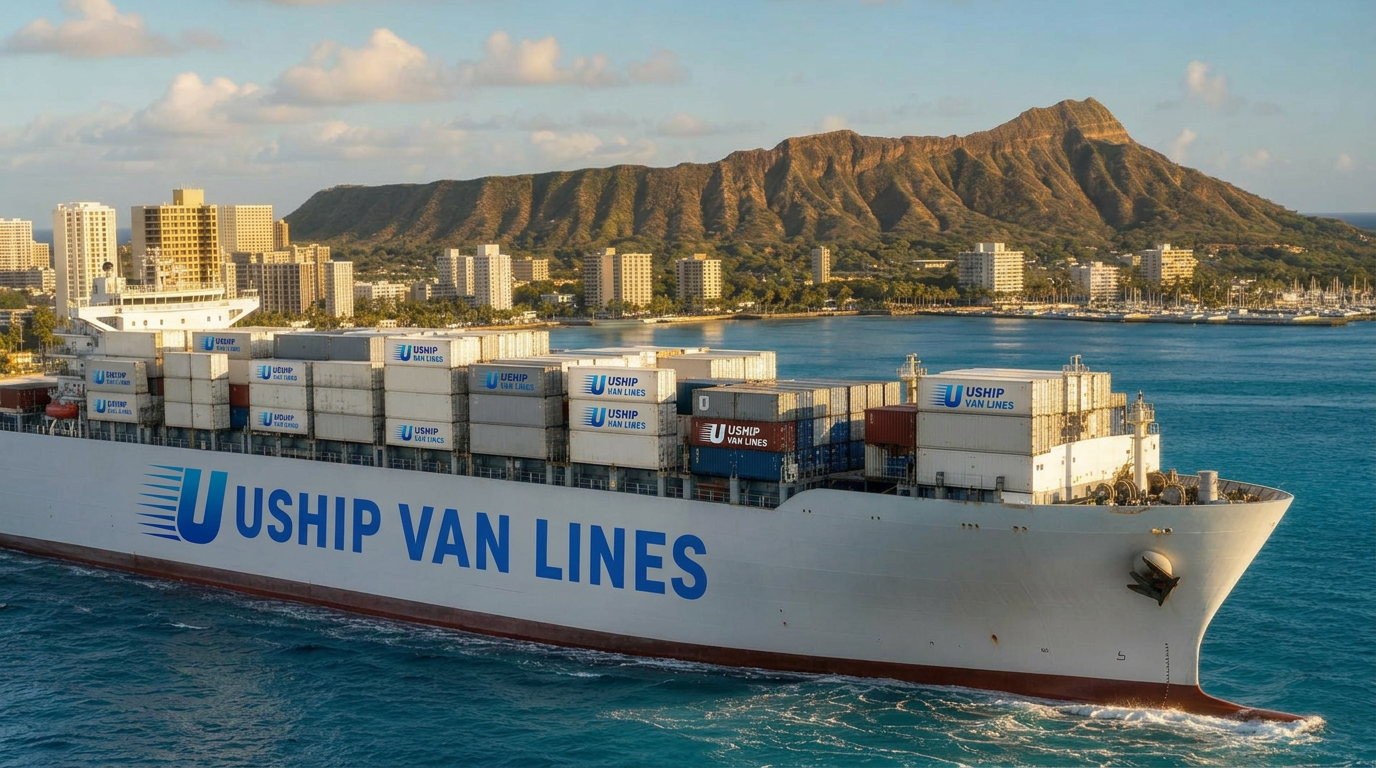
Moving from Hawaii to Chicago, IL
Moving from Hawaii to Chicago, IL means coordinating ocean freight, mainland transportation, and a dramatic climate shift—all while navigating one of the longest domestic moving routes in the United States. Whether you're relocating from Honolulu, Maui, Kauai, or the Big Island, your household goods will travel by container ship to the West Coast, then overland across 2,000+ miles to the Midwest.
Best Alaska & Hawaii Movers, powered by UShip Van Lines, specializes in these complex inter-modal moves. We handle port logistics, customs paperwork, vehicle shipping, and final delivery to your Chicago doorstep. Request a free quote today to see how we make island-to-mainland moves simple.
Route overview
Route Overview: Hawaii to Chicago, IL
The Hawaii-to-Chicago corridor combines ocean shipping from Honolulu, Kahului (Maui), Nawiliwili (Kauai), or Hilo/Kona (Big Island) with cross-country trucking. Your belongings are packed into 20-foot or 40-foot ocean containers, loaded onto Matson or Pasha vessels, and sail to Long Beach or Oakland—typically 5–7 days at sea. From the California port, your container is transferred to a 53-foot semi-trailer for the 2,100-mile journey across Nevada, Utah, Wyoming, Nebraska, and Iowa to Illinois.
Chicago's strategic position as a major freight hub streamlines final delivery, but winter weather can add 1–3 days during snowstorms. Most moves complete door-to-door in 18–28 days, though summer peak season (June–August) and holiday periods may push timelines longer.
This route is ideal for military families (many Pearl Harbor relocations), retirees seeking lower costs and four seasons, and professionals accepting mainland job transfers. Understanding the multi-stage logistics—port fees, inland drayage, cross-country transit, and Chicago delivery—is critical to budgeting accurately.
How the moving process works
The Hawaii-to-Chicago Moving Process
-
Free In-Home or Virtual Survey – A moving consultant assesses your inventory (typically 7,000–12,000 lbs for a 2–3 bedroom home) and provides a binding or not-to-exceed estimate. Discuss fragile items, vehicle shipping, and storage needs upfront.
-
Book Early (6–10 Weeks Out) – Summer sailings fill quickly. Reserve your container space and coordinate your move-out date with ship schedules. Inter-island customers may need an additional barge leg (Neighbor Islands → Honolulu).
-
Professional Packing & Loading (1–2 Days) – Our crew packs your belongings into wooden crates and cardboard cartons, then loads them into a 20' or 40' ocean container at your Hawaii residence or a consolidation warehouse. We secure furniture, wrap electronics, and create a detailed inventory.
-
Ocean Transit to California (5–7 Days) – Your container sails to Long Beach or Oakland. Matson and Pasha provide reliable weekly service. You'll receive a bill of lading and estimated arrival date.
-
Port Unloading & Customs Clearance (2–4 Days) – At the California port, your container is offloaded, inspected, and cleared. We handle all documentation. If shipping a vehicle separately, it's processed in parallel.
-
Overland Transit to Chicago (5–8 Days) – Your container is transferred to a 53-foot trailer and driven I-80 eastbound. Drivers run in teams or relay, covering ~500 miles per day. Weather and DOT hours-of-service rules affect timing.
-
Final Delivery & Unpacking – In Chicago, our crew unloads, places furniture, and unpacks boxes (if selected). We remove debris and confirm your inventory. Inspect for damage immediately and note any claims on the delivery receipt.
Estimated moving costs
Cost Estimate: Hawaii to Chicago, IL
Typical Range for a 2–3 Bedroom Move: $6,800–$11,500 door-to-door.
- Studio/1-Bedroom (3,000–4,500 lbs): $4,200–$6,500
- 2-Bedroom (5,000–7,500 lbs): $6,800–$9,200
- 3-Bedroom (8,000–11,000 lbs): $8,500–$11,500
- 4+ Bedroom or Full Container (12,000+ lbs): $11,000–$16,000+
Key Cost Drivers:
- Weight and Volume – Ocean freight is charged per container or per cubic foot; overland trucking by weight. Decluttering before you pack saves hundreds.
- Port Fees – Hawaii origin fees (wharfage, terminal handling) and California destination fees (drayage, chassis) add $800–$1,400.
- Packing Services – Full-service packing (materials + labor) runs $800–$1,800. Partial packing (fragiles only) is $300–$600.
- Vehicle Shipping – Cars/trucks ship separately in roll-on/roll-off vessels: $1,100–$1,600 per vehicle Hawaii → California, then $600–$900 California → Chicago.
- Storage – If you need temporary storage in California or Chicago, expect $150–$300/month for a 200–400 sq ft unit.
- Insurance – Basic carrier liability is $0.60/lb; full-value protection costs 1–3% of declared value.
- Peak Season – June–August and December rates climb 15–25% due to high demand.
Important: These are estimates only. Your final price depends on exact inventory, service level, and timing. Request a detailed, written quote to avoid surprises. We never claim guaranteed prices without a formal binding estimate.
Estimated transit times
Transit Time: Hawaii to Chicago
Total Door-to-Door: 18–28 days (average 22–24 days).
Breakdown by Leg:
- Packing & Loading in Hawaii: 1–2 days
- Container Dray to Port & Waiting for Departure: 1–4 days (depends on sailing schedule)
- Ocean Voyage to Long Beach/Oakland: 5–7 days
- Port Unloading, Customs, Dray to Trucking Terminal: 2–4 days
- Overland Transit (California → Chicago): 5–8 days
- Final Delivery Scheduling & Unload: 1–2 days
Factors That Extend Timelines:
- Inter-Island Moves – Neighbor Island customers add 3–5 days for barge service to Honolulu before the mainland sailing.
- Port Congestion – Summer peak and post-holiday surges can delay container release by 2–3 days.
- Weather – Winter snow in the Rockies or Midwest may slow trucking. Hurricanes in the Pacific (June–November) can postpone sailings.
- Weekends & Holidays – Ports and trucking terminals close; delivery windows shift accordingly.
Pro Tip: Book your move to arrive mid-week in Chicago (Tue–Thu) for the most flexible delivery slots. If your lease or closing date is firm, build in a 5–7 day buffer and arrange temporary lodging or storage.
Regional logistics
Hawaii-Specific Logistics for Your Chicago Move
Ports of Origin:
- Oahu (Honolulu): Matson and Pasha sail weekly to Long Beach and Oakland. Easiest and fastest option—most frequent departures, shortest wait times.
- Maui (Kahului), Kauai (Nawiliwili), Big Island (Hilo/Kona): Containers are barged to Honolulu, then loaded onto mainland-bound vessels. Add 3–5 days and $300–$600 in inter-island fees.
- Outer Islands: Some small islands require lightering or consolidation; consult your mover.
Paperwork & Regulations:
- Hawaii moves are domestic, so no international customs—but carriers require a bill of lading, inventory list, and proof of residence.
- Plant and Soil Restrictions: USDA prohibits most live plants and soil from Hawaii to the mainland. Dispose of houseplants or give them away; clean gardening tools thoroughly.
- Firearms: Declare all firearms on your inventory. Transport ammunition separately or dispose per TSA/ATF rules.
Vehicle Shipping:
- Cars and trucks ship separately in roll-on/roll-off (RORO) vessels. Matson and Pasha run weekly auto services Honolulu → Long Beach/Oakland ($1,100–$1,600), then overland to Chicago ($600–$900). Total: $1,700–$2,500 per vehicle, 14–21 days.
- Vehicles must be operable, contain less than ¼ tank of gas, and have no personal items inside (carriers inspect and charge fees for violations).
- Alternative: Drive your car once it arrives in California and fly to Chicago—saves money but adds complexity.
Last-Mile Delivery in Chicago:
- Chicago requires city moving permits for large trucks on residential streets (your mover handles this).
- High-rise buildings may require certificate of insurance and elevator reservations. Coordinate with your condo board or property manager 2–3 weeks ahead.
- Winter moves: building lobbies and elevators must be protected with padding; sidewalks must be salted/shoveled. Ensure building management is aware of your move-in date.
Storage Options:
- If your Chicago home isn't ready, we offer short-term warehousing in California or Illinois. Rates: $150–$300/month for 200–400 sq ft. Climate-controlled units recommended for electronics, wood furniture, and artwork.
Insurance & Valuation:
- Basic carrier liability is $0.60/lb ($600 for a 1,000-lb couch). Opt for full-value protection (1–3% of declared value) to cover replacement cost. High-value items (jewelry, art, collectibles) may need separate riders; consult your homeowner's or renter's insurance.
Seasonal considerations
Seasonal Considerations for Hawaii-to-Chicago Moves
Summer (June–August): Peak moving season. Families relocate before the school year; military PCS orders cluster in summer. Expect higher rates (15–25% premium), longer lead times (8–10 weeks to book), and port congestion in Long Beach/Oakland. Advantage: calm Pacific seas, minimal weather delays. Disadvantage: Chicago heat and humidity make move-in day sweaty; book air-conditioned storage if needed.
Fall (September–November): Shoulder season with moderate rates and availability. September and early October are ideal—still warm, kids are settled in school, and holiday rushes haven't begun. Pacific hurricane season peaks in August–September; late-season storms are rare but can delay sailings 2–4 days. Chicago weather is pleasant through October, then turns cold and rainy in November.
Winter (December–February): Off-peak pricing (10–20% below summer), but weather risks rise. Pacific winter storms (November–March) can delay sailings or slow ocean transit. Cross-country trucking faces snow, ice, and road closures in the Rockies, Wyoming, and Illinois—adding 1–3 days. Chicago winters are brutal: subzero wind chills, blizzards, and icy sidewalks make move-in dangerous. If you must move in winter, hire full-service movers to handle slippery conditions, and ensure your new home's heat is on days before arrival.
Spring (March–May): Excellent balance of lower rates and improving weather. March can still see late snowstorms in Chicago; April and May are temperate. Pacific sailing schedules ramp up for summer, so availability is good. Book 6–8 weeks ahead. Spring rains in the Midwest rarely delay moves, but have tarps ready for unpacking.
Hurricane Season (June 1–November 30): Central Pacific hurricanes are less frequent than Atlantic storms, but can disrupt Matson/Pasha schedules. Monitor NOAA forecasts if moving July–October. Carriers will reschedule sailings; build extra buffer time.
Why choose Best Alaska & Hawaii Movers
Why Choose Best Alaska & Hawaii Movers for Your Hawaii-to-Chicago Move
- Ocean + Overland Expertise – We coordinate every leg: inter-island barge, Matson/Pasha container shipping, California port handling, cross-country trucking, and Chicago final delivery. One point of contact, seamless execution.
- Transparent, All-Inclusive Pricing – Our quotes include packing materials, port fees, inland drayage, fuel surcharges, and delivery. No hidden costs. We explain every line item so you can budget confidently.
- Flexible Service Levels – Choose full-service (we pack, load, unpack) or hybrid (you pack, we load and transport). We accommodate military PCS, corporate relocations, and personal moves with equal professionalism.
- Real-Time Tracking & Communication – Receive updates at every milestone: container loaded, vessel departed, port arrival, truck dispatched, delivery scheduled. Call or text your move coordinator anytime.
- Powered by UShip Van Lines – Our nationwide carrier network and vetted partner drivers ensure reliable overland transit. UShip's technology platform matches your move with qualified capacity, reducing delays and costs.