
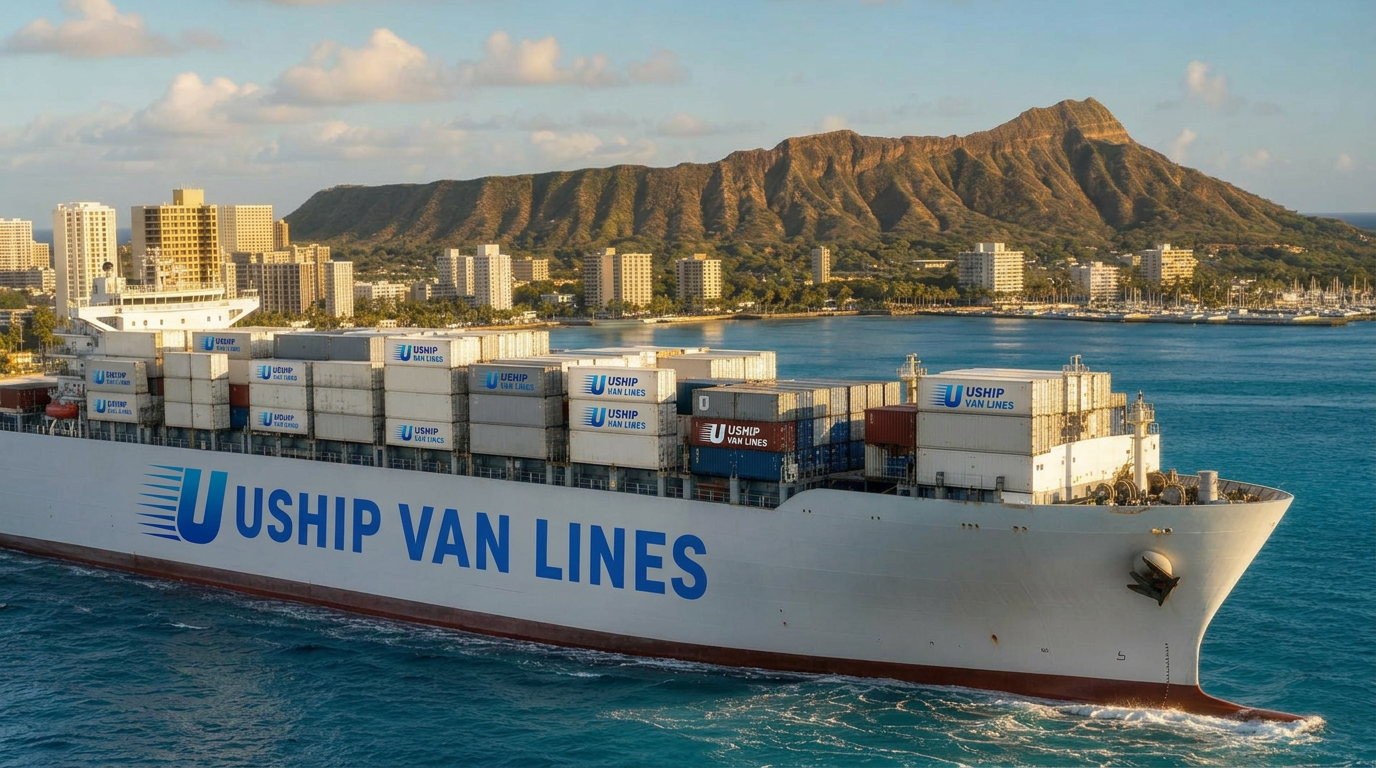
Moving from Hawaii to Bridgeport, CT
Relocating from the Hawaiian Islands to Bridgeport, Connecticut means crossing more than 5,000 miles of ocean and continent. This transpacific move requires specialized logistics—ocean container shipping from Honolulu, Maui, Kauai, or the Big Island to the West Coast, followed by cross-country overland transport to Connecticut's largest city on Long Island Sound. Whether you're moving for work at Bridgeport Hospital, attending the University of Bridgeport, or seeking New England's four seasons after island life, this journey demands careful planning and experienced coordination.
Best Alaska & Hawaii Movers, powered by UShip Van Lines, manages every segment of your Hawaii-to-Bridgeport relocation—from port documentation and container loading in the islands through final delivery to your Bridgeport neighborhood. Our platform connects you with verified carriers who understand both maritime shipping regulations and continental logistics, ensuring your belongings arrive safely at your new Connecticut home. Request your free quote today to start planning your cross-Pacific move with confidence.
Route overview
Understanding the Hawaii to Bridgeport Moving Route
Your household goods begin their journey at one of Hawaii's commercial ports—primarily Honolulu Harbor on Oahu, with inter-island connections available from Kahului (Maui), Nawiliwili (Kauai), and Hilo or Kawaihae (Big Island). Items are loaded into 20-foot or 40-foot ocean containers and shipped via Matson Navigation or Pasha Hawaii to West Coast ports, typically Long Beach or Oakland, California. This ocean crossing takes 5–7 days depending on vessel schedules and weather conditions.
Once your container clears customs and is unloaded at the mainland port, your belongings are transferred to a continental moving truck for the 2,900-mile overland journey to Bridgeport. The cross-country segment traverses Interstate 80 through Nevada, Utah, Wyoming, Nebraska, Iowa, and Illinois before connecting to I-90 eastward through Ohio, Pennsylvania, and New York, finally reaching Connecticut via I-95 or the Merritt Parkway. This transcontinental leg typically requires 5–8 days of transit time, accounting for driver hours-of-service regulations and potential weather delays, especially during winter months in the Midwest and Northeast.
Bridgeport presents unique delivery considerations as Connecticut's most populous city. Your mover will navigate to neighborhoods like Black Rock, Brooklawn, the North End, or Downtown, coordinating delivery times that comply with local parking restrictions and condominium building requirements. Many Bridgeport residences feature narrow streets built before the automobile era, requiring experienced drivers familiar with tight urban maneuvering and multi-story walk-up deliveries.
How the moving process works
How Your Hawaii to Bridgeport Move Works: Step by Step
-
Request a detailed quote and schedule your move: Contact Best Alaska & Hawaii Movers 8–12 weeks before your desired move date. Provide an accurate inventory of your belongings, including any vehicles, specialty items like surfboards or musical instruments, and restricted materials that cannot be shipped (plants, perishable foods, aerosols, ammunition). Your coordinator will assess whether a full 40-foot container, shared 20-foot container, or consolidated shipment best fits your needs and budget.
-
Complete Hawaii agricultural inspection and port documentation: Hawaii's Department of Agriculture requires inspection of household goods leaving the islands to prevent invasive species transport. Your moving crew will facilitate this inspection, typically conducted at your residence or at the port facility. You'll also complete a detailed packing list and customs declaration for mainland entry, even though Hawaii-to-continental-US moves are domestic shipments.
-
Professional packing and container loading in Hawaii: On moving day, your crew arrives to pack and protect your belongings using marine-grade materials—reinforced boxes, moisture barriers, and extra cushioning to withstand ocean transit. Furniture is disassembled, wrapped, and strategically loaded into your container to prevent shifting during the sea voyage. All items are inventoried with condition notes for insurance purposes.
-
Ocean freight to California and customs clearance: Your sealed container is transported to the port and loaded aboard the next available Matson or Pasha vessel bound for Long Beach or Oakland. The 5–7 day ocean crossing is followed by port unloading, which can add 2–4 days depending on port congestion and customs processing. Your coordinator tracks the container throughout this phase and notifies you when it reaches the mainland.
-
Cross-country overland transport begins: Once cleared, your container is either kept intact and loaded onto a flatbed truck or unloaded and transferred to a traditional moving van, depending on your carrier's network. The driver begins the 2,900-mile journey eastward, typically making the trip in 5–8 days with required rest stops. You'll receive progress updates as your shipment crosses time zones.
-
Final delivery coordination in Bridgeport: As your truck approaches Connecticut, your delivery coordinator will contact you to schedule a specific delivery window, typically 24–48 hours in advance. They'll confirm access requirements—parking permits for narrow streets, elevator reservations for apartment buildings, or homeowners association notification for gated communities.
-
Delivery, unloading, and inventory verification: Your crew arrives at your Bridgeport address, unloads all items, reassembles furniture, and places boxes in designated rooms. You'll check the inventory list and note any missing items or damage on the delivery receipt before signing. Most carriers offer unpacking services for an additional fee, or you can tackle boxes at your own pace after the crew departs.
Estimated moving costs
What Does a Hawaii to Bridgeport Move Cost?
A complete door-to-door move from Hawaii to Bridgeport, Connecticut typically ranges from $6,800 to $14,500 for a 2–3 bedroom household, depending on volume, service level, and timing. A studio or one-bedroom apartment with minimal furnishings might cost $4,200–$6,500, while a large four-bedroom home with 12,000+ pounds of belongings can exceed $18,000–$24,000.
Several factors drive your final cost. Container volume is primary—a full 40-foot container (fitting about 4–5 bedrooms) costs significantly more than a 20-foot container or shared consolidation. Ocean freight rates fluctuate seasonally, with higher prices during summer peak moving season (May–September) when demand spikes. Packing services add $800–$2,200 depending on whether you choose full-service packing, partial packing of fragile items only, or self-packing with supplied materials. Vehicle shipping costs an additional $1,400–$2,100 per car, requiring separate roll-on/roll-off ocean transport.
Access challenges at either origin or destination increase labor costs—third-floor walk-ups, long carries from parking to doorway, or narrow staircases requiring furniture hoisting all add $200–$600 in fees. Insurance coverage beyond basic liability (60 cents per pound) typically costs 1–3% of declared value, but provides essential protection for high-value items during this complex journey. Storage needs on either end—perhaps while you find permanent housing in Bridgeport or if your mainland delivery date doesn't align with container arrival—add $150–$350 per month for climate-controlled warehouse space.
Timing flexibility saves money. Off-peak moves (October–April, excluding holidays) often cost 15–25% less than summer relocations. Booking at least 10–12 weeks in advance typically secures better rates than last-minute arrangements when carrier capacity is limited. Best Alaska & Hawaii Movers provides transparent, itemized quotes with no hidden fees—request yours today to understand your specific cost structure and explore ways to optimize your budget.
Estimated transit times
How Long Does Hawaii to Bridgeport Moving Take?
Door-to-door transit time from Hawaii to Bridgeport, Connecticut typically spans 18–32 days from your pack date in the islands to delivery in Connecticut. This timeline breaks down into distinct segments, each with inherent variability.
Hawaii packing and port drayage (Days 1–3): Your household goods are packed, loaded into the container, and transported to Honolulu Harbor or your departure port. If you're moving from a neighbor island, add 1–2 days for barge transport to Oahu before the mainland vessel departs.
Ocean freight to California (Days 4–10): Matson and Pasha Hawaii operate regular weekly or twice-weekly sailings from Honolulu to Long Beach/Oakland, with the actual voyage taking 5–7 days. Your departure date depends on when your container reaches the port relative to the sailing schedule—containers typically ship on the next available vessel after arrival at the port facility.
Port unloading and customs processing (Days 11–14): West Coast port congestion significantly impacts this phase. In optimal conditions, your container is unloaded within 24–48 hours of vessel arrival. During peak periods or labor disruptions, unloading can extend to 3–5 days. Customs clearance for Hawaii-origin shipments is usually straightforward since it's domestic, but agricultural inspections may add time.
Cross-country overland transport (Days 15–24): The 2,900-mile journey from California to Bridgeport requires 5–8 days of actual driving under federal hours-of-service regulations, which limit drivers to 11 hours daily with mandatory rest periods. Weather events—winter snowstorms in the Rockies or Midwest, summer thunderstorms delaying loading—can add 1–3 days to this segment.
Final delivery in Bridgeport (Days 25–32): Once your truck reaches the Northeast, your coordinator schedules delivery within your requested window. If your specific move date isn't immediately available due to building access restrictions or your personal schedule, the carrier may store your goods for a few days until your confirmed delivery date.
Express service options can compress timelines by 5–8 days through guaranteed container space on priority sailings and dedicated cross-country trucks, but typically cost 30–50% more than standard service. For most relocations, planning for a full month from pack to delivery provides realistic expectations and reduces stress.
Regional logistics
Hawaii-Specific Moving Logistics
Port operations and container handling: Your move begins at one of Hawaii's commercial harbors. Honolulu Harbor (Oahu) handles the majority of mainland-bound household goods containers with daily operations and extensive infrastructure. Neighbor island residents may pack locally and have containers barged to Honolulu for mainland loading, or in some cases, consolidate shipments that connect with less frequent inter-island services. Matson Navigation Company and Pasha Hawaii dominate this route with regular sailing schedules, typically offering weekly departures from Honolulu to Long Beach and Oakland. Container availability can tighten during peak season—coordinate with your moving company 8–12 weeks out to secure space on your preferred sailing.
Agricultural inspection requirements: Hawaii's Department of Agriculture inspects all outbound household goods shipments to prevent the spread of invasive species like coqui frogs, coconut rhinoceros beetles, and various plant pests to the mainland. Your moving crew schedules this inspection, typically conducted at your residence or the warehouse before container sealing. Inspectors may examine soil on outdoor furniture, check for pests in potted plants (which generally cannot be shipped), and verify that items like wooden crates are pest-free. This inspection adds 1–2 hours to your packing day but is mandatory and costs are typically included in your moving quote.
Prohibited and restricted items: You cannot transport plants, fresh foods, fruits, vegetables, seeds, or any live animals in your moving container. Propane tanks must be purged and certified empty. Hazardous materials—paint, aerosols, cleaning chemicals, ammunition, fireworks—are prohibited on ocean vessels. Alcoholic beverages face quantity restrictions and must be properly packed to prevent breakage. Your moving coordinator provides a comprehensive prohibited items list during the planning phase. Dispose of restricted items before moving day or plan to carry small quantities of allowable items in your checked airline luggage if moving yourself separately.
Vehicle shipping as a separate process: Cars, motorcycles, and boats require dedicated roll-on/roll-off (RoRo) ocean transport, shipped separately from your household container. Matson and Pasha offer vehicle shipping services with approximately weekly sailings. Vehicles must be clean (exterior washed, interior vacuumed) to pass agricultural inspection, operable to drive on and off the vessel, and contain no personal items beyond a spare tire, jack, and car seat. Vehicle shipping from Hawaii to Long Beach costs $1,400–$2,100 per car, with an additional $600–$1,200 for overland transport from California to Bridgeport. Total vehicle transit time mirrors household goods—about 18–28 days port-to-port plus final overland delivery.
Bridgeport delivery considerations: Connecticut's irregular street layouts, dating from pre-automobile times, require experienced drivers. Many Bridgeport neighborhoods feature narrow streets with limited parking—securing temporary parking permits from the city for moving day prevents ticketing and towing. Multi-family homes, common in Bridgeport, often require coordinating building access, reserving freight elevators, and protecting common area floors. Waterfront condo buildings near Captain's Cove or downtown may have specific moving hours and insurance requirements your carrier must meet. Communicate your exact delivery address, building type, and any access restrictions to your moving coordinator 2–3 weeks before delivery to ensure smooth final placement of your belongings.
Seasonal considerations
Best Times to Move from Hawaii to Bridgeport
Summer (June–August) represents peak moving season for this route, as families relocate between school years and weather is most predictable. Ocean freight capacity tightens as demand surges, often resulting in 20–30% higher costs and longer wait times for container space. Connecticut summers are humid and hot compared to Hawaii's trade-wind-cooled climate—temps in Bridgeport reach 80–90°F with high humidity, making move-in day physically demanding. Book summer moves 12–16 weeks in advance to secure preferred dates and better rates. Bridgeport neighborhoods come alive in summer, offering an easier transition for exploring your new city.
Fall (September–November) offers ideal conditions for this relocation. Moving costs drop 15–25% after Labor Day as demand eases. Ocean sailing schedules remain reliable through October, and cross-country weather is generally favorable until late November. Connecticut's spectacular fall foliage provides a stunning welcome, with peak colors typically occurring in mid-October. Bridgeport's Seaside Park and Beardsley Park showcase New England autumn beauty unavailable in Hawaii. November moves risk early winter weather in the Midwest and Northeast—monitor forecasts and communicate with your carrier if blizzards threaten your delivery window.
Winter (December–February) presents the most challenging and economical period. Prices bottom out, sometimes 30–40% below summer peaks, and container availability is excellent. However, cross-country transit faces significant weather risks—mountain passes in Wyoming and Utah frequently close during blizzards, and Connecticut nor'easters can dump 12–24 inches of snow, making Bridgeport deliveries temporarily impossible. Plan buffer time between your container's expected arrival and when you absolutely need your belongings. Winter moves work well if you're flexible and can tolerate possible delays, with the trade-off being substantial cost savings. Bridgeport winters average 25–40°F with regular snowfall—a dramatic contrast to Hawaiian weather you'll want to prepare for mentally.
Spring (March–May) sees gradually increasing demand and prices. March can still bring winter storms, but April and May offer excellent moving weather. Connecticut springs are beautiful as temperatures climb to 50–70°F and gardens bloom—Bridgeport's coastal location means an early spring compared to inland New England. Ocean freight schedules are reliable, and cross-country routes are clear. Late spring (late May) begins trending toward peak summer pricing as families gear up for school-break moves. Book April moves by late January to capture pre-peak rates while securing good weather odds.
Hurricane considerations: Hawaii's hurricane season (June–November, peaking August–September) rarely impacts shipping schedules but can cause delays if a storm approaches the islands or West Coast ports. Bridgeport faces Atlantic hurricane and tropical storm risks in late summer and fall—while direct hits are uncommon, heavy rain and wind can delay deliveries. Your carrier monitors weather systems and will communicate any storm-related schedule changes.
Why choose Best Alaska & Hawaii Movers
Why Choose Best Alaska & Hawaii Movers for Your Bridgeport Relocation
-
Specialized Hawaii-mainland expertise: Unlike general moving brokers, we exclusively focus on Alaska and Hawaii relocations, understanding the unique maritime logistics, port procedures, and agricultural regulations that mainland-only movers often fumble. Our carrier network includes only companies with proven Hawaii shipping experience and mainland delivery capabilities across all 48 continental states, including Connecticut's urban challenges.
-
Transparent pricing with no hidden fees: Your quote includes all segments—Hawaii packing and port drayage, ocean freight, mainland port handling, cross-country transport, and Bridgeport delivery. We itemize costs for optional services like vehicle shipping, extra insurance, and storage so you understand exactly what you're paying for. No surprise fuel surcharges, long-carry fees, or "reweigh" charges appear on delivery day.
-
End-to-end coordination and tracking: A dedicated move coordinator manages your relocation from first contact through final delivery, serving as your single point of contact. You'll receive proactive updates as your container moves through each phase—departure from Hawaii, arrival at mainland port, cross-country transit milestones, and Bridgeport delivery scheduling. No need to chase down information or coordinate between multiple companies.
-
Vetted carrier network with quality standards: Best Alaska & Hawaii Movers, powered by UShip Van Lines, connects you with licensed, insured moving companies that meet our performance standards. We verify FMCSA registration for interstate carriers, confirm adequate insurance coverage, and monitor customer feedback. Our platform gives you choice—compare multiple quotes and carrier profiles to select the best fit for your budget and timeline.
-
Flexible service levels for every budget: Whether you need premium white-glove service with full packing, custom crating for art and antiques, and unpacking in Bridgeport, or a budget-conscious solution where you self-pack and handle your own unpacking, we match you with carriers offering the right service tier. Options include consolidated shipments sharing container space to reduce costs, or exclusive-use containers for faster transit and maximum security.