
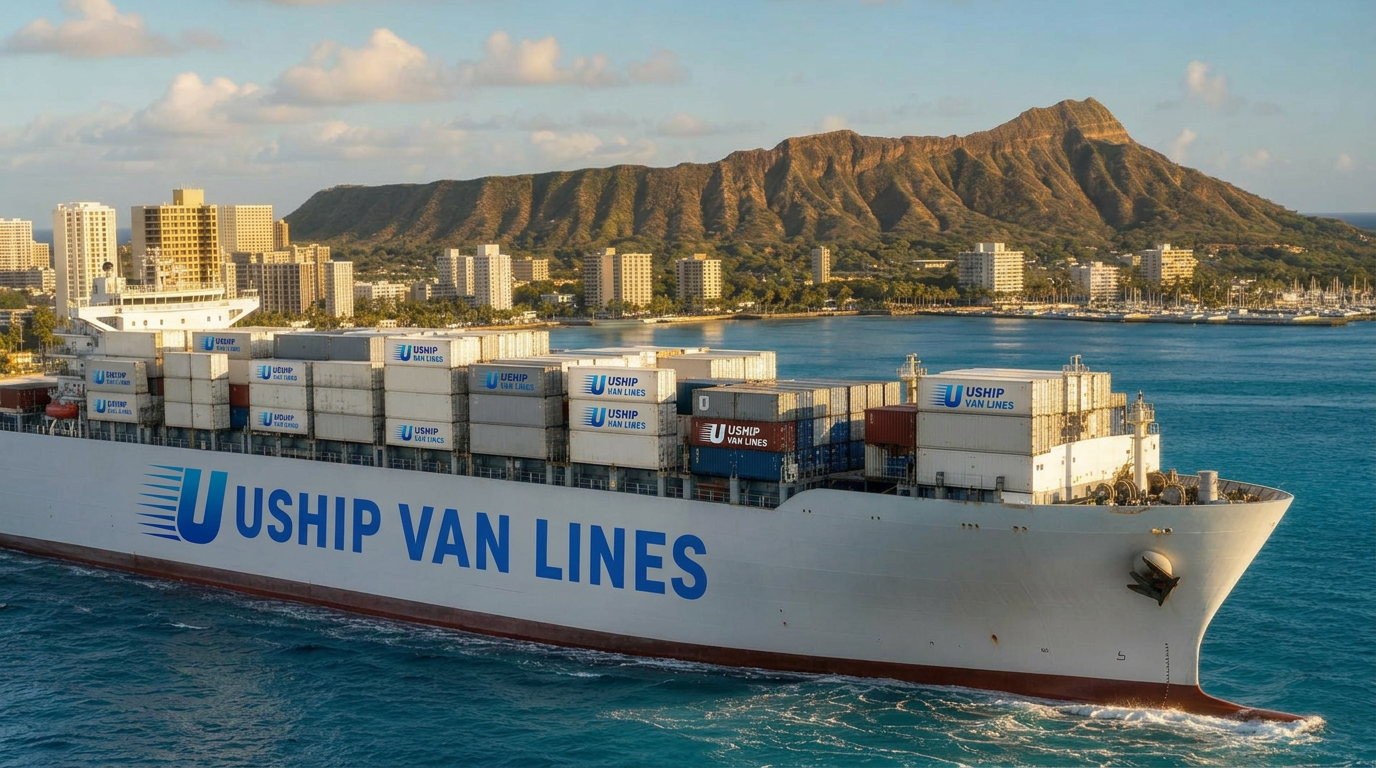
Moving from Boston, MA to Hawaii
Moving from Boston to Hawaii represents one of the most dramatic relocations in the United States—trading cobblestone streets and colonial charm for volcanic beaches and island living. This cross-country, cross-ocean move requires specialized knowledge of both transcontinental ground transport and Pacific maritime shipping.
Best Alaska & Hawaii Movers, powered by UShip Van Lines, coordinates the entire journey from your Boston doorstep to your new Hawaiian home. Whether you're relocating to Oahu, Maui, the Big Island, or Kauai, we handle the complex logistics of getting your belongings across 5,200+ miles of land and ocean. Ready to start planning? Request a free quote today to see how affordable your island move can be.
Route overview
Understanding the Boston to Hawaii Moving Route
Your household goods travel approximately 3,100 miles overland from Boston to the West Coast (typically Long Beach or Oakland, California), then embark on a 2,400+ mile ocean voyage to Honolulu. From Massachusetts, your belongings move west via professional ground transport, then transition to ocean freight containers shipped by carriers like Matson Navigation or Pasha Hawaii.
The transcontinental leg typically takes 7–10 days, with your items consolidated at a West Coast port facility. Ocean transit from California to Honolulu runs 10–14 days depending on sailing schedules. If you're moving to a neighbor island (Maui, Kauai, Big Island, Molokai), add another 3–7 days for inter-island barge service.
This is not a simple point-to-point move—it requires coordination between ground carriers, port terminals, customs brokers (for documentation), and final delivery services. Partnering with specialists who understand both continental trucking and Hawaii maritime logistics eliminates the stress of managing multiple vendors yourself.
How the moving process works
The Step-by-Step Moving Process from Boston to Hawaii
-
Initial consultation and inventory assessment – We evaluate your household volume (typically measured in cubic feet), identify items requiring special handling, discuss prohibited items for Hawaii (certain plants, soil, animals), and provide a detailed quote. Boston-area moves often include narrow street access considerations that affect truck placement.
-
Pre-move preparation and packing – Professional packing services are highly recommended for ocean moves. Items must withstand cross-country trucking plus maritime conditions (humidity, motion). We inventory everything, protect furniture with padding and shrink-wrap, and pack boxes to withstand the extended journey. You'll complete Hawaii agricultural declaration forms during this phase.
-
Loading and transcontinental transport – A long-distance moving truck loads your belongings at your Boston residence and transports them cross-country to our West Coast consolidation facility (Long Beach or Oakland). Transit time: 7–10 days. Your goods are stored climate-controlled until the next available sailing.
-
Container loading and ocean shipping – Your household goods are loaded into a shared 20' or 40' ocean container (or you may book an exclusive container for larger moves). The sealed container boards a Matson or Pasha vessel for the Pacific crossing to Honolulu. Sailing frequency: typically 1–2 departures weekly, with 10–14 days at sea.
-
Honolulu port clearance and inspection – Upon arrival at Sand Island (Honolulu), containers clear customs and undergo Hawaii Department of Agriculture inspection. Most household goods clear quickly, but certain items (wooden furniture, outdoor equipment) receive closer scrutiny. Clearance typically takes 1–3 business days.
-
Inter-island transport (if applicable) – For Maui, Kauai, Big Island, or Molokai destinations, your container transfers to Young Brothers inter-island barge service. Transit times vary: Maui (2–4 days), Big Island (3–5 days), Kauai (3–6 days). Scheduling depends on barge availability and weather.
-
Final delivery and unpacking – Local Hawaii movers transport your belongings from the destination island port to your new address. We unload, place furniture, and can provide unpacking services. Boston residents often appreciate help reassembling items like china cabinets and bookshelves that were disassembled for the journey. Final delivery scheduling depends on port release times and your availability.
Estimated moving costs
Cost Estimates for Boston to Hawaii Moves
A typical 2–3 bedroom household move from Boston to Hawaii ranges from $8,500 to $16,000 for full-service door-to-door transport. Studio or 1-bedroom moves may cost $5,000–$8,500, while larger 4+ bedroom homes can exceed $18,000–$25,000. These figures represent estimates only; actual costs depend on your specific circumstances.
Key cost drivers include:
-
Volume and weight – Hawaiian shipping costs are primarily volume-based (cubic feet), unlike weight-based continental moves. A typical 3-bedroom home occupies 1,200–1,800 cubic feet.
-
Packing services – Professional packing adds $800–$2,500 but is strongly recommended for ocean moves. DIY packing risks damage during the 5,200+ mile journey.
-
Access challenges – Boston's narrow streets, historic buildings without elevators, and limited parking can increase labor time. Brownstone walk-ups and South End row houses often require long-carry fees ($150–$400).
-
Destination island – Oahu delivery is most economical. Neighbor islands (Maui, Kauai, Big Island) add $800–$2,000 for inter-island barge and additional handling.
-
Seasonal demand – Summer months (May–August) see 20–30% higher rates due to peak moving season. Winter offers better pricing but coincides with Hawaii's rainy season.
-
Vehicle shipping – Cars ship separately via roll-on/roll-off auto carriers. Boston to Honolulu car shipping runs $1,400–$2,100. Vehicles to neighbor islands add $200–$350 for inter-island transport.
-
Storage needs – If your Hawaii housing isn't ready, short-term storage on the mainland ($150–$400/month) or in Hawaii ($200–$500/month) may be necessary.
Insurance is separate from the base moving cost. Basic carrier liability covers $0.60 per pound per article. Full-value protection costs approximately 1.5–2.5% of your declared goods value and is highly recommended for cross-ocean moves. Never assume prices without a detailed inventory assessment—request your personalized quote today.
Estimated transit times
Realistic Transit Times from Boston to Hawaii
Door-to-door moving times from Boston to Hawaii typically span 24–38 days from pickup at your Massachusetts home to delivery at your island residence. This timeline includes multiple handoffs and is longer than continental moves due to ocean shipping schedules and island logistics.
Transit breakdown by leg:
-
Boston to West Coast (ground transport) – 7–10 days for cross-country trucking to Long Beach or Oakland. This includes potential consolidation time if sharing truck space.
-
Port staging and container loading – 3–7 days at the West Coast facility. Your goods await the next scheduled sailing, are loaded into containers, and transferred to the shipping terminal.
-
Ocean transit to Honolulu – 10–14 days at sea, depending on weather conditions and specific routing. Matson's express service runs slightly faster; economy sailings may take the full two weeks.
-
Honolulu port clearance – 1–3 business days for customs processing and Hawaii Department of Agriculture inspection. Delays occur if containers are selected for detailed inspection or if paperwork is incomplete.
-
Inter-island barge (neighbor islands only) – 3–7 additional days for Maui, Kauai, or Big Island delivery. Molokai and Lanai may take longer due to limited barge schedules.
-
Final delivery coordination – 1–3 days to schedule and execute delivery from island port to your residence, depending on your availability and local mover scheduling.
Planning tip: Book your move 6–8 weeks in advance during summer peak season, 4–6 weeks minimum in winter. Last-minute bookings may face significant delays waiting for available sailing space. If you have firm deadlines (job start dates, school enrollment, lease expiration), communicate these clearly and consider paying for priority/expedited service where available.
Regional logistics
Hawaii-Specific Moving Logistics from Boston
Port operations and documentation: Your belongings ship through Honolulu's Sand Island terminal, the state's primary maritime freight hub. All shipments require a detailed packing list (prepared by your mover), government-issued ID, and Hawaii Agricultural Declaration Form (Form 7-12). This declaration lists all household goods and identifies any restricted items. Boston movers experienced with Hawaii relocations prepare documentation correctly, avoiding clearance delays.
Agricultural restrictions and inspections: Hawaii maintains strict biosecurity to protect native ecosystems. Prohibited items include: most live plants and seeds, soil or sand, fresh fruits and vegetables, certain wooden items with bark, and any materials that could harbor pests. Wooden furniture, wicker/rattan items, and outdoor equipment receive careful inspection. Items packed in original cardboard boxes typically clear faster than those in used boxes (which might contain pest eggs). If you're bringing Boston-area antiques or wooden furniture, have them professionally cleaned and be prepared for inspection delays.
Vehicle shipping considerations: Cars ship separately from household goods via dedicated auto carriers (Matson or Pasha auto division). Boston to Honolulu typically costs $1,400–$2,100 for a standard sedan. Vehicles must be: (1) nearly empty (less than 1/4 tank of gas, no personal items except floor mats), (2) in running condition, (3) recently cleaned inside and out for agricultural inspection. Classics, motorcycles, and boats require special handling. Schedule vehicle pickup separate from household goods—cars often ship on different schedules.
Island-specific delivery considerations: Oahu (where Honolulu is located) offers the most straightforward final delivery, typically occurring within 1–3 days of port clearance. Neighbor islands require barge transfer via Young Brothers. Maui and Kauai have developed delivery infrastructure; Big Island destinations can be remote, especially Puna, Hilo, or North Kohala areas. Lanai and Molokai have very limited barge service. If moving to a gated community, remote location, or area with access restrictions, inform your mover during quoting to ensure proper final-mile planning.
Housing timing and temporary storage: Hawaii's rental and housing market moves quickly, but transaction timelines can be unpredictable. If your new residence isn't ready when your container arrives, storage is available at Hawaii facilities ($200–$500/month) or you can delay shipment with mainland storage ($150–$400/month). Warehoused container storage (where your sealed container sits in a storage yard) offers another option. Many Boston-to-Hawaii movers keep goods in mainland storage until you confirm Hawaii housing is ready, then schedule the sailing.
Customs and military moves: Civilian moves to Hawaii are domestic relocations—no customs duties, no passports required. However, port security and agricultural inspection follow protocols similar to international shipments. Military members relocating to Hawaii bases (Pearl Harbor, Schofer Barracks, Marine Corps Base Hawaii) should coordinate with their Transportation Office for government-contracted moves, though Best Alaska & Hawaii Movers can provide supplementary services for excess weight or specialty items.
Essential items and fly-away kits: Pack 7–10 days of essentials (clothes, toiletries, medications, key kitchen items, important documents) in suitcases that travel with you on your flight to Hawaii. Your household goods may take 4–5 weeks door-to-door. First-night boxes (bedding, towels, basic dishes, coffee maker) should be clearly marked for priority unloading. Many Boston movers recommend shipping a small "critical items" box via expedited air freight ($300–$600) if you need specific belongings immediately.
Seasonal considerations
Seasonal Timing for Boston to Hawaii Moves
Spring (March–May): An excellent window for relocating to Hawaii. Boston weather improves, making loading easier, while Hawaii experiences post-winter sunshine before peak summer tourism. Shipping demand begins increasing in late April as families plan summer moves. Book 6+ weeks ahead as May approaches. Hurricane season hasn't yet begun, and ocean conditions are generally calm.
Summer (June–August): Peak moving season for both Boston departures and Hawaii arrivals. Expect 20–30% higher rates and fully booked sailings requiring 8–10 week advance booking. Boston's comfortable weather makes packing and loading pleasant, but West Coast ports experience congestion. Hawaii sees maximum tourism, which can complicate final delivery logistics. Hurricane season officially begins June 1, though major storms are rare in early summer. Trade winds keep temperatures comfortable.
Fall (September–November): September remains busy with families who delayed summer moves. October and November offer better pricing and availability as demand drops. Important consideration: Pacific hurricane season peaks August–October. While Hawaii is rarely directly hit, storms can delay sailings by several days. Boston weather remains cooperative through October; November can bring early snow that complicates loading. Thanksgiving week is challenging for scheduling.
Winter (December–February): The most economical time to move, with rates 15–25% below summer peaks. Boston winters present challenges—snow, ice, and cold temperatures can delay pickup. You may need to ensure walkways are cleared and safe for movers. Hawaii experiences its "rainy season," though this means occasional showers, not constant rain. Ocean conditions can be rougher December–February, potentially extending transit by 1–3 days. Holiday periods (mid-December and New Year's) see reduced sailing schedules and should be avoided. January–February offers the best value for budget-conscious movers willing to brave Boston winter weather during packing.
Hurricane watch: Unlike Gulf Coast or Caribbean moves, Hawaii hurricane risk is relatively low. The state averages one direct hurricane impact every 15–20 years. However, tropical storms that don't make landfall can still delay sailings. Your move coordinator monitors forecasts and will communicate any weather-related schedule changes. Summer and fall movers should maintain flexible delivery windows.
Why choose Best Alaska & Hawaii Movers
Why Choose Best Alaska & Hawaii Movers for Your Boston to Hawaii Relocation
-
Specialized Hawaii expertise – Unlike general long-distance movers, we focus exclusively on Alaska and Hawaii relocations. We understand Hawaii's unique agricultural regulations, port procedures, inter-island logistics, and island delivery challenges. Our team has navigated Honolulu's Sand Island terminal hundreds of times and maintains relationships with every neighbor island carrier.
-
True door-to-door service – We coordinate your entire move from Boston pickup through West Coast staging, ocean shipping, port clearance, and final Hawaii delivery. One point of contact, one contract, one team responsible for your belongings across 5,200+ miles. No frustrating handoffs between companies that don't communicate.
-
Transparent pricing and planning – We provide detailed written estimates breaking down every cost component: ground transport, ocean freight, port fees, delivery, insurance options. No surprise charges. Our Boston-to-Hawaii moves include realistic timelines accounting for sailing schedules and potential inspection delays.
-
Proven logistics network – Powered by UShip Van Lines, we leverage an extensive network of certified carriers, port partners, and island delivery professionals. We've negotiated priority container space even during peak summer months. Our West Coast consolidation facilities offer secure, climate-controlled storage if your goods need to wait for optimal sailing schedules.
-
Comprehensive support – From packing services to vehicle shipping coordination to storage solutions, we handle every aspect of your island relocation. Our team assists with Hawaii agricultural paperwork, answers questions about prohibited items, and provides guidance on what to bring versus what to buy new in Hawaii. We stay in communication throughout your move, providing tracking updates and proactively addressing any issues.