
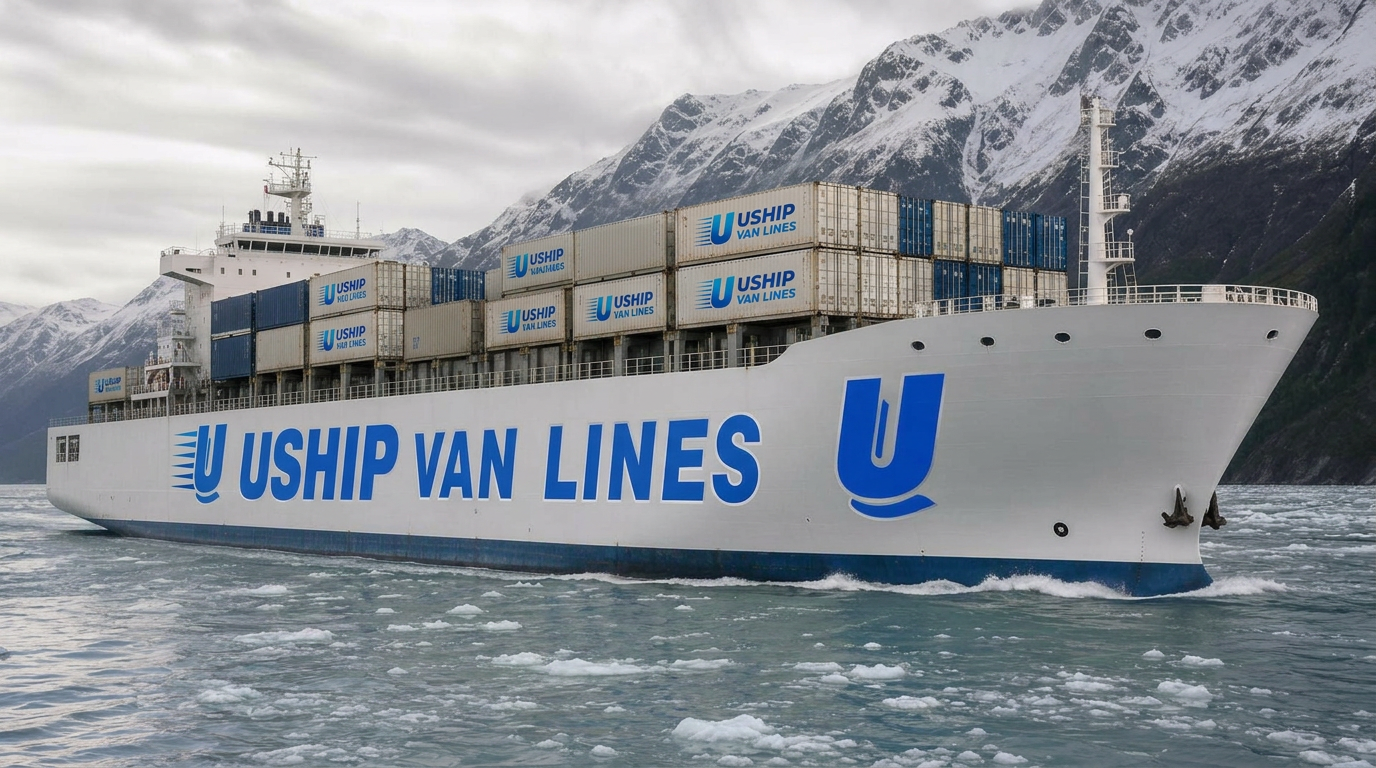
Moving from Albuquerque, NM to Alaska
Moving from the high desert of Albuquerque to the Last Frontier requires specialized logistics that few moving companies understand. Your household goods will travel over 3,000 miles—first by truck to the Port of Tacoma, then by ocean barge to Anchorage, and finally to your destination across Alaska's unique terrain.
Best Alaska & Hawaii Movers, powered by UShip Van Lines, coordinates every step of this complex journey. We handle the seamless handoff between road and sea transport, navigate Alaska Marine Highway schedules, and arrange last-mile delivery whether you're settling in Anchorage, Fairbanks, the Mat-Su Valley, or even remote bush communities. Request a free quote to get accurate pricing and timelines for your specific move.
Route overview
Route Overview: Albuquerque to Alaska
The Albuquerque-to-Alaska corridor presents unique challenges that distinguish it from typical Lower 48 moves. Your belongings will travel approximately 2,200 road miles from central New Mexico to the Port of Tacoma in Washington state. From there, they'll be loaded onto ocean barges operated by carriers like TOTE Maritime or Alaska Marine Lines for the 1,500-nautical-mile voyage through the Inside Passage to the Port of Anchorage.
Once in Alaska, your shipment enters a vastly different logistics environment. The majority of moves land in Anchorage and are distributed from there—either a short drive to surrounding communities or a 350-mile haul north to Fairbanks along the Parks Highway. The Mat-Su Valley (Wasilla, Palmer), Kenai Peninsula, and Kodiak Island all require additional planning beyond the standard barge delivery.
Albuquerque's elevation (5,312 feet) and dry climate mean your furniture and belongings will experience significant environmental shifts. Alaska's humidity, temperature extremes, and seasonal darkness demand proper climate considerations during packing. This isn't a standard interstate move—it's a multimodal expedition requiring experienced coordination between trucking companies, port operations, and Alaska-specific delivery networks.
How the moving process works
The Seven-Step Moving Process from Albuquerque to Alaska
1. Initial Consultation and In-Home or Virtual Survey We assess your inventory, discuss your destination in Alaska, and identify special items (vehicles, boats, ATVs) that require separate handling. This survey determines cubic footage and weight for accurate barge space booking.
2. Packing and Preparation in Albuquerque Professional packing occurs 1–3 days before pickup. For Alaska moves, we use reinforced marine-grade materials and climate-appropriate wrapping. Electronics, wooden furniture, and moisture-sensitive items receive extra protection against humidity changes during the ocean leg.
3. Ground Transportation to Port of Tacoma Your shipment loads onto a 53-foot semi-trailer and travels I-25 north through Colorado, then I-80/I-90 through Wyoming and into Washington—approximately 1,400–1,500 miles depending on routing. Transit to Tacoma typically takes 3–5 days.
4. Containerization and Port Processing At Tacoma, your goods transfer into 20-foot or 40-foot ocean containers or are floor-loaded into shared barge space. Port paperwork, customs pre-clearance (Alaska is a U.S. state but has unique agricultural inspections), and container securing all happen here. Allow 3–7 days for port staging.
5. Ocean Barge to Anchorage The barge voyage takes 5–7 days depending on weather, route (some barges stop in Kodiak or other ports first), and carrier schedule. Barges typically sail weekly during peak season (May–September) and less frequently in winter.
6. Port of Anchorage Unloading and Customs Clearance Containers are offloaded at the Port of Anchorage and go through USDA agricultural inspection (no soil on outdoor equipment, plant material restrictions, etc.). This clearance adds 1–3 days before local delivery can begin.
7. Final Delivery to Your Alaska Address If you're in Anchorage or the Mat-Su Valley, delivery occurs within 1–3 days of port clearance. Fairbanks deliveries add 1–2 days for the northbound haul. Remote locations, islands, or bush communities may require small aircraft, winter ice roads, or seasonal barge service—planned separately based on your specific destination.
Estimated moving costs
What Does It Cost to Move from Albuquerque to Alaska?
A typical 2-bedroom household (approximately 7,000–9,000 pounds) moving from Albuquerque to Anchorage generally ranges from $6,800 to $11,500. A larger 3-bedroom home (10,000–14,000 pounds) typically costs $10,000 to $16,500. These are estimates only; your actual price depends on weight, services selected, season, and final destination.
Key cost drivers include:
- Distance and volume: Charges are based on weight/cubic feet and the multimodal nature of the move—you're paying for both long-haul trucking and ocean barge space
- Packing services: Full professional packing adds $800–$2,000; partial packing (fragiles only) runs $300–$700
- Barge schedules and fuel surcharges: Peak-season moves (May–August) may carry higher rates due to demand; fuel surcharges fluctuate with diesel and bunker fuel prices
- Final destination in Alaska: Anchorage is the baseline; Fairbanks adds $1,200–$2,500; Kenai Peninsula, Kodiak, or bush destinations add significantly more
- Vehicle shipping: Cars shipped via the same barge system cost $1,200–$2,000 per vehicle from Seattle/Tacoma to Anchorage
- Storage: If your Alaska housing isn't ready, storage in Anchorage runs $150–$400/month for typical household volumes
- Insurance: Full-value protection costs approximately 1.5–2.5% of declared value; basic carrier liability (60¢/pound) is included but minimal
We never guarantee prices without a detailed survey. Your quote will reflect your actual inventory, services, and the current market. Request your personalized estimate to see exact costs for your timeline and destination.
Estimated transit times
How Long Does the Move from Albuquerque to Alaska Take?
Door-to-door transit from Albuquerque to Anchorage typically takes 18–30 days. Fairbanks and other destinations add time. Here's the breakdown:
- Packing and loading in Albuquerque: 1–2 days
- Ground transport to Port of Tacoma: 3–5 days (approximately 1,400 miles)
- Port staging, containerization, and customs prep: 3–7 days (varies by barge sailing schedule)
- Ocean barge transit to Port of Anchorage: 5–7 days
- Port clearance and USDA inspection in Anchorage: 1–3 days
- Final delivery in Anchorage metro: 1–2 days after clearance
- Final delivery to Fairbanks: add 2–3 days; to Kenai/Soldotna add 1–2 days; to remote/bush locations, significantly more
Winter moves (November–March) can extend timelines due to reduced barge frequency (some carriers sail every 10–14 days instead of weekly), weather delays in the Gulf of Alaska, and road conditions on the Parks Highway to Fairbanks. Summer moves benefit from frequent sailings but face higher demand—book 4–6 weeks ahead during peak season.
Flexibility is essential. Weather in the Gulf of Alaska, port congestion, and agricultural inspection backlogs can all add days. We provide tracking updates at each milestone and adjust delivery windows as your shipment progresses.
Regional logistics
Alaska-Specific Moving Logistics from Albuquerque
Port of Anchorage and Barge Scheduling The Port of Anchorage receives the majority of Alaska-bound household goods. Major carriers include TOTE Maritime Alaska and Alaska Marine Lines. Barge schedules are published weeks in advance but are weather-dependent—Gulf of Alaska storms can delay sailings. Your shipment must be at the Port of Tacoma 3–5 days before the scheduled sailing. Missing a sailing means waiting for the next available departure, adding 7–14 days in peak season.
USDA and Agricultural Inspections Alaska enforces strict agricultural rules to protect its ecosystems. Inspectors check for soil on outdoor equipment (lawnmowers, bikes, camping gear), prohibited plant material, and certain food items. Clean all equipment thoroughly before packing in Albuquerque. Violations can result in items being held, cleaned at your expense, or destroyed. Houseplants generally cannot be shipped via barge; plan to transport them personally or leave them behind.
Vehicle Shipping Most customers ship one or more vehicles alongside household goods. Vehicles travel via Roll-on/Roll-off (RoRo) barge service from Tacoma to Anchorage. They must be clean (no mud, minimal personal items inside), under 1/4 tank of fuel, and operable. Cost is typically $1,200–$2,000 per car. Motorcycles, ATVs, and boats are also common. If you plan to drive the Alaska Highway from Albuquerque (roughly 4,000 miles via the ALCAN through Canada), budget 7–10 days and prepare for remote stretches, gravel sections in Canada, and border crossings requiring proof of vehicle ownership and insurance.
Last-Mile Delivery Across Alaska Anchorage and the Mat-Su Valley (Wasilla, Palmer) are straightforward—paved roads, standard semi-truck access. Fairbanks requires the 350-mile haul north on the Parks Highway, which is well-maintained but subject to winter closures during severe weather. The Kenai Peninsula (Soldotna, Kenai, Homer) adds a 2–3 hour drive from Anchorage. Kodiak Island, Juneau, and Southeast Alaska communities require separate barge or air service—plan these as distinct shipments. True bush destinations (accessible only by plane or seasonal ice roads) require specialized freight forwarding and can cost as much as the entire Lower 48-to-Anchorage leg.
Storage and Warehousing If your Alaska housing isn't ready, we offer secure warehousing in Anchorage. Climate-controlled units are available for sensitive items. Storage is billed monthly and can be arranged for days, weeks, or months. Notify us early if you anticipate needing storage so we can stage your shipment accordingly and avoid port demurrage fees.
Insurance and Valuation Basic carrier liability (60 cents per pound) is included but provides minimal protection—a 50-pound TV is covered for only $30. We strongly recommend full-value protection, which costs 1.5–2.5% of your declared shipment value and covers repair or replacement at current market value. Given the multiple handoffs (truck, port, barge, truck again), claims are more complex than standard moves. Document high-value items with photos and serial numbers before packing.
Seasonal considerations
Best Times to Move from Albuquerque to Alaska
Spring (April–May): The Shoulder Season Barge service ramps up in April as winter ice clears from Alaska ports. Rates are moderate, and schedules become more frequent. This is ideal for arrivals timed to Alaska's late spring (May is when Anchorage finally warms above freezing consistently). Road conditions improve on both ends, but expect rain in the Pacific Northwest and breakup (muddy conditions) in Alaska.
Summer (June–August): Peak Season The busiest and most expensive period. Barge sailings run weekly, weather is most predictable, and roads are in excellent condition. Families move during school breaks, driving up demand and prices by 15–25%. Book at least 6–8 weeks in advance. Midnight sun and mild temperatures make unpacking and settling easier, but expect competition for movers and housing.
Fall (September–October): Best Value Rates drop after Labor Day. Barge frequency remains solid through October. Anchorage's fall colors and crisp air make for pleasant moving conditions. Be aware that Alaska's winter arrives in earnest by late October—snow and freezing temperatures are common. This is the sweet spot for cost-conscious movers who can handle early-season cold.
Winter (November–March): Lowest Demand, Highest Risk Barge schedules thin out—some carriers sail only twice monthly. Ocean weather in the Gulf of Alaska can be severe, occasionally delaying sailings by days. However, prices are at their lowest (potentially 20–30% below summer). If you're flexible on delivery dates, have winter gear ready, and aren't moving to remote areas dependent on ice roads or summer-only access, winter can offer significant savings. Albuquerque's mild winters make loading easy, but prepare for arrival in true Alaska winter darkness and cold.
Why choose Best Alaska & Hawaii Movers
Why Choose Best Alaska & Hawaii Movers for Your Albuquerque-to-Alaska Move
-
Alaska and Hawaii specialists, powered by UShip Van Lines: We handle only long-distance moves to and from Alaska and Hawaii—this is our core expertise, not a side service. We understand barge schedules, port logistics, USDA inspections, and the realities of last-mile delivery across Alaska's challenging geography.
-
Seamless multimodal coordination: Your move requires perfect handoffs between trucking companies, port operators, ocean carriers, and Alaska delivery teams. We manage every transition, track your shipment in real time, and communicate proactively so you're never wondering where your belongings are.
-
Transparent pricing with no hidden fees: You'll receive a detailed written estimate covering all legs of the journey—trucking, barge, delivery, and any additional services. We explain cost drivers clearly and update you if circumstances change (weather delays, route adjustments, etc.).
-
Customized solutions for every Alaska destination: Whether you're moving to a downtown Anchorage condo, a Fairbanks homestead, a Mat-Su hobby farm, or a remote cabin, we tailor logistics to your exact needs. We've delivered to bush communities, island locations, and military bases across the state.
-
Comprehensive support from quote to delivery: Our team guides you through packing requirements, customs paperwork, vehicle shipping, storage options, and settling-in resources. You'll have a dedicated move coordinator who knows your name and your route, available by phone or email throughout the process.