
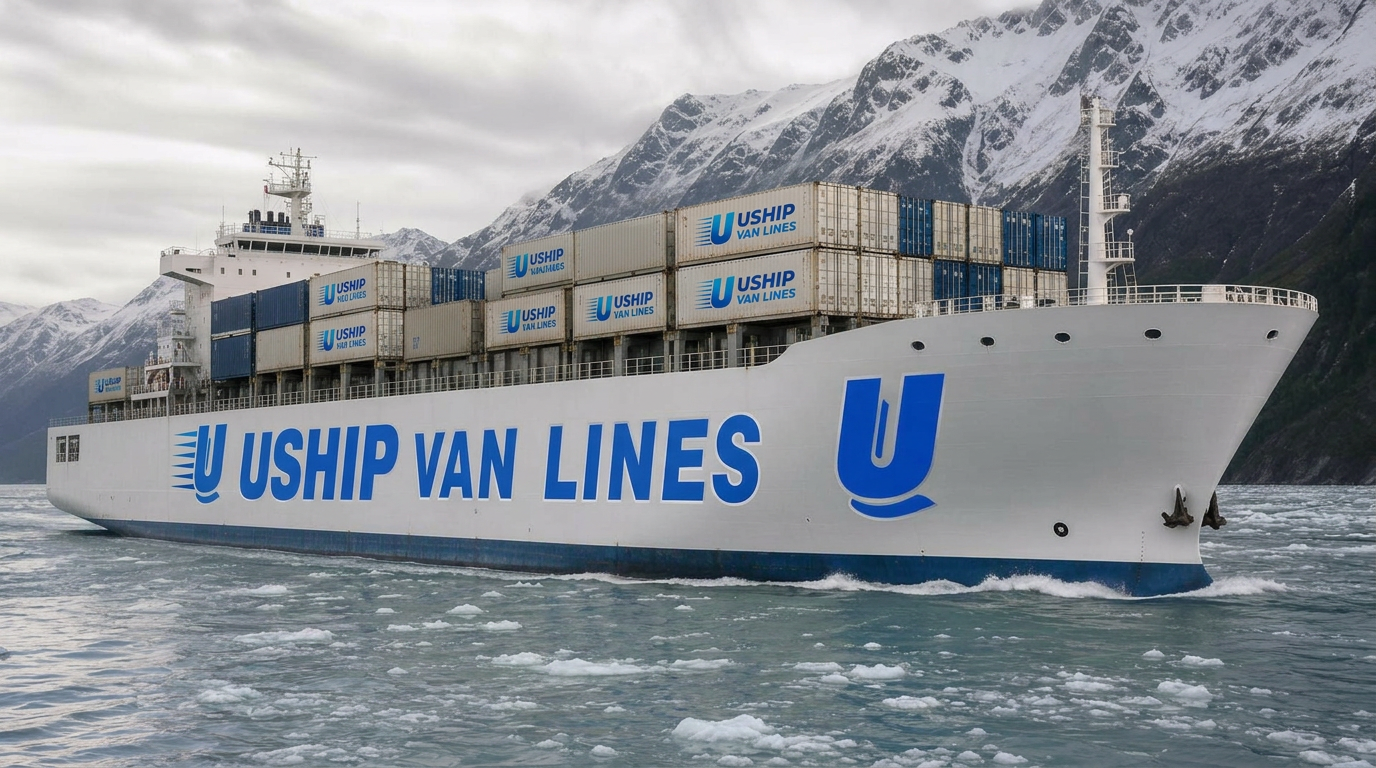
Moving from United States to Alaska
Moving to Alaska from the contiguous United States requires specialized logistics that most traditional movers can't handle. Your household goods will travel by barge from Tacoma, Washington to the Port of Anchorage—a journey that demands careful coordination, weather-aware scheduling, and experience with Alaska's unique delivery challenges.
Whether you're relocating to Anchorage, Fairbanks, the Mat-Su Valley, or more remote communities, understanding barge schedules, seasonal windows, and last-mile delivery options will help you plan a successful move. Request a free quote from Best Alaska & Hawaii Movers to start planning your transition with Alaska moving specialists.
Route overview
How Your Move to Alaska Works
The overwhelming majority of household moves from the Lower 48 to Alaska follow a single route: overland trucking to the Port of Tacoma, barge shipping to the Port of Anchorage, and final delivery to your Alaska destination. This journey typically takes 2–4 weeks door-to-door, depending on barge schedules, weather, and your final destination within Alaska.
Tacoma serves as the primary staging port because of its weekly barge service, established logistics infrastructure, and proximity to major interstate highways. From Anchorage, your belongings can be delivered throughout the road system—including Fairbanks (358 miles north), the Matanuska-Susitna Valley, the Kenai Peninsula, and communities along the Parks, Glenn, and Richardson Highways. Off-road-system communities require additional coordination with bush carriers or air freight.
Unlike a standard long-distance move, Alaska relocations involve multiple handoffs: your origin carrier, port staging, barge line, receiving warehouse, and final delivery team. Working with a coordinator experienced in Alaska moves eliminates the confusion of managing these connections yourself.
How the moving process works
Step-by-Step: Your Alaska Moving Process
-
Request quotes 8–12 weeks before your target move date. Alaska barge capacity fills quickly during peak season (May–September), and advance booking secures better rates and preferred departure dates.
-
Schedule your packing and pickup. Professional movers load your household goods into a dedicated container or shared trailer space at your Lower 48 residence. The carrier transports your shipment overland to the Port of Tacoma.
-
Port staging and barge loading. Your container arrives at Tacoma, clears documentation, and loads onto the next available barge to Anchorage. Weekly sailings are standard in summer; service may be reduced to every 10–14 days in winter.
-
Ocean transit (5–7 days). The barge travels approximately 1,400 nautical miles through the Inside Passage or Gulf of Alaska route. Transit time is weather-dependent, especially October through March.
-
Port of Anchorage arrival and customs clearance. Your shipment offloads, clears any required inspections, and transfers to the receiving warehouse or delivery truck.
-
Final delivery to your Alaska address. Road-accessible locations receive direct delivery. Communities off the road system require coordination with local freight services, air carriers, or seasonal barge/landing craft.
-
Unpacking and inspection. Document any damage immediately and photograph your inventory before the delivery crew leaves. Alaska's climate and multi-modal transport create unique risks for fragile items.
Estimated moving costs
What You'll Pay to Move to Alaska
A typical 2–3 bedroom household moving from the contiguous United States to Anchorage costs $6,000–$12,000 for full-service door-to-door transport. Larger homes (4+ bedrooms) or moves to locations beyond Anchorage typically range $10,000–$18,000+.
Key cost drivers include:
- Distance from origin to Tacoma – West Coast origins pay significantly less than East Coast or Gulf states because of shorter overland hauls
- Shipment volume – Charged by cubic feet or container size; partial loads share barge space and cost less than exclusive containers
- Seasonal timing – Peak summer months (June–August) command premium rates due to high demand; winter moves can save 15–25%
- Final destination – Road-accessible locations cost less; communities like Juneau, Bethel, Kodiak, or Nome require additional marine or air freight segments
- Packing services – Professional packing adds $800–$2,500 but significantly reduces damage risk on multi-modal journeys
- Vehicle shipping – Adding a car or truck to your barge shipment costs $1,500–$3,000 from Seattle/Tacoma to Anchorage
- Storage needs – Warehousing at origin, Tacoma, or Anchorage adds daily fees if your delivery window doesn't align with barge schedules
We never guarantee prices without surveying your specific inventory and route. Request a detailed quote to receive an accurate estimate based on your origin city, destination, move date, and household size.
Estimated transit times
How Long Your Alaska Move Takes
Expect 14–28 days door-to-door for moves from the Lower 48 to road-accessible Alaska locations. The timeline breaks down as follows:
- Pickup to Port of Tacoma: 1–7 days depending on your origin (1–2 days from West Coast, 5–7 days from East Coast)
- Port staging and barge loading: 1–5 days (longer if you just miss a sailing)
- Ocean transit: 5–7 days Tacoma to Anchorage under normal conditions
- Port offload and warehouse transfer: 1–3 days
- Final delivery: 1–7 days (same-day for Anchorage metro, up to 5 days for Fairbanks or Kenai Peninsula, longer for remote areas)
Off-road-system communities add significant time. Juneau, Sitka, Ketchikan, and other Southeast Alaska towns accessible only by ferry or plane may require 3–5 weeks total. Bush communities like Bethel, Kotzebue, Nome, or Barrow often require 4–8 weeks and careful coordination with seasonal barge service or air freight.
Winter moves take longer. November through March, expect extended port times due to weather delays, reduced barge frequency, and road conditions affecting last-mile delivery. Summer moves (May–September) offer the most predictable schedules.
Regional logistics
Alaska-Specific Moving Logistics
Port and Barge Coordination
All Lower 48 to Alaska barge shipments stage through either Tacoma (most common) or occasionally Seattle. Your mover coordinates container loading, documentation, and transfer to carriers like Lynden Transport, TOTE Maritime, or Alaska Marine Lines. You don't handle barge booking directly—your moving company manages these connections.
Vehicle Shipping
Most families drive the Alaska Highway (1,400 miles from the Canadian border to Anchorage) or ship one vehicle while driving another. Barge shipping a standard car or truck from Tacoma to Anchorage costs $1,500–$3,000 and takes the same 5–7 day ocean transit. Vehicles must be clean (no soil/seeds due to agricultural inspection), have less than 1/4 tank of fuel, and contain no personal items. Drive-away services are available if you prefer not to make the multi-day road trip.
Restricted and Prohibited Items
Alaska enforces strict agricultural and environmental regulations. Cannot ship: soil, plants in soil, certain seeds, firewood, raw honey, used agricultural equipment. Regulated items requiring documentation: pets (health certificates, rabies vaccination), firearms (legal but must be declared), alcohol (quantity limits). Professional movers experienced in Alaska moves understand these restrictions and help you prepare compliant shipments.
Last-Mile Delivery Challenges
Anchorage, Eagle River, Wasilla, Palmer, and Kenai Peninsula communities enjoy standard delivery service. Fairbanks and interior locations accessible via the Parks Highway add 1–3 days. Off-road-system communities require special arrangements:
- Southeast Alaska (Juneau, Sitka, Ketchikan): Alaska Marine Highway ferry or separate barge service
- Kodiak, Unalaska/Dutch Harbor: Dedicated barge service, less frequent than Anchorage
- Western/Northern bush (Nome, Bethel, Barrow, Kotzebue): Summer barge season only (June–September) or year-round air freight at much higher cost
Discuss your final destination with your moving coordinator early. Remote delivery often requires consolidating shipments, extended timelines, and significantly higher costs.
Seasonal considerations
When to Move to Alaska: Seasonal Planning
Summer (May–September): Peak Season
The majority of Alaska moves happen during these months. Weekly barge sailings, predictable weather, and school-year timing drive demand. Expect premium pricing (10–25% higher than winter), but you'll enjoy the most reliable schedules and fastest delivery times. Book 10–12 weeks ahead to secure capacity. June and July fill earliest due to family relocations.
Fall (October–November): Shoulder Season
Barge service begins to reduce frequency, but weather remains generally manageable through mid-October. Rates drop 10–15% compared to summer. This window works well for retirees, remote workers, or anyone with flexible timing. Be prepared for potential weather delays affecting final delivery, especially north of Anchorage.
Winter (December–March): Off-Season
The cheapest time to move to Alaska, with rates 20–30% below peak season. However, barge sailings may reduce to every 10–14 days, and severe weather can delay ocean transit or final delivery by a week or more. The Alaska Highway and interior routes face extreme cold, ice fog, and occasional closures. Only recommended if you have flexible delivery dates and your destination housing can accommodate delayed arrival.
Spring (April–early May): Transition Season
Barge schedules ramp up and rates begin climbing toward summer levels. Breakup season (late April/early May) can make unpaved roads impassable and delay deliveries to interior and rural areas. If you can push your move into late May, you'll avoid the worst mud season challenges while catching early-summer reliability.
Why choose Best Alaska & Hawaii Movers
Why Choose Best Alaska & Hawaii Movers
- Alaska-specific expertise: We coordinate the full chain—overland pickup, Tacoma port staging, barge transport, Anchorage receiving, and final delivery—eliminating confusion and handoff gaps that plague inexperienced carriers
- Transparent, realistic pricing: You'll receive detailed quotes breaking down overland, barge, and delivery costs with no hidden port fees or surprise charges
- Year-round service knowledge: We understand seasonal barge schedules, weather windows, and off-season challenges—advising you on the best timing for your specific route and budget
- Off-road-system coordination: Moving to a community without road access? We arrange bush freight, air cargo, or seasonal barge connections that most Lower 48 movers won't touch
- Powered by UShip Van Lines: Access to a national network of licensed carriers for your Lower 48 pickup, combined with Alaska specialists who know the Last Frontier's unique logistics
Request your free quote today and work with a team that moves households to Alaska every week of the year.