
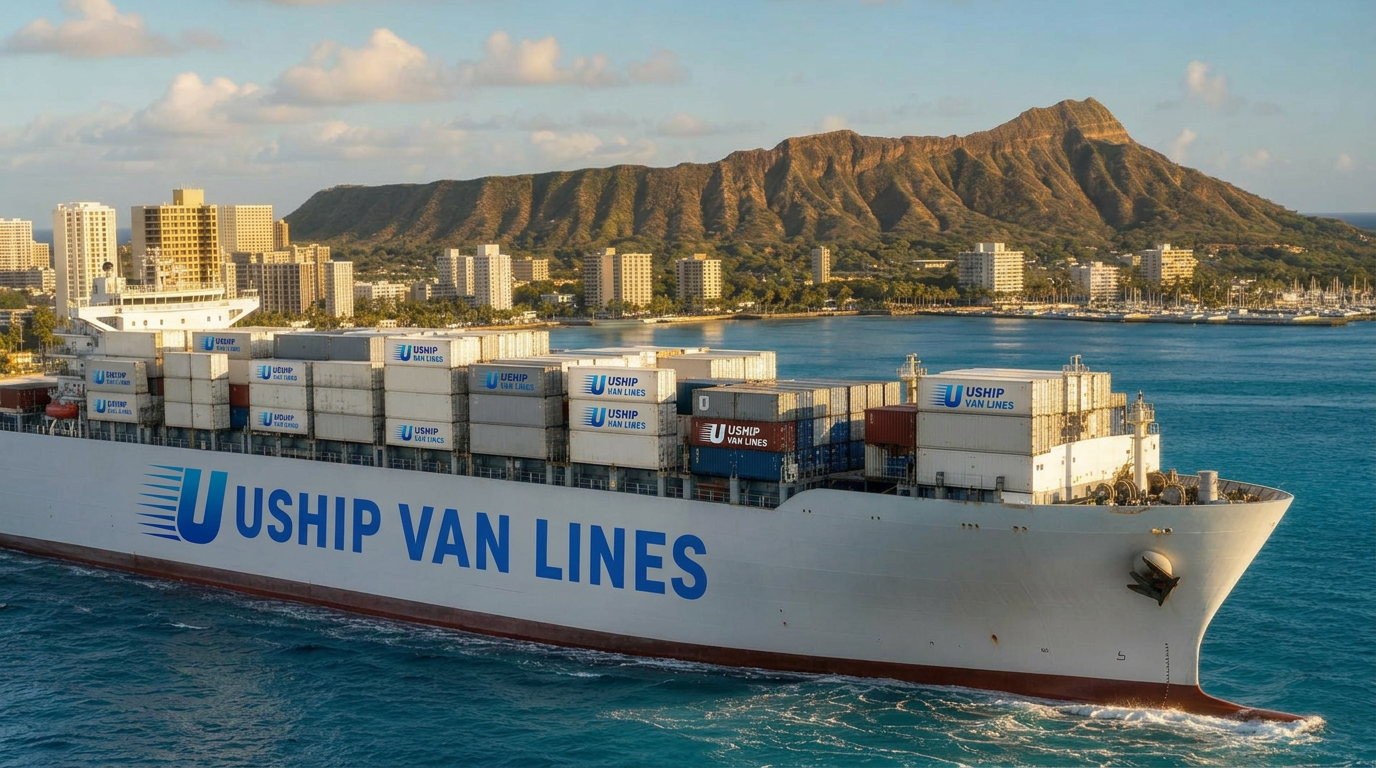
Moving from Wilkes Barre, PA to Hawaii
Moving from Wilkes Barre, Pennsylvania to the Hawaiian Islands represents one of the most logistically complex relocations in the United States. Unlike a typical long-distance move, your household goods will travel roughly 2,700 miles overland to the West Coast, then another 2,500 miles by ocean container to reach the islands—a journey that requires specialized planning, precise coordination, and expertise in both mainland and Pacific shipping.
Best Alaska & Hawaii Movers, powered by UShip Van Lines, specializes in this exact route. We handle the entire chain from your Wilkes Barre doorstep through mainland transit, West Coast port consolidation, ocean freight via Matson or Pasha Lines, and final delivery to your island destination. Ready to start planning your Hawaiian move? Request a free quote today and speak with a specialist who understands the unique requirements of mainland-to-Hawaii relocations.
Route overview
Understanding the Wilkes Barre to Hawaii Moving Route
Your move from northeastern Pennsylvania to Hawaii follows a carefully orchestrated multi-modal path. Professional movers load your belongings in Wilkes Barre and transport them cross-country—typically via I-80 west through Pennsylvania, Ohio, Nebraska, and Wyoming, then I-84 or I-5 to reach major West Coast shipping hubs in Long Beach or Oakland, California. This mainland leg alone covers approximately 2,700 miles and takes 5–7 days under normal conditions.
At the port, your household goods are consolidated into 20-foot or 40-foot ocean containers alongside other Hawaii-bound shipments. Matson Navigation and Pasha Hawaii operate weekly sailings from California to Honolulu, with the ocean voyage taking 5–7 days depending on weather and routing. Once your container clears customs and quarantine inspection in Honolulu, it's either delivered directly (for Oahu residents) or transshipped via inter-island barge to Maui, Kauai, or the Big Island, adding another 3–7 days.
This route requires coordination between mainland trucking teams, port freight forwarders, ocean carriers, customs brokers, and island delivery crews. Weather in the Pacific, port congestion during peak summer and holiday seasons, and Hawaii's strict agricultural inspection protocols all impact timing. Working with a carrier experienced in this specific lane ensures your shipment clears each checkpoint smoothly and arrives intact at your new island home.
How the moving process works
How Your Wilkes Barre to Hawaii Move Works: Step by Step
1. Free In-Home or Virtual Survey A moving specialist evaluates your inventory—typically via video call or in-person visit in Wilkes Barre. They'll note items requiring special handling (pianos, artwork, fragile antiques), measure large furniture, and identify prohibited items for Hawaii (certain plants, soil, untreated wood). You'll receive a detailed written estimate breaking down mainland trucking, ocean freight, and island delivery costs.
2. Packing and Loading in Wilkes Barre On moving day, professional crews arrive at your Pennsylvania home with packing materials, dollies, and protective blankets. They pack your belongings using reinforced boxes rated for ocean transit, wrap furniture in shrink wrap and padding, and load everything into a climate-controlled truck. Inventory lists are created, and you'll receive a bill of lading documenting every item.
3. Cross-Country Transit to West Coast Port Your shipment travels approximately 2,700 miles to Long Beach or Oakland. Drivers navigate mountain passes, weather delays, and weigh stations, typically arriving at the port facility within 5–7 days. Your goods are offloaded at a secure warehouse where they await container consolidation.
4. Container Loading and Ocean Booking Freight forwarders consolidate your shipment with other Hawaii-bound moves into a shared 20' or 40' steel container (or dedicate an exclusive container for larger moves). The container is sealed, documented with customs paperwork, and booked on the next available Matson or Pasha sailing—usually departing weekly.
5. Ocean Voyage to Honolulu The container ship sails from California to Honolulu Harbor, covering roughly 2,500 nautical miles in 5–7 days. Modern container vessels maintain stable climates and secure stowage, though Pacific swells and occasional storms are part of ocean freight reality.
6. Customs Clearance and Agricultural Inspection Upon arrival in Honolulu, your container undergoes U.S. Customs clearance and mandatory Hawaii Department of Agriculture inspection. Inspectors screen for invasive pests, prohibited plants, and untreated wood. Most shipments clear within 1–3 days; any flagged items may be treated, returned, or destroyed per state regulations.
7. Final Island Delivery For Oahu destinations, your goods are delivered directly from the port warehouse. For neighbor islands (Maui, Kauai, Big Island), the container is transferred to an inter-island barge, adding 3–7 days. Island delivery crews navigate narrow roads, steep driveways, and limited parking to place your belongings in your new home, reassemble furniture, and remove packing debris.
Estimated moving costs
What Does a Wilkes Barre to Hawaii Move Cost?
A typical 2–3 bedroom household moving from Wilkes Barre to Hawaii generally ranges between $8,500 and $16,000, depending on volume, services, and final island destination. Smaller studio or 1-bedroom moves may start around $5,000–$7,000, while larger 4–5 bedroom homes with vehicles can exceed $20,000.
Key cost drivers include:
- Shipment volume: Charged per cubic foot or by container share. A 2-bedroom apartment averages 600–900 cubic feet; a 3-bedroom house typically runs 1,000–1,500 cubic feet.
- Packing services: Professional packing adds $800–$2,000 but ensures proper protection for the 5,000+ mile journey.
- Mainland distance: The 2,700-mile overland haul from Wilkes Barre to California ports represents roughly 40–50% of total cost.
- Ocean freight rates: Fluctuate seasonally; summer and holiday periods see 15–25% surcharges due to increased demand.
- Final island destination: Oahu delivery is most economical. Maui, Kauai, and Big Island add $800–$1,800 for inter-island barge and specialized delivery logistics.
- Vehicle shipping: Cars typically add $1,200–$1,800 per vehicle (roll-on/roll-off ocean freight from Long Beach to Honolulu).
- Storage: If your new home isn't ready, Hawaii warehouse storage runs $150–$300 per month.
We provide transparent, itemized estimates with no hidden fees. Request a free quote to receive a customized cost breakdown based on your specific inventory and move date.
Estimated transit times
How Long Does a Wilkes Barre to Hawaii Move Take?
Door-to-door transit from Wilkes Barre to Hawaii typically requires 3–6 weeks, though this timeline varies by season, weather, and final island location.
Transit breakdown by leg:
- Wilkes Barre to West Coast port: 5–7 days for the cross-country truck haul (approximately 2,700 miles via I-80/I-84).
- Port consolidation and container loading: 3–7 days while your shipment awaits the next scheduled sailing and container space.
- Ocean voyage to Honolulu: 5–7 days from Long Beach or Oakland to Honolulu Harbor.
- Customs and agricultural inspection: 1–3 days for clearance (can extend to 5–7 days if items require special inspection or treatment).
- Delivery on Oahu: 1–3 days from port clearance to your doorstep.
- Inter-island barge and neighbor island delivery: Add 3–7 days for Maui, Kauai, or Big Island destinations.
Seasonal timing considerations:
Summer months (June–August) and holiday periods (Thanksgiving through New Year's) see the heaviest volume. Expect longer port consolidation times and potential sailing delays. Winter and early spring (January–April) typically offer the fastest transits, with more available container space and predictable scheduling.
For tight move-in deadlines, book at least 6–8 weeks in advance and consider expedited services or dedicated container options to minimize consolidation delays.
Regional logistics
Hawaii-Specific Logistics You Must Know
Port Operations and Container Handling Your shipment will be containerized at either the Port of Long Beach (most common) or Port of Oakland. Matson Navigation and Pasha Hawaii are the two primary ocean carriers serving Hawaii, operating weekly scheduled services. Your freight forwarder coordinates container booking, customs documentation, and vessel scheduling—all handled by Best Alaska & Hawaii Movers as part of our integrated service.
Hawaii Agricultural Inspection Requirements The Hawaii Department of Agriculture enforces strict biosecurity protocols to protect the islands' unique ecosystems. Inspectors screen every mainland shipment for invasive pests, snails, and plant diseases. Prohibited items include: soil, sand, live plants (except with advance permits), certain seeds, untreated wood, straw packing materials, and used outdoor equipment with soil residue. Clean all gardening tools, camping gear, and children's toys thoroughly before packing. Non-compliant items will be treated (fumigation), returned to the mainland at your expense, or destroyed.
Vehicle Shipping Considerations Cars and motorcycles ship separately via roll-on/roll-off (RORO) ocean freight from Long Beach or San Diego. Vehicles must be operable, with less than a quarter-tank of gas, and empty of all personal belongings. Costs run $1,200–$1,800 per vehicle for standard sedans to Oahu; add $200–$400 for neighbor islands. Most carriers require 2–3 weeks booking lead time during peak season. Upon arrival, vehicles undergo their own agricultural inspection before release.
Inter-Island Barge Services If you're moving to Maui, Kauai, or the Big Island, your container transfers from Honolulu to a Young Brothers barge for the final leg. Barge schedules are less frequent than Oahu deliveries—typically 2–4 times weekly depending on the island. Factor an additional 3–7 days for this segment, plus potential weather delays during high surf or storm conditions.
Last-Mile Delivery Challenges Hawaii's island geography presents unique delivery obstacles. Narrow residential streets, steep hillside driveways, low-clearance carports, and dense urban neighborhoods like Honolulu's Makiki or Kailua require specialized equipment. Many condos and apartments have strict move-in rules, elevator reservations, and building insurance requirements. Communicate access details (parking restrictions, gate codes, elevator dimensions) to your moving coordinator well in advance.
Storage Options If your new home isn't ready or you need temporary warehousing, climate-controlled storage is available on Oahu, Maui, and the Big Island. Rates run $150–$300 per month depending on volume. Note that most storage facilities cannot accept hazardous materials, aerosols, or perishables—plan to dispose of these items before your mainland pickup.
Seasonal considerations
Best Times to Move from Wilkes Barre to Hawaii
Spring (March–May): Optimal Moving Window Spring offers the most predictable conditions. Pennsylvania weather has stabilized after winter, West Coast ports operate smoothly without summer congestion, and Pacific hurricane season hasn't begun. Ocean freight rates are moderate, container space is readily available, and you'll avoid the summer rush. Book 4–6 weeks out for best pricing and flexibility.
Summer (June–August): Peak Season Challenges Summer is the busiest moving period for Hawaii relocations—families relocate before the school year, military transfers peak, and vacation-season demand spikes. Expect 15–25% premium pricing, longer port consolidation waits (sometimes 10–14 days), and fully booked sailing schedules. The official Pacific hurricane season begins June 1, though major storms are rare. Book 8–10 weeks ahead and prepare for higher costs and extended timelines.
Fall (September–November): Hurricane Season & Holiday Rush Early fall remains busy with lingering summer demand. Pacific hurricane season peaks August–October; while Hawaii experiences far fewer storms than the Atlantic or Gulf, tropical systems can delay sailings by 3–7 days. Thanksgiving through Christmas sees another demand surge as people relocate for the holidays. September–early October offers a sweet spot after summer but before Thanksgiving—book 6–8 weeks out.
Winter (December–February): Off-Peak Savings & Weather Trade-offs Winter brings the year's lowest rates and fastest port processing, but introduces Pennsylvania winter weather challenges. Snowstorms in Wilkes Barre or along the I-80 corridor can delay pickup or cross-country transit by 2–5 days. West Coast ports and Pacific sailings operate normally. If you're flexible with pickup dates and can accommodate potential snow delays, winter moves save 10–20% and enjoy expedited container processing. Book 3–5 weeks ahead—shorter lead times are often possible due to lower demand.
Why choose Best Alaska & Hawaii Movers
Why Choose Best Alaska & Hawaii Movers for Your Wilkes Barre to Hawaii Move
-
Specialized Mainland-to-Hawaii Expertise: Unlike general long-distance carriers, we focus exclusively on Alaska and Hawaii relocations. We understand Pennsylvania pickup logistics, West Coast port operations, Hawaii agricultural rules, and inter-island delivery challenges—all coordinated under one contract.
-
Transparent, All-Inclusive Pricing: Our quotes include mainland trucking from Wilkes Barre, West Coast port handling, ocean freight, customs clearance, agricultural inspection coordination, and final island delivery. No surprise fees or hidden container charges—just honest, itemized pricing.
-
End-to-End Coordination: You work with a single move coordinator from initial estimate through final delivery. We manage trucking schedules, container bookings, sailing confirmations, customs paperwork, and delivery appointments—you make one phone call, not ten.
-
Proven Port Partnerships: Our relationships with Matson, Pasha, and West Coast freight forwarders ensure priority container space, expedited customs processing, and reliable sailing schedules even during peak summer and holiday periods.
-
Island Delivery Teams Who Know Hawaii: Our Oahu, Maui, Kauai, and Big Island delivery crews live on the islands. They navigate tight streets, understand condo move-in protocols, and handle Hawaii's unique residential access challenges daily—ensuring your belongings arrive safely at your door, not stuck at a port warehouse.