
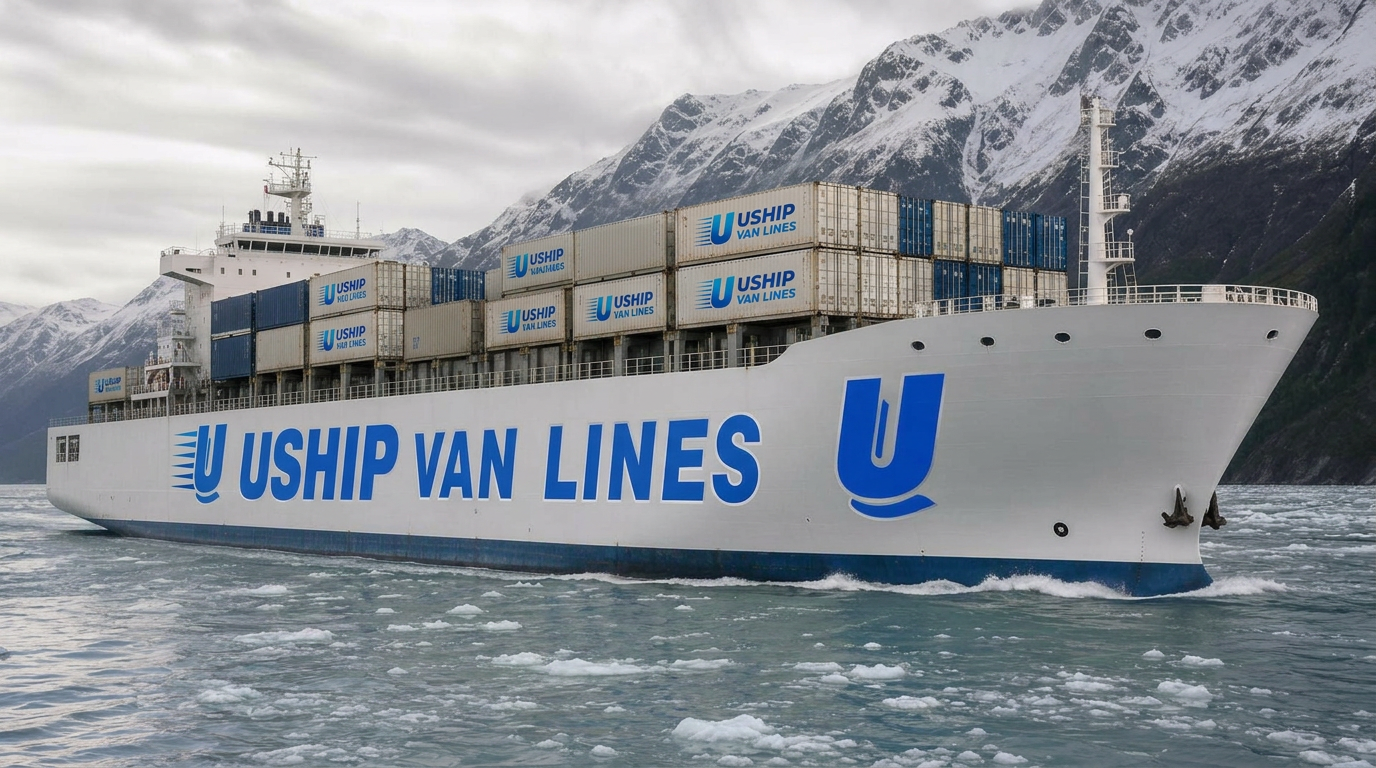
Moving from Colorado Springs, CO to Alaska
Moving from the high-altitude sunshine of Colorado Springs to the expansive wilderness of Alaska is an adventure that requires specialized logistics and careful planning. Unlike a standard interstate move, your household goods will travel by truck to the Port of Tacoma, then aboard an Alaska-bound barge to Anchorage, Fairbanks, or your final destination across the Last Frontier.
Best Alaska & Hawaii Movers, powered by UShip Van Lines, coordinates every leg of this complex journey—from packing in Colorado Springs through final delivery to your new Alaskan home. Whether you're headed to Anchorage, the Mat-Su Valley, Fairbanks, or a remote bush community, our route-specific expertise ensures a smooth transition. Ready to start planning? Request your free, no-obligation quote today.
Route overview
Colorado Springs to Alaska: Understanding the Route
Your move from Colorado Springs begins with a long-haul truck transporting your belongings approximately 1,400 miles northwest to the Port of Tacoma, Washington. This leg typically takes 2–3 days depending on weather and scheduling. Once at the port, your goods are loaded into a secure marine container and placed aboard a northbound barge operated by carriers serving the Alaska Marine Highway and commercial shipping lanes.
The barge voyage from Tacoma to the Port of Anchorage typically takes 5–8 days, depending on weather, route, and vessel schedule. Anchorage serves as the primary distribution hub for the entire state. From there, shipments destined for Fairbanks, the Kenai Peninsula, Mat-Su Valley communities like Wasilla and Palmer, or remote bush locations are transferred to final-mile carriers—which may include smaller trucks, bush planes, or even winter ice road transport for the most isolated destinations.
This multi-modal route requires precise coordination and realistic expectations. Unlike moving within the Lower 48, Alaska moves operate on weekly or biweekly barge schedules, and weather—especially during winter—can introduce delays. Planning 6–8 weeks ahead and maintaining flexibility around delivery windows is essential for a successful Colorado Springs to Alaska relocation.
How the moving process works
How Your Colorado Springs to Alaska Move Works: Step by Step
-
Free Consultation & Inventory Assessment
Contact Best Alaska & Hawaii Movers for a detailed phone or video survey of your household. We'll discuss special items (vehicles, firearms, hazardous materials that cannot be shipped), your destination in Alaska, and preferred moving dates. You'll receive a transparent cost estimate tailored to your inventory and timeline. -
Schedule & Book Around Barge Departures
Alaska barge sailings from Tacoma occur on fixed schedules—typically weekly or biweekly. We'll align your packing date in Colorado Springs with an optimal barge departure, ensuring minimal storage time in Tacoma and the earliest possible arrival in Alaska. -
Professional Packing & Loading in Colorado Springs
Our crew arrives at your Colorado Springs home to carefully pack, wrap, and load your belongings into a long-haul truck. All items are inventoried and protected for the cross-country journey and marine transport ahead. High-value and fragile items receive extra padding and crating as needed. -
Overland Transport to Port of Tacoma
Your truck departs Colorado Springs and travels northwest through Wyoming, Idaho, and into Washington State. The driver navigates mountain passes and weather conditions, typically arriving at the Tacoma port facility within 2–3 days. -
Container Loading & Barge Sailing to Alaska
At the port, your household goods are transferred into a weatherproof marine container (often a 20' or 40' steel container). The container is secured aboard the barge, which then sails north through the Inside Passage or open Pacific waters to the Port of Anchorage. This voyage takes 5–8 days under normal conditions. -
Customs Clearance & Port Unloading (If Applicable)
While Alaska is a U.S. state and does not require customs, port paperwork and container inspections do occur. Our Alaska-based partners coordinate timely unloading and transfer to final-mile carriers. -
Final Delivery to Your Alaska Home
Once your container clears the Port of Anchorage, it's loaded onto a local delivery truck (or transferred to a bush carrier if you're outside the road system). Our team schedules delivery, unloads your belongings, and places items in the rooms you designate. For remote or bush locations, expect additional coordination and possible weather-related delays.
Estimated moving costs
What Does a Colorado Springs to Alaska Move Cost?
A typical 2–3 bedroom household moving from Colorado Springs to Anchorage, Fairbanks, or another Alaska road-accessible location generally costs $7,500–$14,000 for full-service packing, transport, and delivery. Smaller moves (studio or 1-bedroom) may range from $4,500–$7,000, while larger homes (4+ bedrooms) can exceed $16,000.
Key cost drivers include:
- Volume and weight: Alaska moves are priced per cubic foot or per pound, plus marine freight fees. More belongings mean higher costs.
- Barge freight rates: Marine shipping from Tacoma to Anchorage is a significant expense. Rates fluctuate seasonally, with summer moves typically costing more due to demand.
- Destination beyond Anchorage: Delivery to Fairbanks, Kenai, Mat-Su communities, or remote bush locations incurs additional trucking, barge transfer, or air freight charges. Bush deliveries can add $1,000–$5,000 or more.
- Packing services: Full-service packing (recommended for Alaska moves) adds $800–$2,000 depending on home size. DIY packing saves money but increases risk during the multi-leg journey.
- Vehicle shipping: If you're shipping a car or truck, expect $1,500–$3,000 additional via roll-on/roll-off (RoRo) barge service from Tacoma to Anchorage.
- Insurance and valuation: Basic coverage is included, but full-value protection (recommended for Alaska's complex route) costs approximately 1–2% of declared inventory value.
- Storage: If barge schedules don't align with your move-out date, short-term storage in Tacoma or Anchorage may be necessary at $150–$400/month.
We never guarantee prices without a detailed inventory. Every move is unique, and Alaska logistics introduce variables beyond typical long-distance moves. Request a free quote to receive a precise, binding estimate based on your specific situation and timeline.
Estimated transit times
How Long Does a Colorado Springs to Alaska Move Take?
Door-to-door transit from Colorado Springs to an Alaska destination typically takes 10–21 days, though remote or bush locations may require additional time.
Breakdown by leg:
- Colorado Springs to Port of Tacoma (overland truck): 2–3 days, covering approximately 1,400 miles through the Rocky Mountains and Pacific Northwest. Weather and road conditions in mountain passes can add a day.
- Port staging and container loading: 1–3 days, depending on barge departure schedule and port operations. If you miss a sailing, you may wait up to a week for the next departure.
- Tacoma to Port of Anchorage (barge voyage): 5–8 days under normal conditions. Winter storms or mechanical issues can extend this to 10–12 days in rare cases.
- Port clearance and transfer in Anchorage: 1–2 days for unloading, inspection, and loading onto final-mile carriers.
- Anchorage to final Alaska destination: Same-day to 3 days for road-accessible locations like Fairbanks, Wasilla, Palmer, or Kenai. Bush destinations may require 3–7 additional days depending on weather, bush plane schedules, or ice road conditions.
Important: Alaska moves operate on barge schedules, not on-demand timelines. Booking early (6–8 weeks minimum) and building flexibility into your plans is critical. Winter moves face higher risk of weather delays. Summer moves (May–September) offer the most reliable schedules but also the highest demand and cost.
Regional logistics
Alaska-Specific Logistics You Need to Know
Port of Entry and Distribution:
The Port of Anchorage is Alaska's primary marine gateway. Nearly all household goods from the Lower 48 arrive here before distribution across the state. Port operations are weather-dependent, and winter storms can delay unloading by several days. Once cleared, shipments are transferred to Anchorage-based warehouses or loaded directly onto final-mile carriers.
Vehicle Shipping:
If you're bringing a car, truck, or SUV, it will travel separately via roll-on/roll-off (RoRo) barge service from Tacoma to Anchorage. Vehicles must be clean (Alaska inspects for invasive species), operable, and contain no personal belongings. Transit time mirrors household goods (5–8 days on water), and costs range from $1,500–$3,000. Alternatively, driving the Alaska Highway from Colorado Springs is possible but involves 3,000+ miles and requires winter driving preparation if traveling off-season.
Restricted and Prohibited Items:
Alaska barge carriers prohibit hazardous materials: propane tanks, gasoline, ammunition, firearms (which require special shipping compliance), paint, cleaning chemicals, and certain plants. Frozen or perishable foods are not recommended due to transit time. If you have firearms, declare them early—Alaska law is gun-friendly, but marine shipping requires specific packaging and documentation.
Delivery to Remote or Bush Communities:
If your destination is off the road system (e.g., Nome, Bethel, Kotzebue, Dillingham, Kodiak, or smaller villages), expect additional costs and logistics. Bush delivery may involve air freight via cargo plane, seasonal barge service to remote ports, or winter ice road transport. These destinations require specialized carriers, and transit times can extend to 3–6 weeks. Costs for bush delivery often double or triple compared to road-accessible locations.
Insurance and Valuation:
Given the complexity and distance of Alaska moves, full-value protection insurance is strongly recommended. Basic carrier liability (typically $0.60/lb) is insufficient for most households. Full-value coverage costs approximately 1–2% of your declared inventory value but provides peace of mind if items are damaged during the multi-leg journey.
Paperwork and Documentation:
While moving to Alaska does not require customs (it's a U.S. state), you will need a detailed inventory list, proof of residence, and vehicle title/registration if shipping a car. Active-duty military members receive additional support and may qualify for government-contracted moving services.
Seasonal considerations
Best Time to Move from Colorado Springs to Alaska: Seasonal Factors
Spring (April–May):
Barge schedules ramp up as Alaska emerges from winter. Ice conditions in some northern ports may still cause delays, but this is a solid shoulder season with moderate pricing and fewer crowds. Colorado Springs weather is generally mild, making packing and loading straightforward. Expect moderate demand and competitive rates.
Summer (June–August):
Peak moving season. Barge sailings are most frequent, weather is stable, and Alaska road conditions are excellent. However, demand is highest—expect premium pricing and the need to book 8–12 weeks ahead. Summer is ideal for families moving with school-age children, as it avoids mid-school-year disruption. Wildlife and tourism traffic in Alaska can affect final-mile delivery times.
Fall (September–October):
Another excellent shoulder season. Barge schedules remain frequent, prices drop slightly, and Alaska weather is still manageable (though snow begins in October). Colorado Springs autumn weather is pleasant for packing. This is a smart time for cost-conscious moves with flexible timelines. Be aware that by late October, Alaska winter conditions may begin affecting remote deliveries.
Winter (November–March):
The most challenging and least expensive time to move. Barge schedules are reduced, and severe weather in both Colorado (mountain pass closures) and Alaska (storms, ice, extreme cold) can cause significant delays. Winter moves are only recommended for those with flexible timelines, remote work, or temporary housing. However, if you can tolerate uncertainty, winter rates can be 15–25% lower than summer. Bush deliveries may be impossible until spring thaw or ice road formation.
Why choose Best Alaska & Hawaii Movers
Why Choose Best Alaska & Hawaii Movers for Your Colorado Springs to Alaska Move
-
Alaska Route Specialists: We focus exclusively on moves to and from Alaska and Hawaii, giving us deep expertise in barge schedules, port logistics, and last-mile delivery across the Last Frontier—expertise general moving companies simply don't have.
-
Powered by UShip Van Lines: Our partnership with UShip Van Lines provides access to a vetted network of carriers, competitive pricing, and reliable logistics coordination from Colorado Springs through final delivery in Alaska.
-
Transparent, All-Inclusive Quotes: No hidden fees or surprise charges. We provide detailed, binding estimates that include overland transport, marine freight, port fees, and final-mile delivery—so you know exactly what to expect.
-
Full-Service Packing and Crating: Alaska moves demand secure packing. Our crews use marine-grade materials, custom crating for fragile items, and proven techniques to protect your belongings during the multi-leg journey.
-
Flexible Scheduling Around Barge Departures: We work backward from barge sailing schedules to optimize your packing date, minimize storage time, and deliver the fastest possible transit to Alaska.
-
Dedicated Move Coordinators: From your first quote request through final delivery, a single point of contact manages your move, answers questions, and provides real-time tracking updates as your shipment crosses the country and sails north.